
Spinal Injury Treatment in Delhi
A spinal injury is damage to the vertebrae, discs, ligaments or spinal cord that can affect movement, sensation and bladder or bowel control. Treatment depends on spinal stability, cord involvement and how quickly the injury is assessed. Spinal injury treatment in Delhi ranges from bracing and rehabilitation to emergency decompression and fixation, planned by a neurosurgeon.
Dr. Vikas Gupta, Senior Consultant Neurosurgeon at Kailash Deepak Hospital, Karkardooma, has over 30 years of neurosurgical experience.
Reach Out for Expert Care
What Is a Spinal Injury?
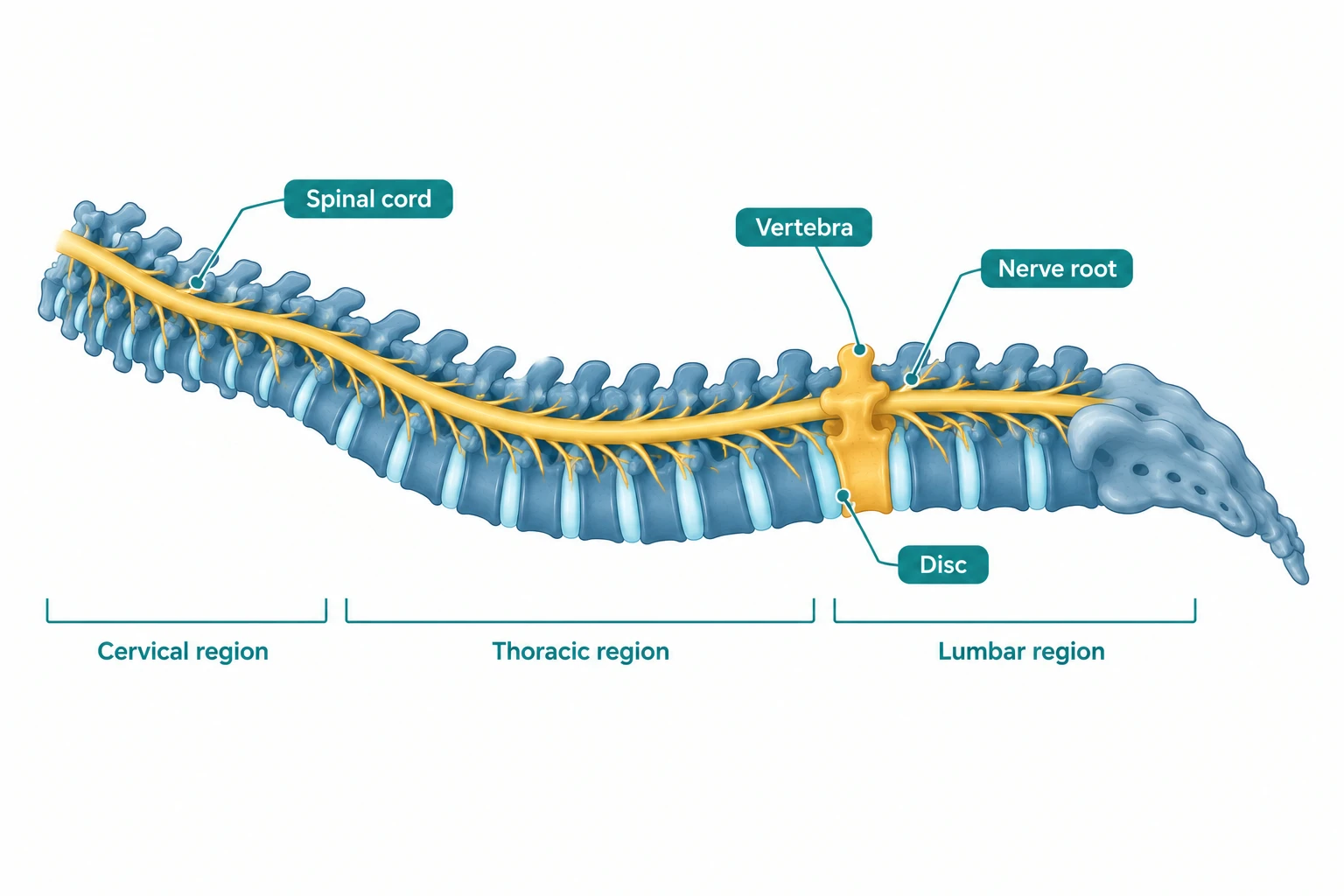
A spinal injury is any damage to the bones, discs, ligaments or spinal cord of the neck and back. A spinal cord injury is the most serious type, because the cord carries signals between the brain and the body.
- Vertebral fracture: a crack or collapse of a spine bone, with or without cord involvement
- Ligament or disc injury: can make the spine unstable
- Incomplete cord injury: some movement or feeling remains below the injury
- Complete cord injury: no movement or feeling below the injury
Not every spinal injury damages the cord, but every suspected one needs urgent assessment.
What Causes Spinal Injury?
Road traffic accidents and falls from height are the leading causes of traumatic spinal injury in India. A review of admissions at the Indian Spinal Injuries Centre from 2012 to 2022 reported road accidents at 44% and falls at 38.3%.
- Two-wheeler and car accidents
- Falls from stairs, roofs, ladders or construction sites
- Non-traumatic causes such as tumours, infection or severe canal narrowing (see our case on cervical canal stenosis with myelopathy)
Helmets, seat belts and safe working-at-height practices can reduce many of these injuries.
What Are the Symptoms of Spinal Injury?
Common symptoms include neck or back pain, numbness or tingling, weakness in the arms or legs, and loss of bladder or bowel control. The pattern depends on the level and severity of the injury.
- Pain or pressure in the neck or back, often worse with movement
- Numbness, tingling or loss of sensation
- Weakness or inability to move a limb
- Poor balance or difficulty walking
- Loss of bladder or bowel control
Symptoms can change in the hours after an injury, so do not wait to see if they settle.
What to Do After a Suspected Spinal Injury?
Keep the person still, call emergency services (112) and avoid moving the head, neck or back until trained help arrives. Moving an unstable spine can worsen the damage.
- Do not lift, sit up or twist the person
- Keep the head and neck in line with the body
- Leave a helmet in place unless trained personnel remove it
- Move to a hospital with neurosurgical and ICU facilities
Careful handling in the first minutes helps protect the spinal cord.
How Is Spinal Injury Diagnosed?
Spinal injury is diagnosed with a neurological examination and imaging, usually X-ray, CT scan and MRI. CT shows bone fractures in detail, while MRI shows the cord, discs and ligaments.
- Neurological examination: checks strength, reflexes and sensation, and grades severity using the ASIA scale
- X-ray and CT scan: show alignment and fractures quickly in emergencies
- MRI: shows cord swelling, bleeding, disc and ligament damage
Accurate imaging and examination decide whether the spine needs stabilising, observation or surgery.
Spinal Injury Treatment Options in Delhi
Spinal injury treatment includes emergency stabilisation, non-surgical care such as bracing, and surgery to relieve pressure on the cord or stabilise the spine. The plan depends on spinal stability, neurological status and overall health.
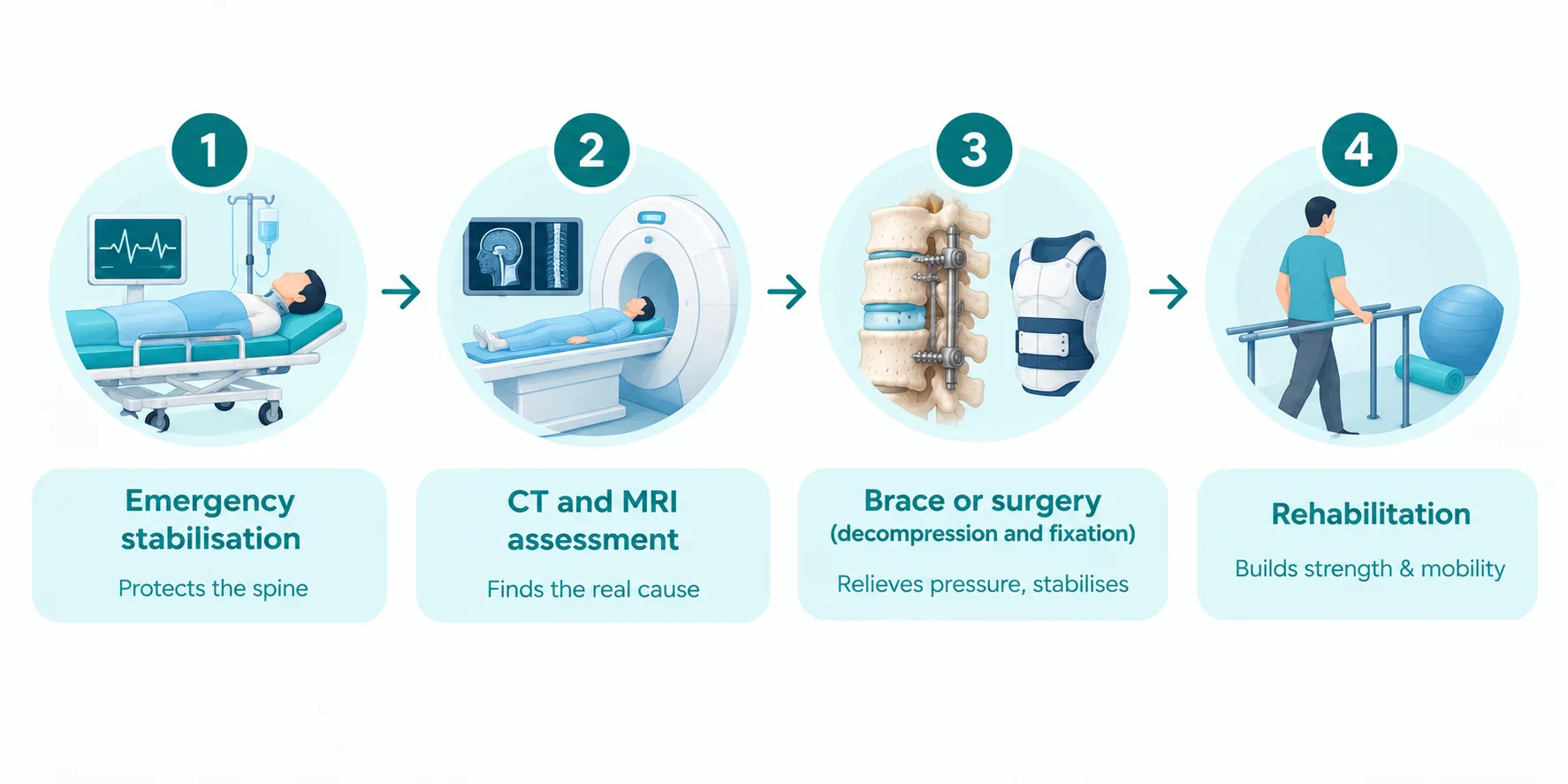
- Emergency care: immobilisation, breathing support and blood pressure support to keep the cord well supplied with blood
- Non-surgical care: collar or brace, rest and early physiotherapy for stable fractures without cord compression
- Early decompression: the AO Spine and Praxis 2024 guidelines support surgery within 24 hours of injury where the cord is compressed
- Fixation and fusion: screws and rods that stabilise an unstable spine, explained on our spinal fixation surgery and spinal fusion pages
- Level-specific surgery: cervical spine surgery or lumbar spine surgery
- Keyhole and cement-based options: minimally invasive spine surgery and vertebral augmentation for suitable compression fractures, as in this vertebroplasty case and this kyphoplasty and rod fixation case
The right option is chosen after imaging and neurological assessment, not before.
Recovery and Rehabilitation After Spinal Injury
Recovery depends on injury severity, and rehabilitation starts early and continues for months, covering physiotherapy, occupational therapy and bladder and bowel care. People with incomplete injuries often regain more function than those with complete injuries.
- Physiotherapy: strength, balance, transfers and walking training
- Occupational therapy: daily tasks and mobility aids
- Bladder and bowel care: structured routines to prevent complications
Rehabilitation works best as a team effort between surgeon, therapists and family.
Spinal Injury Treatment Cost in Delhi
The cost of spinal injury treatment in Delhi depends on whether care is non-surgical or surgical, and spine surgery in Delhi generally starts from ₹1,50,000 and rises with complexity, as detailed on our spine surgery cost in Delhi page.
- Type of treatment: brace and rehabilitation, decompression, or fixation and fusion
- Number of spinal levels involved and implants required
- ICU care and length of hospital stay
- Imaging, rehabilitation and follow-up visits
An itemised estimate is given only after your scans and reports are reviewed.
Credentials and Care Setting for Spinal Injury Treatment in Delhi
Dr. Vikas Gupta is a Senior Consultant Neurosurgeon with 30+ years of experience who treats spinal injuries at Kailash Deepak Hospital, Karkardooma, a NABH and NABL-accredited hospital with a neuro-ICU.
- 30+ years of neurosurgical experience and 5,000+ surgeries performed
- Located near Karkardooma Metro Station, accessible from East Delhi and Delhi NCR
Qualifications and training are listed on the About Dr. Vikas Gupta page.
Evaluation and Treatment Planning for Spinal Injury
A spinal injury evaluation reviews your history, neurological findings and scans to decide whether you need observation, bracing or surgery.
- Reports to carry: X-ray, CT, MRI and any discharge summary
- Discussion of options, risks, recovery and cost
For sudden weakness, numbness or loss of bladder or bowel control after an injury, go to the nearest emergency department immediately.

Dr. Vikas Gupta’s Medical Content Team
Dr. Vikas Gupta’s medical content team specialises in creating accurate, clear, and patient-focused healthcare content. With strong clinical understanding and expertise in technical writing and SEO, the team translates complex medical information into reliable, accessible resources that support informed decisions and uphold Dr. Gupta’s commitment to quality care.
This content is reviewed by Dr. Vikas Gupta
Related Conditions

Related Blogs
Cervical Canal Stenosis with Myelopathy
She Fell, Then Couldn’t Move Her Arms or Legs. Her Neck Was Silently Crushing Her…
Read Article →
Vertebroplasty for L2 Compression Fracture
Three Days of Back Pain. Then He Couldn’t Walk. His Vertebra Had Fractured. At a…
Read Article →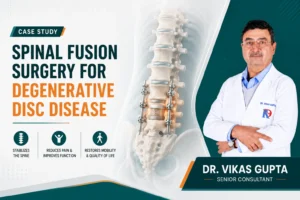
Spinal Fusion Surgery for Degenerative Disc Disease
A Fall. Six Months of Pain. His Spine Had Been Quietly Degenerating for Years. At…
Read Article →
Kyphoplasty and Rod fixation
His Back Had Been Hurting for Months. He Thought It Was Age. His Spine Was…
Read Article →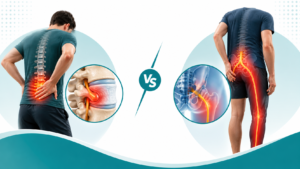
Slip Disc vs Sciatica: How to Tell the Difference
When your back starts hurting, or a sharp pain shoots down your leg, it is…
Read Article →
 WhatsApp