
Kyphoplasty and Rod fixation
Reach Out for Expert Care
His Back Had Been Hurting for Months. He Thought It Was Age. His Spine Was Quietly Fracturing.
At a Glance
| Patient | 72-year-old male |
| Complaint | Severe lower back pain; difficulty standing and walking |
| Diagnosis | Osteoporotic fractures at L2 and L4 vertebrae with endplate collapse |
| Procedure | Kyphoplasty at L2 and L4; cemented pedicle screw and rod fixation at L1-L3 |
| Outcome | Significant pain relief; mobilised with physiotherapy; wound healed well |
A 72-year-old man came in with severe lower back pain that had been making it difficult to stand, walk, or carry out basic daily activities. There had been no fall. No accident. No single moment he could point to. The pain had simply been building, and getting worse.
What the scans revealed explained everything.
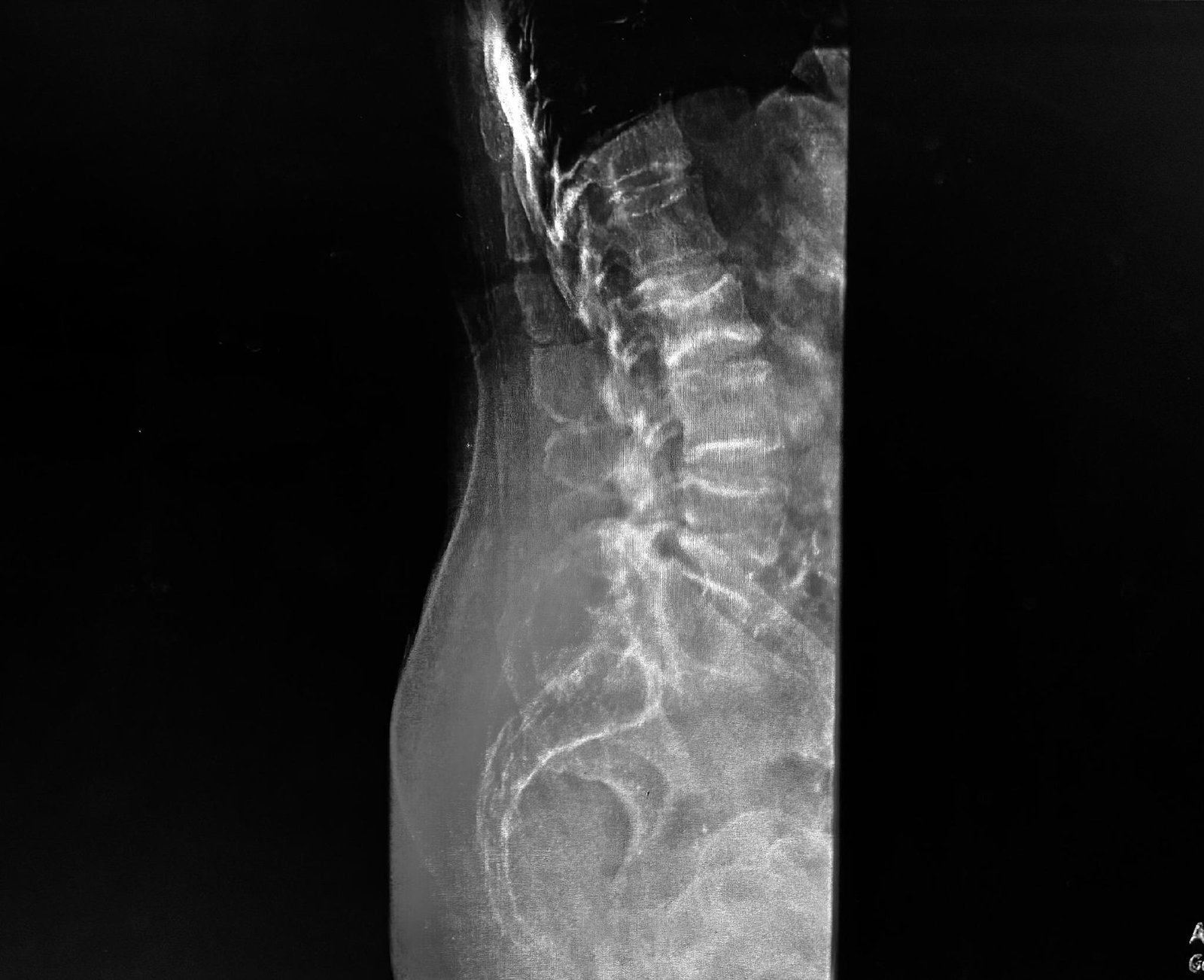
Pre-operative X-ray: X-ray on arrival showing collapsed vertebrae at L2 and L4.
What the Scans Showed?
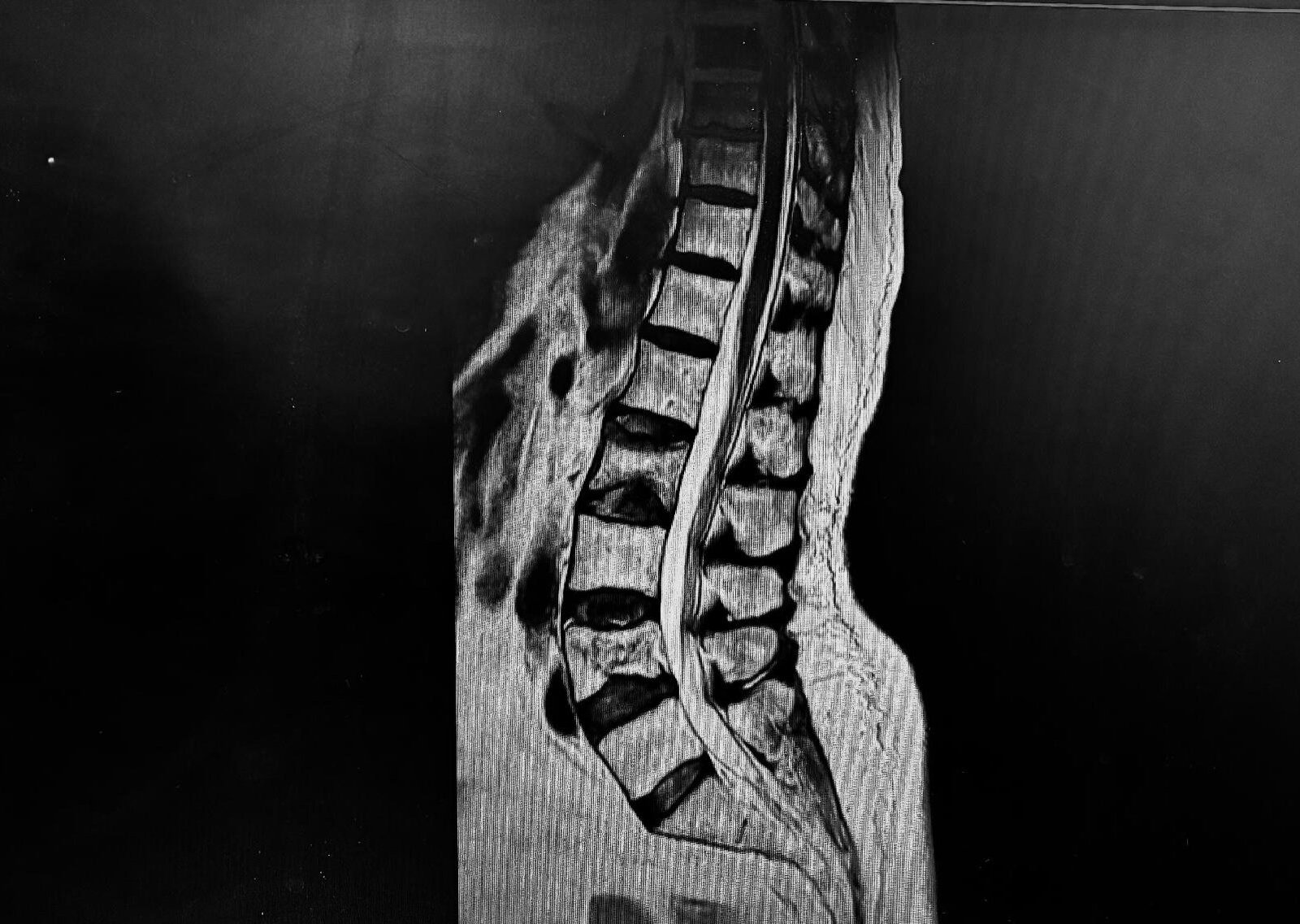
Pre-operative MRI: Showing fractured and collapsed vertebrae at L2 and L4 with endplate depression.
The MRI told the story clearly. Two vertebrae in his lower back, L2 and L4, had fractured and collapsed. Not from a fall or an accident, but because his bones had become too weak over time to hold their own shape. This is called an osteoporotic fracture: a fracture that happens silently, without any trauma, simply because the bone density has dropped low enough that even the everyday load of standing and walking is enough to cause a collapse.
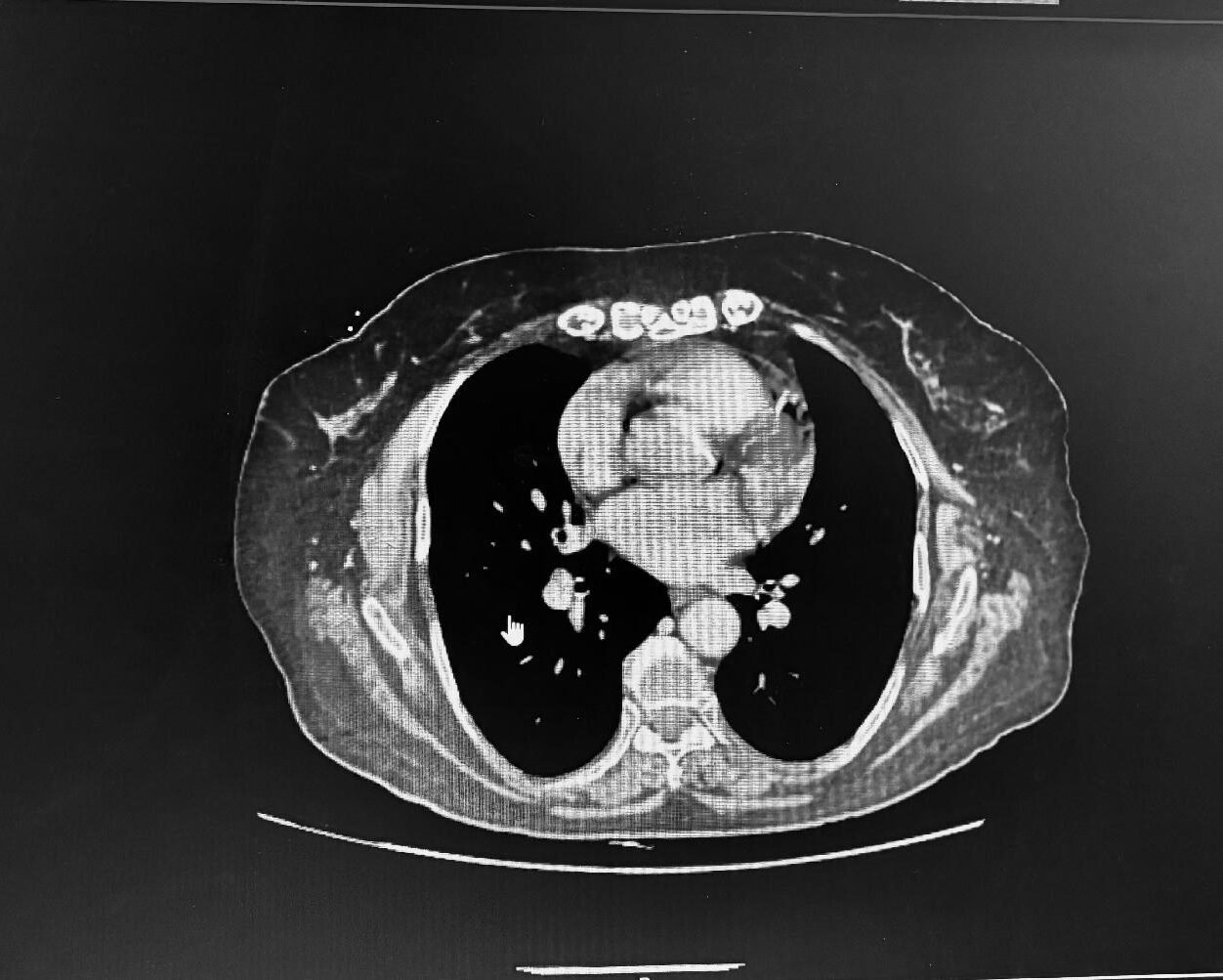
Pre-operative CT Scan: Showing the extent of vertebral collapse at L2 and L4 before surgery.
The CT scan filled in the detail, showing precisely how much each vertebra had collapsed and helping plan exactly where and how to intervene.
The Challenge
In older adults with osteoporosis, fractures can happen without any dramatic event at all. The spine bears the body’s weight every moment of every day, standing, walking, even sitting. When the bones are weak enough, that everyday load is enough to cause them to collapse inward.
At 72, this patient had two such fractures, at two separate levels of the lower spine; both were causing him severe, debilitating pain. The kind that had quietly taken away his ability to move normally and was steadily worsening with every passing week.
The goal was clear: relieve the pain, stabilise the fractured vertebrae, and protect the surrounding spine from further collapse. All in a 72-year-old patient whose bones could not be treated the same way as a younger person’s.
Procedure: What Was Done?
The surgical plan had two parts, working together.
Kyphoplasty at L2 and L4
For each fractured vertebra, Dr. Vikas Gupta performed a procedure called kyphoplasty. A small balloon was carefully inserted into the collapsed vertebra and gently inflated to restore some of its lost height. The balloon was then removed, and the space was filled with bone cement, a medical-grade material that sets firmly and stabilises the bone from within. Think of it as filling a crack in a load-bearing wall so it stops crumbling and holds its shape again. This step directly addresses the source of the pain.
Cemented Pedicle Screw and Rod Fixation
Since this patient’s bones were weakened by osteoporosis, standard screws would not have held securely enough. Instead, Dr. Vikas Gupta used cemented pedicle screws, screws reinforced with bone cement to give them a far stronger grip in soft, osteoporotic bone. These screws were placed into the vertebrae surrounding the fractures and connected by rods on either side of the spine, locking the segment in stable alignment and preventing further movement or collapse at the fracture levels.
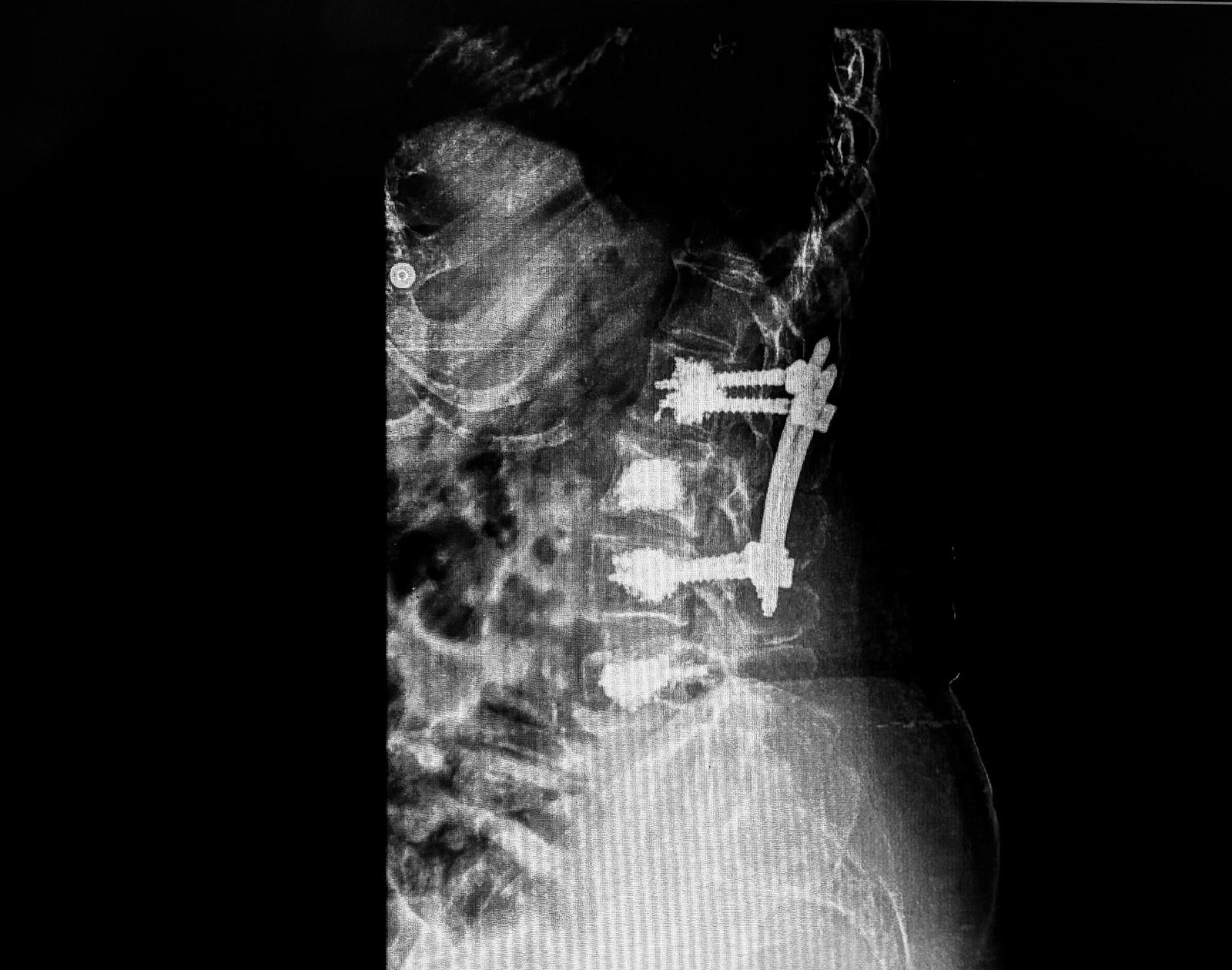
Post-operative X-ray: Confirming cemented screw and rod fixation with kyphoplasty at L2 and L4.
Outcome
Following surgery, the patient experienced significant pain relief. He was started on physiotherapy and guided mobilisation, progressing gradually from supported movement to independent walking. At follow-up, his wound was healthy, and stitches were removed without any complications.
For a 72-year-old who had come in barely able to stand, the ability to move again, without the constant, grinding pain, was a meaningful and life-changing recovery.
Why This Case Matters?
Back pain in older adults is often dismissed by families, and sometimes by patients themselves, as a normal part of getting older. This case is a reminder that persistent, worsening back pain in an elderly person deserves proper investigation, not just pain medication and rest.
A spinal fracture does not always announce itself with a fall. In someone with osteoporosis, it can happen silently, and the only sign may be pain that keeps getting worse, a posture that becomes increasingly stooped, or a growing difficulty with standing and walking.
The good news is that osteoporotic spinal fractures are treatable. Kyphoplasty is a well-established, minimally invasive procedure that can relieve pain and restore stability, even in elderly patients, with a good safety profile and meaningful recovery.
If an elderly parent or family member has been complaining of persistent back pain or increasing difficulty standing, it is worth getting a proper evaluation. It may not be just age.
If someone in your family is experiencing persistent back pain or has been diagnosed with osteoporosis, early evaluation can prevent further fractures and serious complications. Explore Spine Surgery or book a consultation with Dr. Vikas Gupta.
This case study is published for educational and awareness purposes only. It does not constitute medical advice.

 WhatsApp