
Brain Haemorrhage Treatment in Delhi
A brain Haemorrhage, also called a brain bleed, is a medical emergency that occurs when a blood vessel inside or around the brain ruptures and bleeds into the surrounding tissue. The leaked blood puts dangerous pressure on brain cells, disrupting their function and causing rapid damage. Without prompt, expert treatment, the consequences can be life-altering or fatal.
Despite being a critical condition, brain Haemorrhages are treatable. With early diagnosis, the right surgical approach, and expert neurological care, many patients make meaningful recoveries and return to normal life.
Dr. Vikas Gupta, Senior Consultant Neurosurgeon and Neurointerventional Specialist at Kailash Deepak Hospital, Karkardooma, has over 30 years of experience managing complex brain bleeding emergencies. He combines microsurgical precision with advanced interventional techniques to deliver the best possible outcomes for patients across Delhi NCR.
Reach Out for Expert Care
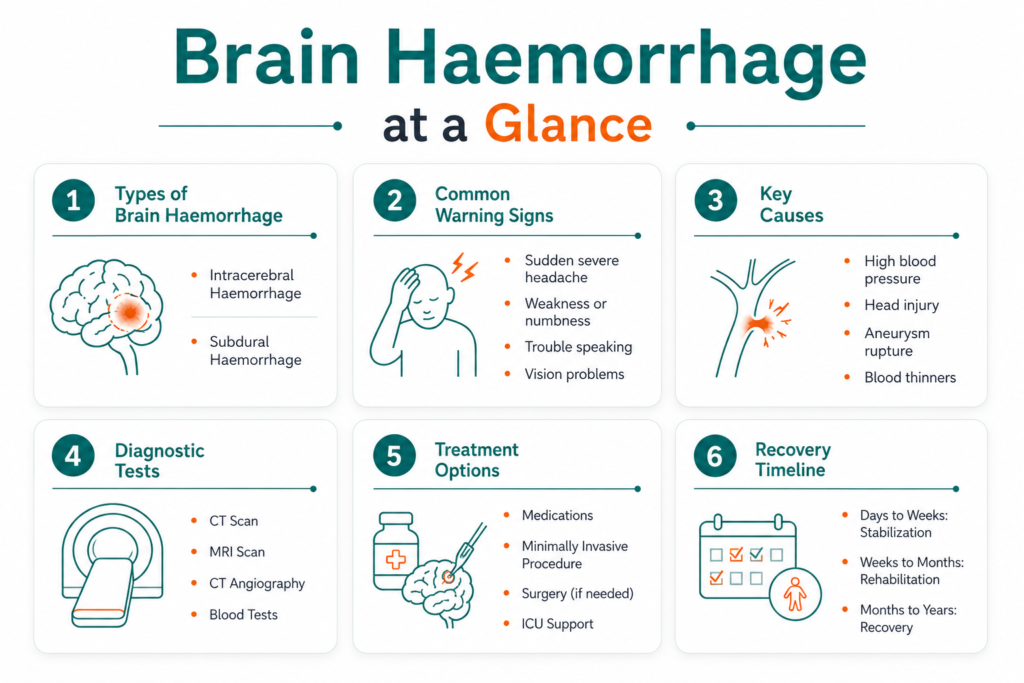
What is a Brain Haemorrhage and its types?
A brain Haemorrhage is not a single condition; it refers to any bleeding that occurs within or around the brain. Understanding the brain Haemorrhage type helps determine the right treatment urgently.
The main types of brain Haemorrhage include:
- Intracerebral Haemorrhage (ICH): Bleeding directly within the brain tissue, most commonly caused by uncontrolled high blood pressure. This is the most common type seen in adults in India.
- Subarachnoid Haemorrhage (SAH): Bleeding in the space between the brain and its protective covering (subarachnoid space), often caused by a ruptured brain aneurysm. This type causes the classic “thunderclap headache.”
- Subdural Haemorrhage: Bleeding between the brain and its outer covering (dura), usually after a head injury.
- Epidural Haemorrhage: Bleeding between the skull and the dura, typically following trauma and a skull fracture.
- Intraventricular Haemorrhage: Bleeding that extends into the brain’s fluid-filled ventricles, which can block normal cerebrospinal fluid flow and lead to hydrocephalus.
Each type carries different risks and requires a different management strategy. Accurate classification through imaging is the first step in saving lives.
Causes of Brain Haemorrhage
A brain Haemorrhage occurs when a blood vessel in or around the brain is weakened, damaged, or under excessive pressure, and eventually ruptures. The most common and important brain Haemorrhage causes are:
- High Blood Pressure (Hypertension): Chronically elevated blood pressure is the single leading cause of intracerebral Haemorrhage. Over time, it weakens small arterial walls deep in the brain, making them prone to rupture, often without warning.
- Brain Aneurysm Rupture: A brain aneurysm is a balloon-like bulge in a blood vessel wall. When it bursts, it causes a sudden, severe subarachnoid Haemorrhage. Learn more about brain aneurysm treatment.
- Brain AVM (Arteriovenous Malformation): Abnormal tangles of blood vessels that bypass the normal capillary system can rupture, causing Haemorrhage. Brain AVMs are a common cause of Haemorrhage in younger patients.
- Head Trauma: Injuries from accidents, falls, or blows to the head are a leading cause of subdural and epidural Haemorrhages.
- Blood Thinners and Clotting Disorders: Patients on anticoagulant medications (like warfarin) or those with blood disorders such as haemophilia have a significantly higher risk of brain bleeding.
- Carotid Artery Disease and Stroke: Severe carotid artery disease can predispose certain patients to haemorrhagic complications.
Other causes include liver disease, cocaine or stimulant misuse, brain tumours, and, in rare cases, genetic vascular conditions.
Warning Signs of a Brain Haemorrhage
A brain Haemorrhage often strikes suddenly and progresses rapidly. Recognising the brain haemorrhage warning signs and acting fast can be the difference between full recovery and permanent disability.
Call emergency services immediately if you or someone nearby experiences:
- A sudden, extremely severe headache, often described as “the worst headache of my life”
- Sudden confusion, slurred speech, or difficulty understanding language
- Weakness or numbness on one side of the face, arm, or leg
- Loss of vision in one or both eyes
- Sudden loss of balance or inability to walk
- Nausea and vomiting with a severe headache
- Seizures with no prior history of epilepsy
- Loss of consciousness or unresponsiveness
Do not wait for symptoms to worsen. Brain tissue dies rapidly when deprived of oxygen; every minute matters.
Brain Haemorrhage Diagnosis
Brain Haemorrhage is diagnosed using a combination of neurological examination and advanced imaging. Since symptoms can mimic a stroke, accurate and rapid diagnosis is critical.
When a patient arrives with suspected brain Haemorrhage, the following diagnostic steps are followed:
- CT Scan (Computed Tomography): This is the first-line emergency investigation. A non-contrast CT scan can detect bleeding within minutes of the event and identify the location, size, and type of Haemorrhage. It is available around the clock at Kailash Deepak Hospital, Delhi.
- MRI (Magnetic Resonance Imaging): Provides more detailed imaging of brain tissue, useful for identifying the underlying cause of the bleed (such as a tumour, AVM, or cavernoma) and assessing the extent of damage.
- CT Angiography or MR Angiography: Examines the blood vessels to detect aneurysms, AVMs, or vascular malformations that may have caused the bleeding.
- Digital Subtraction Angiography (DSA): The gold-standard test for evaluating vascular abnormalities. It gives the most precise mapping of blood vessels and is essential for planning endovascular treatment.
- Blood Tests: To assess clotting function, platelet counts, and identify blood disorders or medication effects that may have contributed to the Haemorrhage.
Brain Haemorrhage Treatment in Delhi – What Are Your Options?
Brain Haemorrhage treatment options depend on the type and location of the bleed, its cause, the patient’s age and overall health, and the speed of presentation. Dr. Vikas Gupta evaluates every case individually and recommends the safest, most effective course of treatment.
Emergency Stabilisation
Regardless of the Haemorrhage type, the first priority is stabilising the patient, controlling blood pressure, managing airway and breathing, reversing blood thinners if applicable, and reducing dangerous pressure inside the skull (raised intracranial pressure or ICP).
Brain Haemorrhage Surgery – When Is It Needed?
Brain Haemorrhage surgery is recommended when there is a large or expanding blood clot, raised intracranial pressure, or a treatable underlying cause such as an aneurysm or AVM.
- Craniotomy for Clot Evacuation: A small section of the skull is temporarily removed to allow the surgeon to directly access and remove the accumulated blood clot, relieving pressure on the brain. This is the most common surgical approach for large intracerebral or subdural Haemorrhages. Learn more about craniotomy surgery in Delhi.
- Surgical Clipping for Aneurysms: If the Haemorrhage was caused by a ruptured brain aneurysm, surgical clipping is used to seal the aneurysm and prevent rebleeding.
- Endovascular Coiling: A minimally invasive catheter-based technique used to treat aneurysms causing subarachnoid Haemorrhage without open surgery. A coil is placed inside the aneurysm to prevent blood from flowing into it.
- VP Shunt Surgery: If the Haemorrhage leads to hydrocephalus (a build-up of fluid in the brain), a VP shunt may be placed to drain excess fluid and relieve pressure.
- Endovascular Treatment for AVMs: If an AVM caused the bleed, endovascular embolisation or embolisation for brain conditions may be recommended as part of a comprehensive treatment plan.
Non-Surgical Management
Not all brain Haemorrhages require surgery. Small, stable bleeds in non-critical areas may be managed conservatively with:
- Strict blood pressure control medications
- Anti-seizure medications (if seizures are present)
- Reversal agents for blood thinners
- Corticosteroids to reduce brain swelling
- Close neurological monitoring in the ICU
Brain Haemorrhage Surgery Success Rate in India
The success rate of Brain Haemorrhage surgery depends significantly on several factors: the type and size of the Haemorrhage, how quickly the patient receives treatment, the patient’s age and overall health, and the neurosurgeon’s expertise.
For surgically treated intracerebral Haemorrhage, outcomes are strongly linked to the Glasgow Coma Scale (GCS) score on admission and the volume of the bleed. Small-to-moderate Haemorrhages treated promptly by experienced neurosurgeons in well-equipped centres have good outcomes, with many patients achieving independent function. For subarachnoid Haemorrhage due to aneurysm rupture, early surgical or endovascular intervention significantly reduces the risk of rebleeding, which is the most dangerous early complication.
At Dr. Vikas Gupta’s practice, the focus is on rapid diagnosis, emergency-ready surgical teams, and personalised post-operative care to maximise recovery for every patient.
Brain Haemorrhage Recovery Time – What to Expect?
Brain Haemorrhage recovery time varies widely from person to person and depends on the severity of the bleed, the area of the brain affected, and the treatment received.
General Recovery Timeline:
- Acute Phase (Days 1-7): The patient is typically in the neuro ICU for monitoring, blood pressure control, and prevention of complications such as rebleeding or seizures.
- Sub-Acute Phase (Weeks 2-6): If surgery was performed, hospital discharge usually occurs within 7-14 days for stable patients. Physical and neurological recovery begins.
- Rehabilitation Phase (Weeks 6 – Months 6+): This is the most variable phase. Many patients require physiotherapy for weakness, speech therapy for communication difficulties, and occupational therapy for daily activities.
- Long-Term Recovery (6 Months – 2 Years): The brain continues to adapt and heal. Significant functional improvements are possible even up to 2 years after the event, particularly with consistent rehabilitation.
Factors that improve recovery include: early and aggressive treatment, younger age, smaller bleed size, good pre-existing health, and active participation in rehabilitation.
Patients are followed up regularly at Dr. Vikas Gupta’s clinic with repeat imaging and neurological assessments to track recovery progress.
Brain Haemorrhage Surgery Cost in Delhi
Brain Haemorrhage surgery cost in Delhi varies from ₹1,50,000 to ₹6,00,000 depending on the type of surgery required, the case complexity, and the length of ICU and hospital stay.
General Cost Range for Brain Haemorrhage Treatment in Delhi:
| Treatment Type | Approximate Cost Range |
| Craniotomy for Clot Evacuation | ₹2,50,000 – ₹5,00,000 |
| Endovascular Coiling (Aneurysm) | ₹3,50,000 – ₹6,00,000 |
| Surgical Clipping (Aneurysm) | ₹3,00,000 – ₹5,50,000 |
| VP Shunt Surgery | ₹1,50,000 – ₹3,00,000 |
| Emergency ICU Stay (per day) | ₹8,000 – ₹20,000 |
Factors that influence the total cost:
- Type and complexity of the surgical procedure
- ICU duration and level of monitoring required
- Implant or device costs (coils, shunts, clips)
- Advanced diagnostic imaging (CT, MRI, DSA)
- Post-operative rehabilitation requirements
- Length of hospital stay
All costs are discussed transparently during the consultation. Dr. Vikas Gupta’s team assists families in understanding treatment costs and navigating insurance or cashless hospitalisation where applicable.
Why Patients Trust Dr. Vikas Gupta for Brain Haemorrhage Treatment
Choosing the right neurosurgeon during a brain Haemorrhage emergency is one of the most critical decisions a family will make. Patients from East Delhi, Delhi NCR, and neighbouring states choose Dr. Vikas Gupta because:
- 30+ Years of Neurosurgical Experience in both elective and emergency brain conditions
- Expert in Microsurgery & Endovascular Techniques, offering both surgical and minimally invasive options
- Emergency Availability; rapid assessment and surgical intervention when time is critical
- Personalised Treatment Plans; no one-size-fits-all approach; every case is evaluated individually
- Transparent Communication; families are guided clearly through diagnosis, treatment, and recovery expectations
- Strong Track Record in managing ruptured aneurysms, hypertensive ICH, AVM bleeds, and traumatic Haemorrhages
- Trusted neuro care for patients from Karkardooma, East Delhi, and Delhi NCR.
Book a Consultation for Brain Haemorrhage Treatment in Delhi
A brain Haemorrhage is a time-sensitive emergency. If you or a loved one is experiencing sudden, severe headache, weakness, confusion, or loss of consciousness, seek emergency care immediately.
For non-emergency evaluations, follow-up care, or second opinions, you can schedule a consultation with Dr. Vikas Gupta.
During your consultation:
- Full review of imaging reports (CT, MRI, DSA)
- Neurological examination and risk assessment
- Clear explanation of the bleeding type and cause
- Treatment options, expected outcomes, and realistic recovery timeline
- Transparent discussion of brain Haemorrhage surgery costs
Early intervention saves lives and improves long-term recovery outcomes. Don’t delay.
Frequently Asked Questions
What is the first sign of a brain Haemorrhage? expand_more
The most common first sign is a sudden, extremely severe headache, often described as the worst headache of your life, sometimes accompanied by nausea, vomiting, or sudden confusion. Any sudden neurological symptom warrants immediate emergency evaluation.
Can a person fully recover from a brain Haemorrhage? expand_more
Full or near-complete recovery is possible, especially for small bleeds treated promptly. Recovery depends on the Haemorrhage location, size, time to treatment, and the patient's age and overall health. Many patients regain significant function through structured rehabilitation.
Is brain Haemorrhage the same as a stroke? expand_more
A haemorrhagic stroke is a type of stroke caused by bleeding in the brain, so yes, a brain Haemorrhage can cause a stroke. However, not all strokes are caused by bleeding; ischemic stroke (caused by a clot) is more common.
How can I book an appointment with Dr. Vikas Gupta? expand_more
You can book an appointment with Dr. Vikas Gupta by contacting Neurological Hall or Kailash Deepak Hospital, Karkardooma, directly, or using their online appointment booking facilities
How can I book an appointment at Kailash Deepak Hospital? expand_more
You can book an appointment at Kailash Deepak Hospital by calling the hospital reception directly or using the online appointment booking facility on the hospital's website

Dr. Vikas Gupta’s Medical Content Team
Dr. Vikas Gupta’s medical content team specialises in creating accurate, clear, and patient-focused healthcare content. With strong clinical understanding and expertise in technical writing and SEO, the team translates complex medical information into reliable, accessible resources that support informed decisions and uphold Dr. Gupta’s commitment to quality care.
This content is reviewed by Dr. Vikas Gupta

Related Blogs
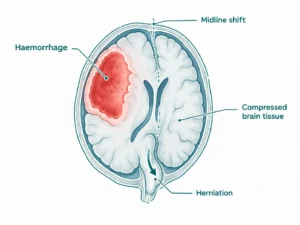
Decompressive Hemicraniectomy for Sudden Brain Haemorrhage in a Young Patient
She Was 28. No Health Issues. Then Without Warning: She Collapsed. At a Glance Patient…
Read Article →
Brain Surgery in Delhi: A Patient Guide for 2026
Being told you or a loved one may need brain surgery is one of the…
Read Article →
 WhatsApp