
Alzheimer’s Treatment in Delhi
Alzheimer’s disease is the most common form of dementia, a progressive brain condition that slowly affects memory, thinking, behaviour, and the ability to carry out everyday tasks. It is not a normal part of ageing, and while it cannot currently be reversed, early diagnosis and the right treatment for Alzheimer’s disease can significantly slow its progression, protect quality of life, and provide meaningful support to both the patient and their family.
Dr. Vikas Gupta, Senior Consultant Neurosurgeon and Neurointerventional at Kailash Deepak Hospital with over 30 years of experience, provides comprehensive Alzheimer’s disease diagnosis and treatment, combining the latest pharmacological approaches with individualised, patient-centred care.
Families from across East Delhi and Delhi NCR seek his expertise for trusted, long-term neurological management of dementia.
Reach Out for Expert Care
What is Alzheimer’s Disease?
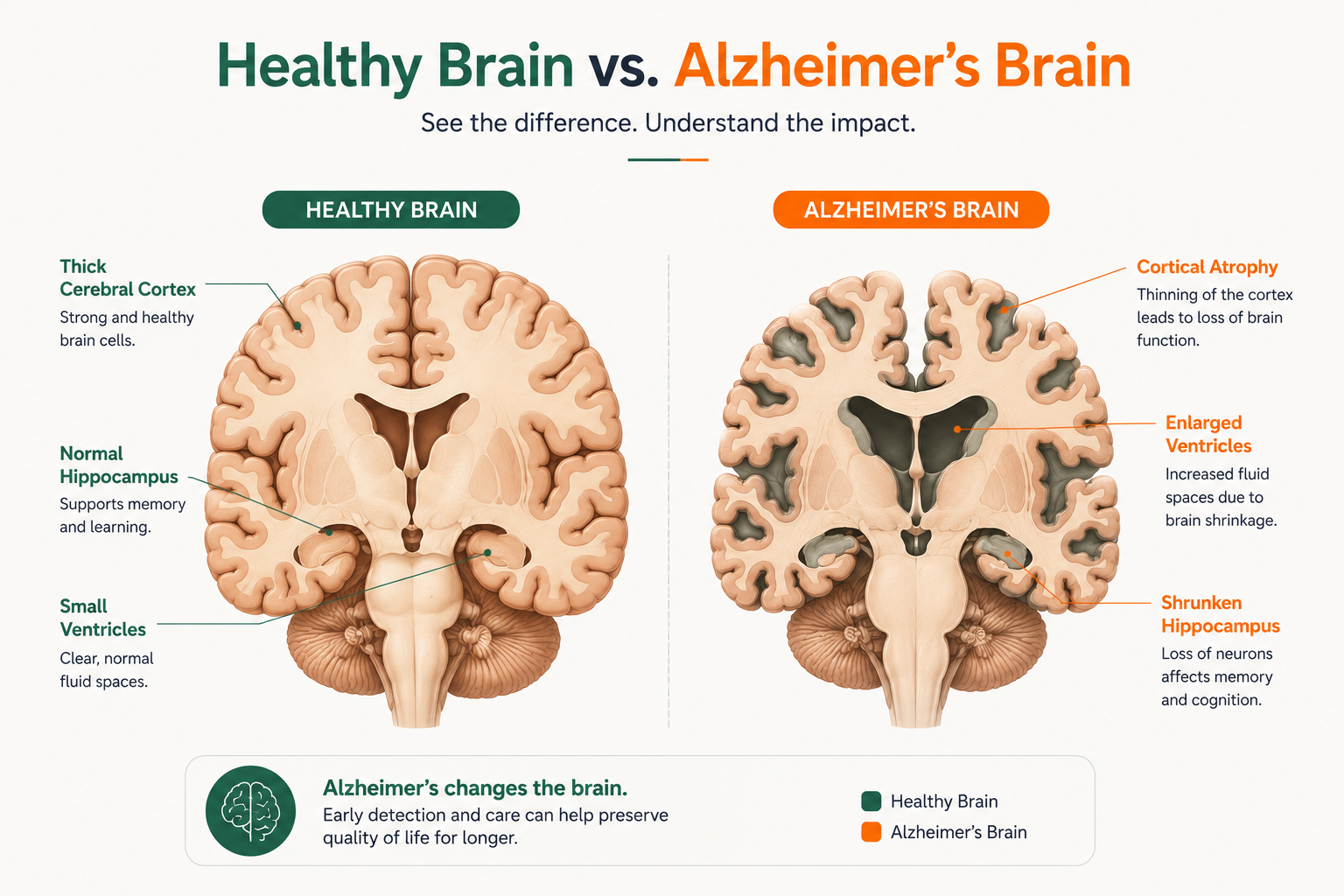
Alzheimer’s disease is a neurodegenerative condition in which abnormal protein deposits, primarily amyloid plaques and tau tangles, build up in the brain, damaging nerve cells and disrupting communication between different brain regions. Over time, this leads to progressive loss of memory, reasoning, language, and independent function.
Alzheimer’s disease accounts for approximately 60-70% of all dementia cases globally. In India, the number of people living with dementia is estimated to be over 8.8 million, and this figure is projected to rise significantly in the coming decades. Despite its growing prevalence, many families in Delhi and across India continue to mistake early symptoms as a normal part of old age, leading to delays in diagnosis and treatment.
Early evaluation by a specialist is essential, the sooner Alzheimer’s disease is identified, the more effectively its progression can be managed.
Causes of Alzheimer’s Disease
Alzheimer’s disease has no single identifiable cause. It results from a combination of genetic, biological, and environmental factors that damage brain cells over time.
Key Contributing Factors:
- Abnormal protein accumulation: Build-up of amyloid-beta plaques and tau tangles disrupts normal brain cell function and communication.
- Age: The risk of Alzheimer’s increases significantly after the age of 65, though early-onset forms can appear in the 40s and 50s.
- Genetics: A family history of Alzheimer’s or carrying the APOE-e4 gene variant can increase susceptibility, though it does not guarantee the disease will develop.
- Cardiovascular risk factors: High blood pressure, diabetes, high cholesterol, and obesity have been linked to an increased risk of Alzheimer’s and vascular dementia.
- Head injury history: Repeated or severe traumatic brain injuries may increase long-term risk.
- Lifestyle factors: Physical inactivity, social isolation, smoking, and poor sleep have been associated with higher dementia risk.
It is important to understand that Alzheimer’s is not caused by any single factor, and many people with risk factors never develop the condition.
Early Warning Signs and Symptoms of Alzheimer’s Disease
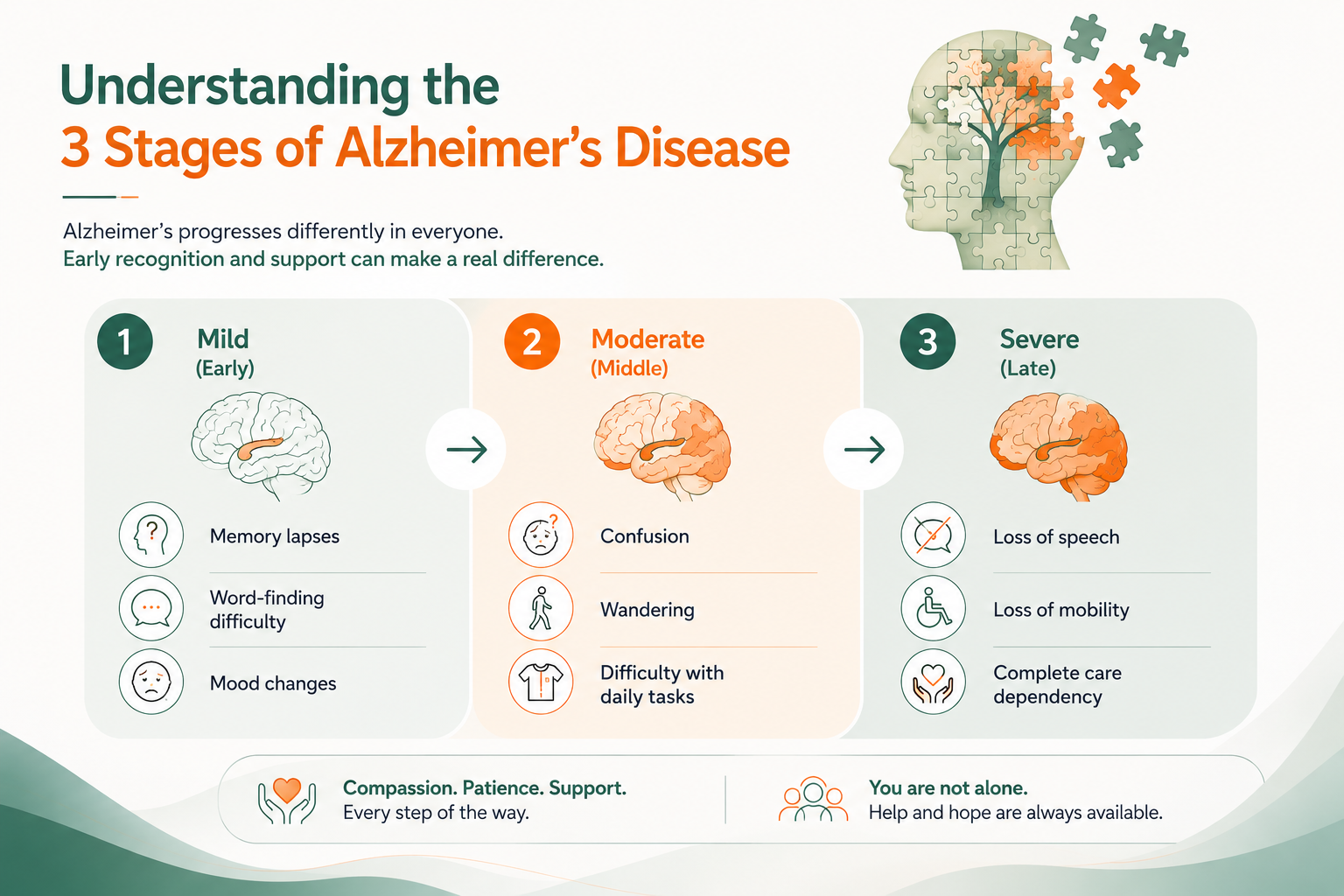
Alzheimer’s disease progresses through stages, and recognising the early warning signs is one of the most important steps a family can take. Symptoms typically worsen gradually over months and years.
Common Alzheimer’s Symptoms to Watch For:
- Forgetting recent conversations, events, or names of familiar people
- Asking the same questions repeatedly
- Getting confused about dates, times, or familiar places
- Difficulty finding the right words during conversation
- Poor judgement or difficulty making decisions
- Misplacing objects and being unable to retrace steps
- Withdrawal from social activities, hobbies, or family interactions
- Changes in mood or personality, increased anxiety, suspicion, or depression
- Difficulty with familiar tasks such as cooking, managing finances, or driving
In later stages, symptoms may include significant memory loss, difficulty walking, swallowing, and eventually, complete dependence on caregivers.
How is Alzheimer’s Disease Diagnosed?
Alzheimer’s disease diagnosis and treatment planning begins with a thorough evaluation. There is no single test for Alzheimer’s, diagnosis is based on a combination of clinical assessment, cognitive testing, and imaging.
Diagnostic Steps Include:
- Detailed Medical and Family History: Understanding symptom onset, duration, medical conditions, and any family history of dementia.
- Neurological Examination: Assessment of reflexes, coordination, memory, and language function.
- Cognitive and Memory Tests: Standardised tools such as the Mini-Mental State Examination (MMSE) and Montreal Cognitive Assessment (MoCA) to evaluate cognitive function.
- MRI of the Brain: Identifies brain volume loss (atrophy), rules out other causes such as brain tumours, stroke, or hydrocephalus, and helps assess the degree of neurodegeneration.
- CT Scan: Useful for quickly identifying structural changes, bleeding, or other neurological conditions that may mimic dementia.
- Blood Tests: Rule out reversible causes of memory loss, such as thyroid disorders, vitamin B12 deficiency, or infections.
- PET Scan (where available): Advanced imaging can detect amyloid plaques and assess metabolic activity in the brain.
An accurate and early diagnosis is the cornerstone of effective Alzheimer’s disease treatment and care planning.
Alzheimer’s Disease Treatment Options in Delhi
Alzheimer’s disease treatment in India focuses on two main goals: managing symptoms to preserve quality of life, and where possible, slowing the progression of the disease. Treatment is always personalised based on the stage of the disease, the patient’s overall health, and the specific challenges faced by the family.
1. Cholinesterase Inhibitors (For Mild to Moderate Alzheimer’s)
Cholinesterase inhibitors are the most widely used drugs in the treatment of Alzheimer’s disease. These medications work by preventing the breakdown of acetylcholine, a chemical messenger involved in memory and learning, thereby improving communication between brain cells.
Commonly prescribed drugs:
- Donepezil (Aricept): Approved for all stages of Alzheimer’s; once-daily dosing.
- Rivastigmine (Exelon): Available as tablet and skin patch; commonly used for mild to moderate disease.
- Galantamine (Razadyne): Helps with memory and daily function in early to moderate stages.
These drugs do not cure or stop Alzheimer’s, but they can help stabilise symptoms, improve memory function, and reduce the burden on caregivers for a significant period.
2. Memantine (For Moderate to Severe Alzheimer’s)
Memantine is an NMDA receptor antagonist, a different class of drug used for the treatment of Alzheimer’s disease in its more advanced stages. It works by regulating glutamate activity in the brain, which helps protect nerve cells from damage.
Memantine can be safely combined with cholinesterase inhibitors for patients with moderate to severe disease, providing additional symptom control.
3. Management of Behavioural and Psychological Symptoms
Many patients with Alzheimer’s experience behavioural challenges, agitation, sleep disturbances, depression, anxiety, and hallucinations. These symptoms significantly impact both the patient and their family.
Treatment may include:
- Low-dose antidepressants or anti-anxiety medications
- Sleep management strategies and, where appropriate, medication
- Non-pharmacological approaches, music therapy, structured routines, and a calm, familiar environment
- In 2026, new non-antipsychotic options for managing Alzheimer’s-related agitation are emerging globally, offering additional safer tools for managing these difficult symptoms.
4. Recent Advances in Treatment of Alzheimer’s Disease
One of the most important developments in recent years has been the global approval of anti-amyloid monoclonal antibody therapies, lecanemab (Leqembi) and donanemab (Kisunla), which are the first treatments designed to directly target the underlying amyloid pathology of Alzheimer’s disease.
These represent a major milestone in the field of Alzheimer’s treatment. As of 2025, these treatments have been approved in over 45 countries including the USA, UK, EU, China, and Japan. Their availability and applicability in India continue to evolve, and patients should discuss eligibility with a specialist.
Additionally, ongoing research into non-invasive brain stimulation, focused ultrasound, and cognitive rehabilitation continues to expand the horizon of Alzheimer’s care.
Holistic and Non-Pharmacological Support for Alzheimer’s
Medication is only part of Alzheimer’s care. A comprehensive management plan includes:
- Cognitive Stimulation Therapy: Engaging activities, puzzles, memory games, storytelling, to keep the brain active.
- Physiotherapy: Maintaining physical mobility and reducing fall risk.
- Occupational Therapy: Adapting the home environment and daily routines to support independence for as long as possible.
- Speech and Language Therapy: Addressing communication difficulties as the disease progresses.
- Caregiver Education and Support: Families play a central role in Alzheimer’s care. Guidance on safe communication, daily routine management, managing wandering, and preventing caregiver burnout is an essential part of the care plan.
- Nutrition and Lifestyle Guidance: Balanced diet, regular physical activity, and social engagement have been shown to support brain health.
Related reading: Sleep Disorders and Dementia; poor sleep quality can worsen cognitive decline and should be addressed as part of Alzheimer’s management.
Alzheimer’s Treatment Cost in Delhi
The cost of Alzheimer’s disease treatment in Delhi varies depending on the stage of the disease, the medications prescribed, the frequency of follow-up consultations, and any additional therapies required. Key cost-influencing factors include:
- Initial diagnostic workup (MRI, cognitive tests, blood investigations)
- Type and duration of medication prescribed
- Frequency of neurological follow-up appointments
- Allied health therapies (physiotherapy, occupational therapy, speech therapy)
- Caregiver support and training programmes
A personalised consultation with Dr. Vikas Gupta will provide a clear understanding of the expected care pathway and associated costs for your family’s specific situation.
Why Families Trust Dr. Vikas Gupta for Alzheimer’s Care in Delhi?
Choosing the right specialist for Alzheimer’s disease diagnosis and treatment is one of the most important decisions a family will make. Patients and families across East Delhi and Delhi NCR trust Dr. Vikas Gupta for:
- 30+ Years of Neurological and Neurosurgical Experience
- Comprehensive, Stage-Based Alzheimer’s Disease Treatment Planning
- Access to Advanced Neuroimaging; MRI, CT, and Cognitive Assessment
- Integration of Both Pharmacological and Non-Pharmacological Approaches
- Compassionate Communication with Patients and Families
- Trusted Name Across Delhi NCR for Complex Neurological Conditions
Whether you are seeking an initial evaluation for a family member showing early memory changes, or need ongoing management for a loved one with established Alzheimer’s, Dr. Vikas Gupta provides expert, long-term neurological care.
Book a Consultation for Alzheimer’s Treatment in Delhi
If you or a loved one is experiencing memory loss, confusion, or behavioural changes, do not wait. Early evaluation is the single most important step in Alzheimer’s disease management; the earlier the diagnosis, the more effective the treatment.
During your consultation with Dr. Vikas Gupta, you can expect:
- A detailed review of symptoms, medical history, and family background
- Thorough neurological and cognitive examination
- Assessment of existing MRI, CT, or blood test reports
- Clear explanation of the diagnosis and disease stage
- A personalised Alzheimer’s treatment plan
- Guidance on medication options, therapy, and caregiver support
- Transparent discussion of costs and follow-up requirements
Early intervention saves lives and improves long-term recovery outcomes. Don’t delay.
Frequently Asked Questions
What is the best Alzheimer's disease treatment in India? expand_more
The most widely used Alzheimer's disease treatment in India includes cholinesterase inhibitors such as donepezil, rivastigmine, and galantamine for mild to moderate stages, and memantine.
Can Alzheimer's disease be cured? expand_more
Currently, there is no cure for Alzheimer's disease. However, available treatments can significantly slow its progression, manage symptoms, and improve quality of life for both the patient and their family.
At what age does Alzheimer's disease typically begin? expand_more
Most cases of Alzheimer's disease occur in people over the age of 65 (late-onset). However, early-onset Alzheimer's can develop in people in their 40s or 50s, though this is less common. Age is the greatest known risk factor.
How can I book an appointment with Dr. Vikas Gupta? expand_more
You can book an appointment with Dr. Vikas Gupta by contacting Neurological Hall or Kailash Deepak Hospital, Karkardooma, directly, or using their online appointment booking facilities.
How can I book an appointment at Kailash Deepak Hospital? expand_more
You can book an appointment at Kailash Deepak Hospital by calling the hospital reception directly or using the online appointment booking facility on the hospital's website.

Dr. Vikas Gupta’s Medical Content Team
Dr. Vikas Gupta’s medical content team specialises in creating accurate, clear, and patient-focused healthcare content. With strong clinical understanding and expertise in technical writing and SEO, the team translates complex medical information into reliable, accessible resources that support informed decisions and uphold Dr. Gupta’s commitment to quality care.
This content is reviewed by Dr. Vikas Gupta
Related Blogs
 WhatsApp