
Carpal Tunnel Syndrome Treatment in Delhi
Do your fingers go numb while typing, scrolling your phone, or driving? Does your hand feel weak, or do you wake up at night shaking it to get the tingling to stop? These are classic signs of carpal tunnel syndrome, one of the most common nerve compression disorders affecting the hand and wrist.
Dr. Vikas Gupta, Senior Consultant Neurosurgeon at Kailash Deepak Hospital, Karkardooma, brings over 30 years of neurosurgical experience to the diagnosis and treatment of nerve compression conditions, including carpal tunnel syndrome. Carpal Tunnel Syndrome treatment in Delhi is planned individually, ranging from conservative management to minimally invasive carpal tunnel release surgery, depending on severity.
Reach Out for Expert Care
What Is Carpal Tunnel Syndrome?
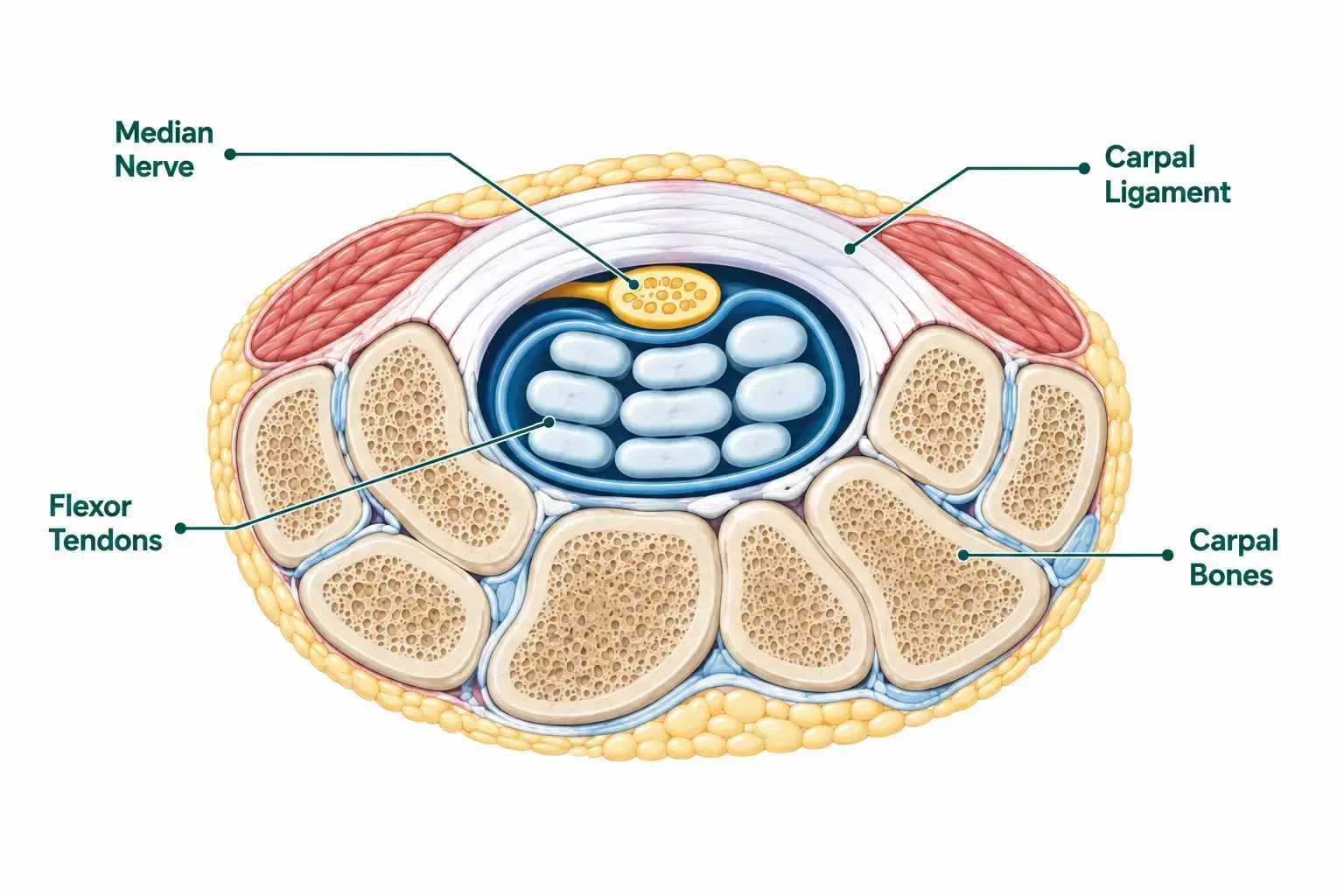
Carpal tunnel syndrome occurs when the median nerve, which runs through a narrow passage in the wrist called the carpal tunnel, gets compressed or squeezed.
This tunnel is formed by small wrist bones on one side and a tough ligament on the other. When the tissues around the tendons inside this tunnel swell or thicken, pressure builds on the median nerve, causing numbness, tingling, and weakness in the thumb, index, middle, and part of the ring finger.
Carpal Tunnel Syndrome Causes
Carpal tunnel syndrome is usually caused by repeated wrist movement, underlying health conditions, or anatomical factors that increase pressure inside the wrist. Common contributing factors include:
- Repetitive hand and wrist movements (typing, assembly-line work, prolonged mobile phone use)
- Pregnancy-related fluid retention and swelling
- Diabetes and thyroid disorders
- Rheumatoid arthritis and other inflammatory conditions
- Wrist fractures or previous injury
- Obesity
- Family history of a naturally narrower carpal tunnel
Carpal Tunnel Syndrome Symptoms
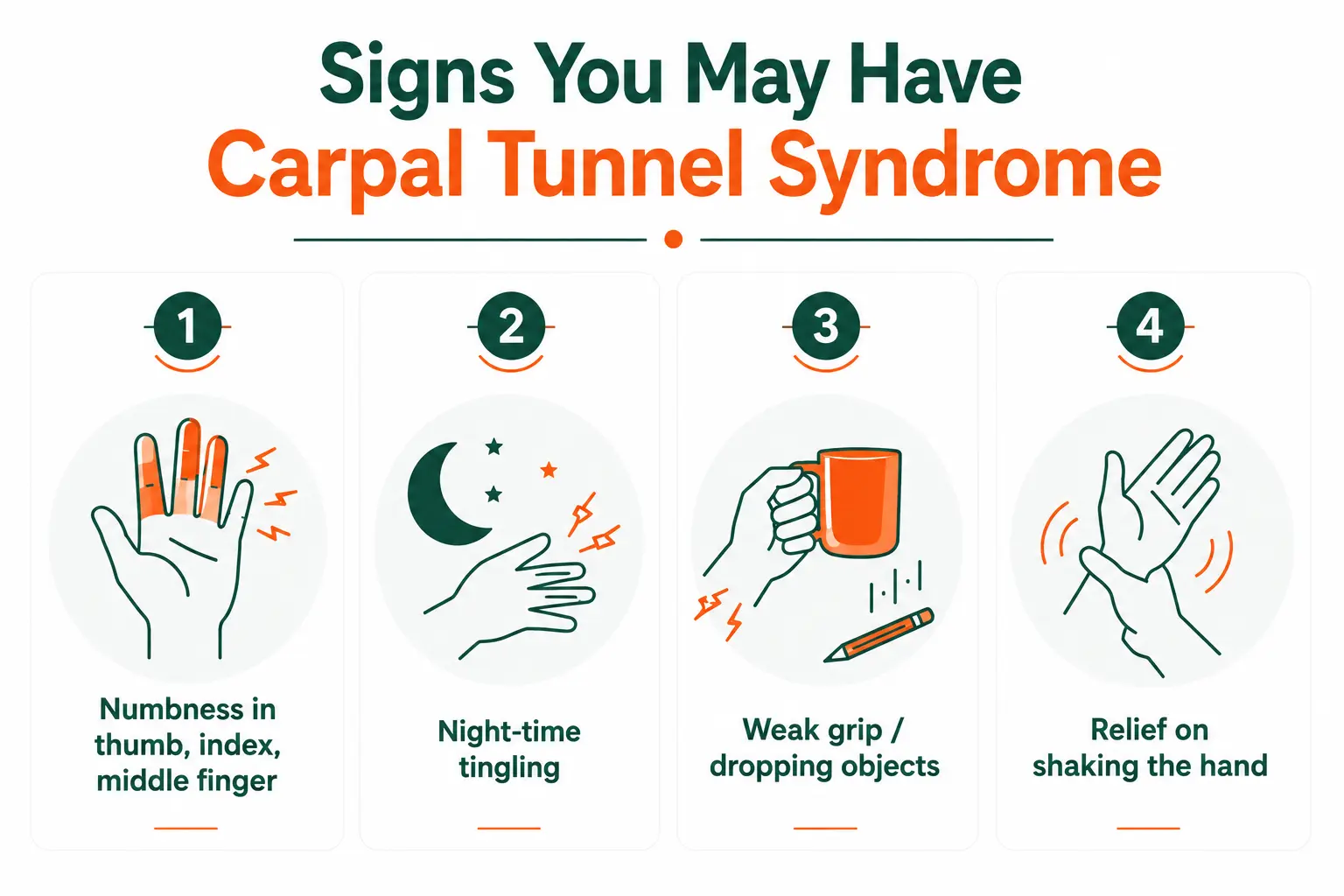
The most common symptoms of carpal tunnel syndrome are numbness, tingling, and pain in the thumb, index, and middle fingers, often worse at night. Other symptoms include:
Who Is at Risk of Developing Carpal Tunnel Syndrome?
People with the following factors are at higher risk of carpal tunnel syndrome:
- Repetitive-strain occupations
- Hormonal changes
- Metabolic conditions face
Key risk factors include being female (women are three times more likely to develop it), age between 30 and 60, pregnancy, diabetes, obesity, and jobs involving repetitive gripping, typing, or vibrating tools.
Carpal Tunnel Syndrome Diagnosis
Diagnosis of carpal tunnel syndrome is confirmed through a clinical examination combined with a nerve conduction study. Dr. Gupta’s evaluation typically includes:
- Clinical tests: Tinel’s sign (tapping over the wrist to reproduce tingling) and Phalen’s test (wrist flexion to trigger symptoms)
- Nerve Conduction Study (NCV) / Electromyography (EMG): Measures how well the median nerve is conducting signals and confirms the severity of compression
- Ultrasound of the wrist: Helps visualise nerve swelling and rule out structural causes
- Blood tests: To check for diabetes, thyroid dysfunction, or inflammatory markers when relevant
Carpal Tunnel Syndrome Treatment Options in Delhi
Treatment of carpal tunnel syndrome depends on severity: mild cases often respond to conservative care, while moderate-to-severe cases need surgical nerve release. Options include:
- Wrist Splinting: Keeps the wrist in a neutral position, especially at night, to relieve pressure on the nerve
- Activity Modification: Ergonomic adjustments to reduce repetitive strain
- Medications: Anti-inflammatory drugs to reduce swelling and discomfort
- Corticosteroid Injections: Reduce inflammation around the nerve for temporary to medium-term relief
- Carpal Tunnel Release Surgery: A minimally invasive procedure to relieve pressure on the median nerve when symptoms are moderate to severe or conservative treatment fails
What Happens During Carpal Tunnel Release Surgery?
Carpal tunnel release surgery involves dividing the ligament that presses on the median nerve to permanently relieve compression, and is usually performed as a day-care procedure.
Before Surgery
- Nerve conduction study to confirm severity
- Review of medical history and anaesthesia fitness
- Discussion of endoscopic versus open technique
During Surgery
- Performed under local or regional anaesthesia
- A small incision at the wrist (or two tiny incisions for the endoscopic technique)
- The transverse carpal ligament is divided to release pressure on the median nerve
- Wound closure with sutures
After Surgery
- Usually a same-day discharge procedure
- Hand elevation and light dressing for initial healing
- Gradual return to normal hand activities over 2-6 weeks
Recovery After Carpal Tunnel Surgery
Carpal tunnel surgery recovery varies from person to person depending on the severity of nerve compression, the surgical technique used, and individual healing.
- Early symptom relief: Many patients notice reduced numbness and tingling within the first few days.
- Gentle hand movement: Light finger and hand movements are usually encouraged within 24-48 hours to minimise stiffness.
- Wound healing: Stitches are typically removed 10-14 days after surgery.
- Return to work: Most people with desk-based jobs can resume work within 1-2 weeks, while physically demanding occupations may require 6-8 weeks.
- Strength recovery: Grip strength gradually improves over the following weeks as the hand heals.
- Hand rehabilitation: If the median nerve was compressed for a long time, your orthopaedic surgeon may recommend hand therapy or physiotherapy to restore strength, flexibility, and function.
Following your surgeon’s post-operative instructions and attending regular follow-up appointments can help ensure a smooth recovery and the best possible functional outcome.
Carpal Tunnel Syndrome Treatment Cost in Delhi
The cost of carpal tunnel syndrome treatment in Delhi generally starts from ₹30,000 for surgical release, while conservative treatment such as splinting or injections costs considerably less.
Key factors that influence the cost include:
- Type of treatment (splinting, steroid injection, or surgery)
- Surgical technique used (open vs. endoscopic release)
- Type of anaesthesia (local or regional)
- Hospital facility and infrastructure charges
- Whether one or both hands require treatment
A precise cost estimate is provided after clinical examination and nerve conduction study review.
Why Do Patients Choose Dr. Vikas Gupta for Carpal Tunnel Treatment in Delhi?
Choosing the best neurosurgeon for carpal tunnel syndrome is essential, as accurate diagnosis and appropriate treatment can significantly influence recovery, hand function, and long-term symptom relief.
- 30+ years of neurosurgical experience in treating nerve compression disorders.
- Accurate diagnosis using clinical evaluation and nerve conduction studies.
- Personalised treatment plans with conservative and surgical options based on individual needs.
- Minimally invasive carpal tunnel release focused on protecting surrounding tissues.
- Comprehensive nerve care, including cervical spondylosis, brachial plexus injuries, and peripheral nerve disorders.
- Clear guidance on recovery, rehabilitation, and expected outcomes.
Dr. Vikas Gupta provides evidence-based, patient-centred carpal tunnel treatment for patients across East Delhi and Delhi NCR, focusing on lasting symptom relief and improved hand function.
Book a Consultation for Carpal Tunnel Syndrome Treatment in Delhi
Persistent hand numbness or weakness should not be ignored; delayed treatment can lead to permanent nerve damage and muscle wasting at the base of the thumb. A consultation with Dr. Vikas Gupta includes
- A detailed symptom review
- Clinical nerve tests
- Nerve conduction study assessment
- Clear discussion of whether splinting, injections, or surgery is right for you.
To explore related nerve and spine conditions Dr. Gupta treats, visit the full conditions list or learn about functional neurosurgery and cervical spine surgery for related nerve compression issues.
Frequently Asked Questions
Can carpal tunnel syndrome go away without surgery? expand_more
Yes, mild cases often improve with splinting, activity changes, and anti-inflammatory treatment. Surgery is generally reserved for moderate to severe or persistent cases.
Can carpal tunnel syndrome come back after surgery? expand_more
Recurrence is uncommon when the release is complete, but symptoms can return if underlying conditions like diabetes or repetitive strain are not managed.
Is carpal tunnel syndrome only caused by typing or computer use? expand_more
No. While repetitive hand use is a contributing factor, conditions like diabetes, thyroid disorders, pregnancy, and wrist injury are equally significant causes.
How can I book an appointment with Dr. Vikas Gupta? expand_more
You can book an appointment with Dr. Vikas Gupta by contacting us directly, using our online appointment booking facilities, available on this website.
How can I book an appointment at Kailash Deepak Hospital? expand_more
You can book an appointment at Kailash Deepak Hospital by calling the hospital reception directly or using the online appointment booking facility on the hospital's website.

Dr. Vikas Gupta’s Medical Content Team
Dr. Vikas Gupta’s medical content team specialises in creating accurate, clear, and patient-focused healthcare content. With strong clinical understanding and expertise in technical writing and SEO, the team translates complex medical information into reliable, accessible resources that support informed decisions and uphold Dr. Gupta’s commitment to quality care.
This content is reviewed by Dr. Vikas Gupta
 WhatsApp