
Cervical Spine Surgery in Delhi
Persistent neck pain, shooting arm pain, tingling in the fingers, or a loss of grip strength, these are not just everyday discomforts. In many cases, they are warning signs of a cervical spine problem that may require surgical attention.
If conservative treatments such as physiotherapy and medications have not provided lasting relief, cervical spine surgery in Delhi may be the answer you have been looking for.
Dr. Vikas Gupta, a senior consultant neurosurgeon and neurointerventionalist at Kailash Deepak Hospital, Karkardooma, Delhi, specialises in advanced cervical spine procedures. With extensive experience in minimally invasive spine surgery, Dr. Gupta is widely regarded as one of the best cervical spine doctors in Delhi, trusted by patients from across India and abroad.
Reach Out for Expert Care
What Is Cervical Spine Surgery?
Cervical spine surgery refers to a group of surgical procedures performed on the upper portion of the spine, specifically the seven vertebrae (C1 to C7) located in the neck. These procedures are designed to relieve nerve compression, stabilise the spine, and restore normal function and mobility.
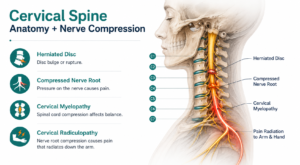
Surgery becomes necessary when the cervical spine’s discs, bones, or ligaments press on the spinal cord or nerve roots, causing pain, weakness, or neurological symptoms that do not respond to non-surgical care.
The most commonly performed cervical spine surgeries include Anterior Cervical Discectomy and Fusion (ACDF), Cervical Disc Replacement (CDR), Posterior Cervical Decompression (Laminectomy or Laminoplasty), and Cervical Foraminotomy.
Conditions Treated with Cervical Spine Surgery
A cervical spine specialist will recommend surgery for the following confirmed conditions:
- Cervical spondylosis (degenerative wear of neck vertebrae)
- Cervical disc herniation (slipped or bulging disc in the neck)
- Cervical myelopathy (spinal cord compression causing weakness and balance issues)
- Cervical radiculopathy (pinched nerve causing arm pain, numbness, or weakness)
- Cervical stenosis (narrowing of the spinal canal in the neck)
- Ossification of the Posterior Longitudinal Ligament (OPLL)
- Cervical fractures or instability due to trauma
- Failed conservative treatment for cervical spondylitis
According to a 2025 Indian spine surgery registry study examining 2,667 patients over 18 years, degenerative cervical myelopathy (DCM) and cervical disc pathology remain among the most significant causes of neurological disability, with a population prevalence of symptomatic DCM of approximately 2-3% in adults.
Types of Cervical Spine Surgery
The cervical spine surgery types can be categorised as follows:
1. Anterior Cervical Discectomy and Fusion (ACDF)
ACDF is the gold-standard procedure for cervical disc herniation and myelopathy. The surgeon accesses the spine from the front of the neck, removes the damaged disc, and fuses adjacent vertebrae using a bone graft or titanium cage and plate. Published data shows ACDF fusion rates of up to 95.5% in younger patients and 94.4% in elderly patients, demonstrating consistent and durable outcomes across age groups.
2. Cervical Disc Replacement (Arthroplasty)
An artificial disc is implanted in place of the damaged one, preserving natural neck movement. A 2024 meta-analysis comparing Cervical Disc Arthroplasty (CDA) with ACDF found CDA associated with a significantly higher overall surgical success rate and a lower secondary surgery rate, making it a preferred option for appropriate candidates.
3. Posterior Cervical Laminectomy / Laminoplasty
Performed through the back of the neck, this procedure creates more space for the spinal cord by removing or repositioning the lamina (back part of the vertebra). It is preferred for multi-level cervical stenosis and myelopathy.
4. Cervical Foraminotomy
The foramen (the opening through which nerve roots exit the spine) is widened to relieve pressure on a compressed nerve. This is ideal for cervical radiculopathy where a single nerve root is affected.
5. Minimally Invasive Cervical Surgery
Using tubular retractors and a high-powered surgical microscope, Dr. Gupta performs selected cervical procedures through smaller incisions. This approach reduces blood loss, muscle trauma, and recovery time significantly.
Below is the table to understand key differences between the major surgical options:
| Procedure | Approach | Motion Preserved? | Best For | Avg. Hospital Stay |
| ACDF | Anterior (front) | No (fusion) | Single/multi-level disc disease, myelopathy | 2–3 days |
| Cervical Disc Replacement | Anterior (front) | Yes | Single-level disc herniation, younger patients | 2–3 days |
| Laminectomy / Laminoplasty | Posterior (back) | Partial | Multi-level stenosis, myelopathy | 3–4 days |
| Foraminotomy | Posterior (back) | Yes | Single nerve root compression (radiculopathy) | 1–2 days |
When Is Cervical Spine Surgery in Delhi Recommended?
Cervical Spine Surgery is typically advised when all of the following conditions are met:
- Symptoms (neck pain, arm pain, weakness, tingling) have persisted for 6-12 weeks despite conservative treatment
- MRI confirms significant disc herniation, nerve compression, or spinal cord involvement
- Neurological examination shows weakness, reduced reflexes, or progressive functional decline
- Symptoms are worsening or significantly impacting daily activities such as writing, driving, or walking
Early surgical intervention is especially important for cervical myelopathy, where delayed treatment may result in permanent spinal cord damage. Any signs of hand clumsiness, difficulty buttoning clothes, unsteady gait, or bladder/bowel dysfunction should prompt an urgent consultation with a cervical specialist doctor in Delhi.
Diagnostic Tests and Evaluation Before Cervical Spine Surgery
A thorough pre-operative work-up is essential for safe and precise surgical planning.
- MRI Cervical Spine: Identifies disc herniation, nerve compression, cord signal changes
- X-rays (Dynamic Flexion-Extension): Assesses spinal alignment and instability
- CT Scan: Evaluates bony anatomy, particularly for OPLL or fractures
- Neurological Examination: Tests grip strength, reflexes, and sensation
- EMG / Nerve Conduction Study: Confirms nerve root involvement
- Blood Tests and Anaesthetic Assessment: Ensures fitness for surgery
All investigations are reviewed in detail during your consultation with Dr. Vikas Gupta to determine the most appropriate surgical approach.
Cervical Spine Surgery Procedure: Step-by-Step Guide
Most cervical spine surgeries follow this structured process:
- Pre-Operative Preparation
Admission is arranged on the day of or the day before surgery. General anaesthesia is administered. Intraoperative neuromonitoring (IONM) may be used to protect nerve function during the procedure.
- Surgical Access
For anterior approaches (ACDF, disc replacement), a small incision is made on the side of the neck. For posterior approaches (laminectomy, foraminotomy), the incision is made at the back of the neck. Muscles are gently retracted rather than cut, preserving structural integrity.
- Decompression and Reconstruction
The damaged disc or bone is carefully removed under high magnification. The nerve root or spinal cord is freed from compression. A graft, implant, or plate is used to restore disc height and stabilise the segment.
- Closure and Recovery
The incision is closed in layers. Most patients begin gentle neck movement within 24 hours. Walking is encouraged on the same day or the morning after surgery.
Recovery After Cervical Spine Surgery
Recovery after cervical spine surgery depends on the type of procedure performed, the number of spinal levels treated, and the patient’s overall health.
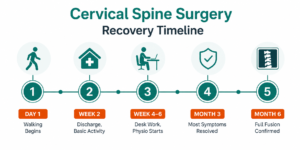
Dr. Vikas Gupta provides personalised recovery guidance tailored to each patient’s surgical procedure, occupation, and overall health status.
Cervical Spine Surgery Cost in Delhi
The cost of cervical spine surgery in Delhi varies from ₹1,00,000 to ₹4,50,000, depending on several factors including the type of procedure, number of spinal levels involved, implant selection, hospital facilities, duration of stay, and pre-operative investigations required.
| Procedure | Estimated Cost Range (INR) |
| Anterior Cervical Discectomy and Fusion (ACDF), Single Level | ₹1,20,000 – ₹2,00,000 |
| Cervical Disc Replacement (Arthroplasty) | ₹2,00,000 – ₹3,50,000 |
| Posterior Cervical Laminectomy / Laminoplasty | ₹1,50,000 – ₹2,50,000 |
| Cervical Foraminotomy | ₹1,00,000 – ₹1,80,000 |
| Multi-Level Cervical Surgery | ₹2,50,000 – ₹4,50,000 |
Note: Cost estimates are indicative and subject to change based on individual clinical requirements, insurance coverage, and prevailing hospital charges. A transparent cost discussion is provided during your initial consultation with Dr. Vikas Gupta.
Patients are encouraged to explore available health insurance coverage. Many procedures, including ACDF and laminectomy, are covered under standard insurance policies in India.
Cervical Spine Surgery in Delhi For International Patients
India is a leading destination for international patients seeking high-quality, affordable spine surgery. Cervical spine surgery costs in India are a fraction of what patients pay in the UK, USA, Canada, or the Middle East, with no compromise on safety, technology, or outcomes.
Dr. Vikas Gupta at Kailash Deepak Hospital, Karkardooma, offer comprehensive support for international patients including:
- Remote pre-operative MRI review and consultation via teleconsultation
- Visa assistance guidance and hospital invitation letters
- Airport transfer and accommodation coordination
- Language support for patients from Gulf countries, Africa, and Southeast Asia
- Discharge summary and follow-up care coordination with home country doctors
To schedule a remote second opinion or international consultation for cervical spine surgery in Delhi, Click here →
Why Patients Choose Dr. Vikas Gupta for Cervical Spine Surgery in Delhi
Cervical spine surgery requires precise diagnosis, careful surgical planning, and a strong focus on preserving neurological function. Patients across Delhi NCR consult Dr. Vikas Gupta for cervical spine treatment because of:
- 30+ years of experience in neurosurgery and complex spine procedures
- Expertise in cervical spine decompression, disc surgery, spinal stabilisation, and minimally invasive techniques
- Strong focus on nerve preservation, functional recovery, and long-term spinal health
- Advanced surgical infrastructure at Kailash Deepak Hospital, Karkardooma, including modular OTs, surgical microscopes, and intraoperative neuromonitoring
- Personalised treatment planning based on MRI findings, symptoms, lifestyle, and overall health status
- Transparent communication regarding diagnosis, surgical options, expected recovery, and treatment costs
- Trusted spine and neuro care for patients from Karkardooma, East Delhi, and Delhi NCR.
His approach prioritises appropriate treatment at the right stage, conservative care when possible and surgery when genuinely necessary.
Book a Consultation with Cervical Spine Specialist in Delhi
Persistent neck pain, arm numbness, weakness, tingling, or balance problems may indicate cervical nerve or spinal cord compression. Early evaluation by an experienced cervical spine surgeon can help prevent long-term neurological damage and improve quality of life.
During your consultation with Dr. Vikas Gupta, you can expect:
- Detailed clinical evaluation and MRI review
- Clear explanation of the diagnosis and severity of compression
- Guidance on whether surgery is required or conservative treatment is appropriate
- Discussion of surgical options, recovery timeline, and expected outcomes
- Transparent discussion of treatment planning and costs
- Answers to your concerns without rushed consultations
Early diagnosis often leads to better recovery outcomes and safer treatment planning.
Frequently Asked Questions
Is cervical spine surgery safe? expand_more
When performed by an experienced cervical spine surgeon using modern techniques, cervical spine surgery carries a low risk profile. Published studies demonstrate ACDF fusion rates exceeding 94% and significant improvement in neck disability scores in the majority of patients.
Will I need to wear a neck collar after surgery? expand_more
A soft cervical collar is commonly recommended for 2-4 weeks after anterior cervical surgery to support healing. Posterior procedures may require a collar for a longer duration.
Can cervical spine surgery be avoided? expand_more
Many patients with cervical disc problems respond well to conservative management including physiotherapy, anti-inflammatory medications, and cervical traction.
How can I book an appointment with Dr. Vikas Gupta? expand_more
You can book an appointment with Dr. Vikas Gupta by contacting Neurological Hall or Kailash Deepak Hospital, Karkardooma, directly, or using their online appointment booking facilities.
How can I book an appointment at Kailash Deepak Hospital? expand_more
You can book an appointment at Kailash Deepak Hospital by calling the hospital reception directly or using the online appointment booking facility on the hospital's website.

Dr. Vikas Gupta’s Medical Content Team
Dr. Vikas Gupta’s medical content team specialises in creating accurate, clear, and patient-focused healthcare content. With strong clinical understanding and expertise in technical writing and SEO, the team translates complex medical information into reliable, accessible resources that support informed decisions and uphold Dr. Gupta’s commitment to quality care.
This content is reviewed by Dr. Vikas Gupta
Related Treatments

Spinal Fixation Surgery in Delhi
Spinal fixation is a surgical procedure used to stabilize the spine and treat various spinal conditions. This type of surgery…
Lumbar Spine Surgery in Delhi
Back pain that travels down the leg, numbness in the feet, or weakness that makes standing difficult are not signs…
Spinal Fusion Surgery in Delhi
Spinal fusion is a surgical procedure designed to join two or more vertebrae in the spine into a single, solid…

Brachial Plexus and Nerve Surgery in Delhi
The brachial plexus is a network of nerves running from the neck to the shoulder, arm, and hand. Damage from…
Minimally Invasive Spine Surgery (MISS) in Delhi
Minimally Invasive Spine Surgery (MISS) represents a revolutionary approach to treating various spine conditions through small incisions, specialised instruments, and…
Related Blogs
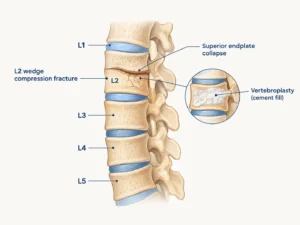
Vertebroplasty for L2 Compression Fracture
Three Days of Back Pain. Then He Couldn’t Walk. His Vertebra Had Fractured. At a…
Read Article →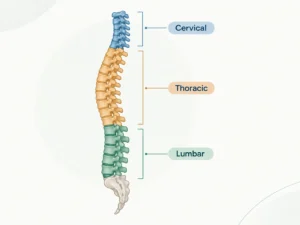
Back Exercises for Spine Health: A Complete Guide
A strong, flexible spine is the foundation of nearly every movement we make, from bending…
Read Article →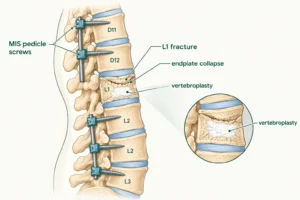
Minimally Invasive Spine Surgery for L1 Vertebral Fracture After a Fall
She Fell at Home. By the Time She Reached the Hospital, She Could Barely Move.…
Read Article →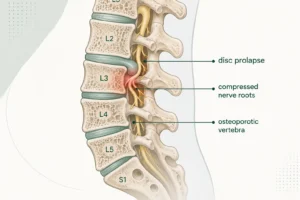
Disc Surgery for Leg Weakness and Back Pain in Osteoporosis
She Could Barely Walk. Her Spine Was Collapsing, and Her Bones Were Too Weak to…
Read Article →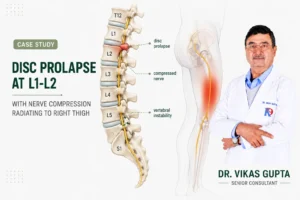
Spinal Fusion Surgery for Disc Prolapse and Spinal Instability
She Had Been Managing the Pain for Months. Then One Morning, She Could Barely Move.…
Read Article →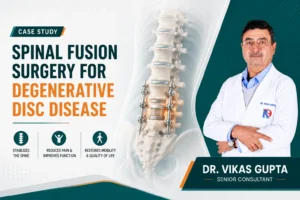
Spinal Fusion Surgery for Degenerative Disc Disease
A Fall. Six Months of Pain. His Spine Had Been Quietly Degenerating for Years. At…
Read Article → WhatsApp