
Astrocytoma Treatment in Delhi
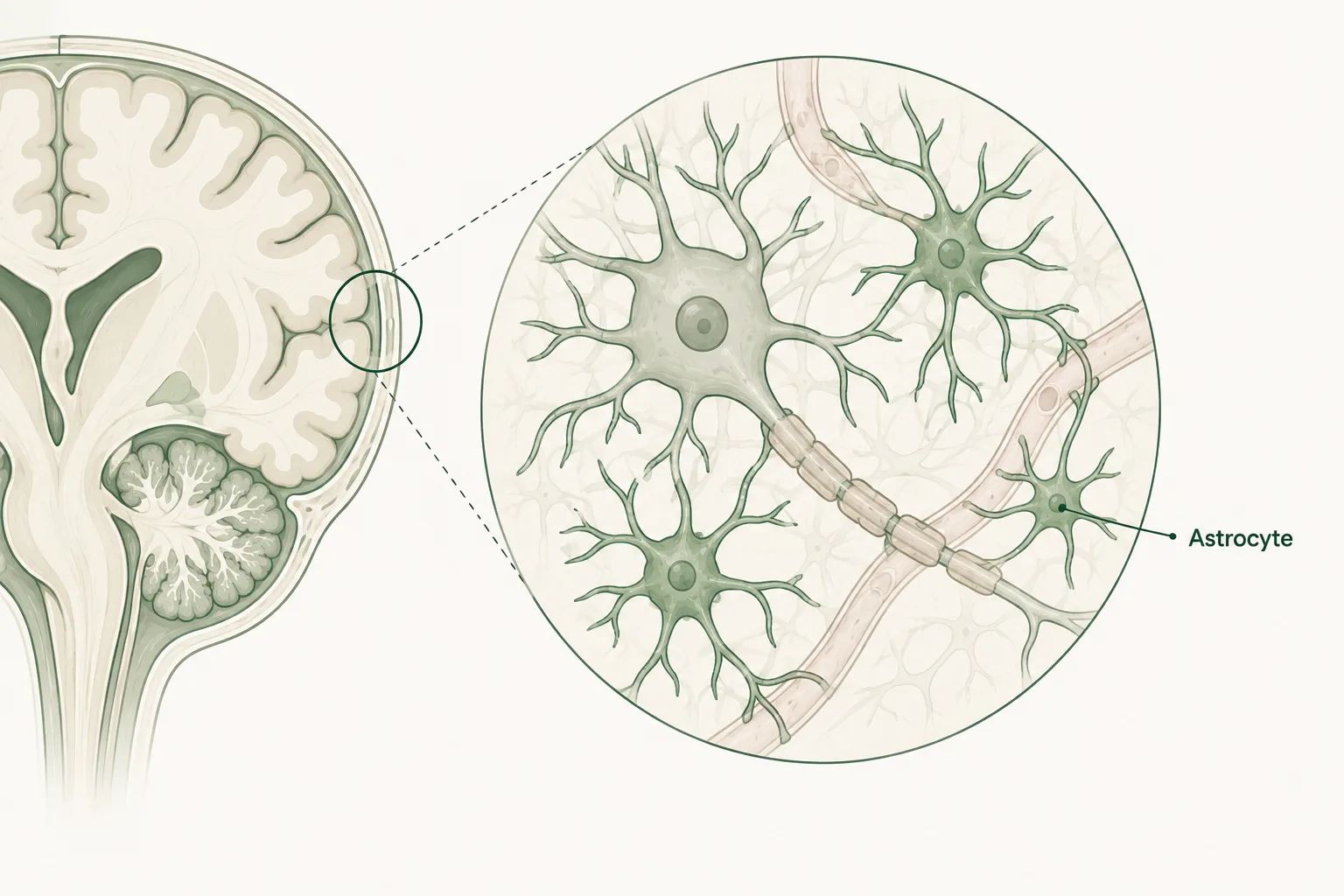
An astrocytoma is a tumour that develops from astrocytes, the star-shaped support cells that surround and protect neurons in the brain and spinal cord. It is the most common type of glioma and can occur at almost any age, from childhood through adulthood. Astrocytomas range from slow-growing, low-grade tumours to aggressive, fast-growing forms, which is why accurate grading is the first and most important step in planning treatment.
With over 30 years of neurosurgical experience, Dr. Vikas Gupta, Senior Consultant Neurosurgeon and Neurointerventional Specialist at Kailash Deepak Hospital, Delhi, provides advanced, grade-based astrocytoma treatment in Delhi using microsurgical resection, awake craniotomy techniques, and multidisciplinary planning with neuro-oncology and radiotherapy teams.
Reach Out for Expert Care
What Is an Astrocytoma?
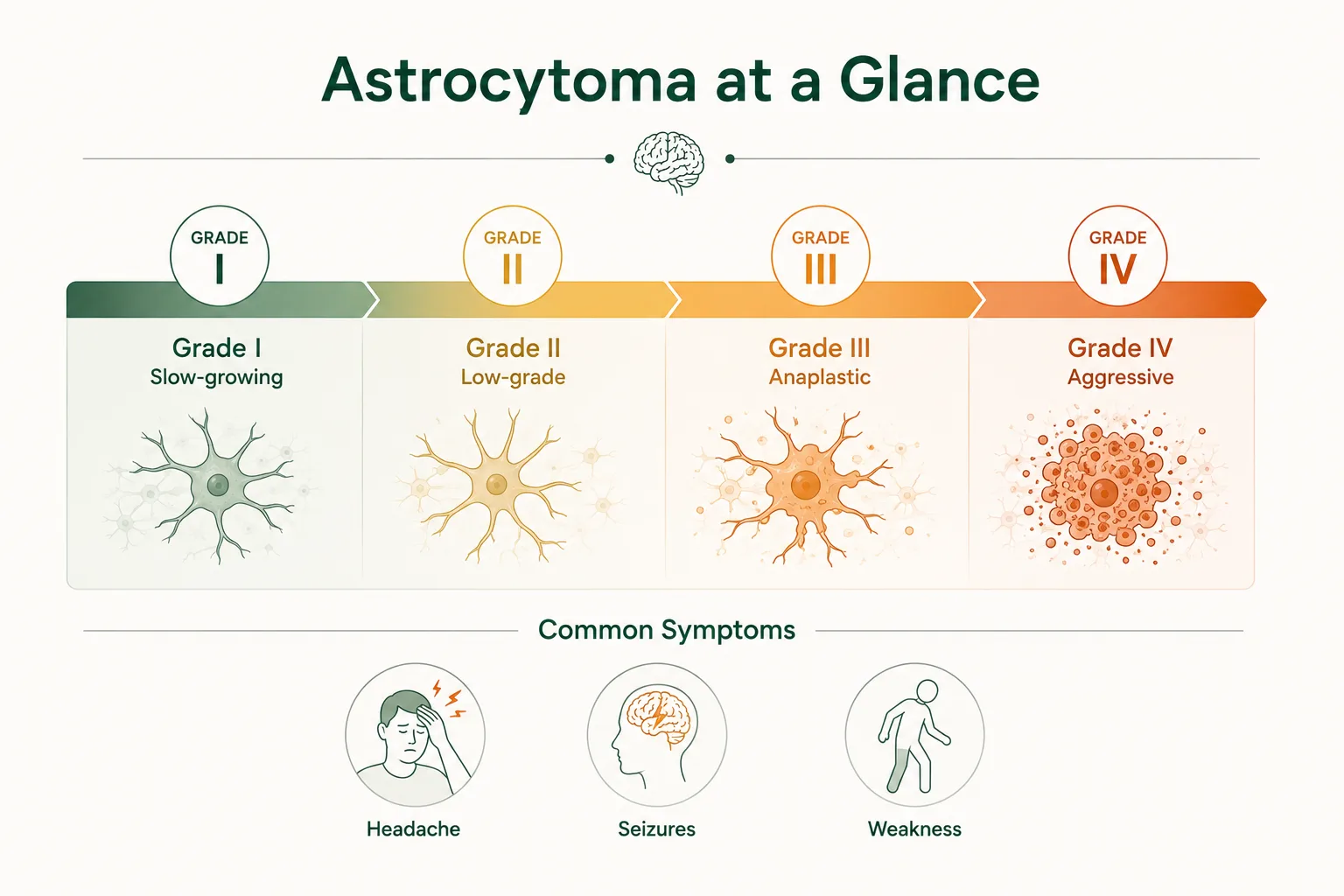
An astrocytoma is a primary brain tumour that arises from astrocytes and is graded from I to IV based on how the cells behave under a microscope.
- Grade I (Pilocytic Astrocytoma): Slow-growing, common in children and young adults, often curable with surgery
- Grade II (Diffuse Astrocytoma): Low-grade but infiltrative, can grow slowly over years
- Grade III (Anaplastic Astrocytoma): Malignant, grows faster, needs combined treatment
- Grade IV (Glioblastoma): The most aggressive form, requiring surgery, radiotherapy, and chemotherapy
Grading determines the entire treatment pathway, from the extent of surgery to whether radiotherapy or chemotherapy is needed afterward.
What Causes an Astrocytoma?
The exact cause of most astrocytomas is not known, and they cannot be traced back to lifestyle or diet.
- Genetic mutations: Changes in cells that control growth, occurring spontaneously in most cases
- Inherited syndromes (rare): Conditions such as neurofibromatosis type 1 or Li-Fraumeni syndrome slightly raise risk
- Age and sex: Certain astrocytoma types are more common in children; others occur more in adults, with a slightly higher incidence in men
- Prior radiation exposure: A small subset of cases follow earlier radiation therapy to the head
For the majority of patients, no identifiable cause is found, and this is not something that could have been prevented.
What Are the Symptoms of an Astrocytoma?
Astrocytoma symptoms depend on the tumour’s grade, size, and location in the brain, and they often develop gradually with low-grade tumours.
- Persistent or worsening headaches, often worse in the morning
- New-onset seizures
- Weakness or numbness on one side of the body
- Changes in speech, memory, or personality
- Vision disturbances or unsteady balance
- Nausea and vomiting linked to raised pressure inside the skull
Sudden or rapidly worsening symptoms, particularly with high-grade tumours, need urgent neurological evaluation.
How Is an Astrocytoma Diagnosed?
Astrocytoma diagnosis relies on imaging to locate the tumour and, in most cases, tissue analysis to confirm its grade.
- MRI with contrast: The primary imaging test to detect tumour size, location, and extent
- CT scan: Useful in emergencies to check for bleeding or swelling
- MR spectroscopy / perfusion imaging: Helps distinguish tumour grade before surgery
- Biopsy or surgical tissue sampling: Confirms the exact grade and molecular markers (IDH mutation, MGMT status)
- Molecular and genetic testing: Increasingly used to guide prognosis and treatment choice
A confirmed diagnosis with grading is essential before finalising the treatment plan.
Astrocytoma Treatment Options in Delhi
Astrocytoma treatment in Delhi is personalised according to tumour grade, location, and the patient’s neurological status, and usually combines two or more of the following.
- Microsurgical Resection: Maximum safe removal of the tumour, often guided by neuronavigation
- Awake Craniotomy: Used when the tumour lies near speech or movement centres, allowing real-time monitoring
- Radiotherapy: Recommended for higher-grade tumours or incomplete resections
- Chemotherapy: Used alongside radiotherapy for anaplastic astrocytoma and glioblastoma
- Active Surveillance: Regular MRI monitoring for select low-grade, asymptomatic cases
The right combination is decided only after multidisciplinary review of the tumour’s grade and the patient’s overall health.
Astrocytoma Surgery in Delhi: What to Expect
Astrocytoma surgery aims to remove as much tumour tissue as possible while protecting critical brain functions, using intraoperative techniques to map safety margins in real time.
Before Surgery
- Detailed neurological and MRI-based evaluation
- Functional MRI or awake mapping planning for tumours near critical areas
- Anaesthesia fitness assessment
During Surgery
- Performed under general or, when needed, awake anaesthesia
- Craniotomy with neuronavigation-guided tumour access
- Maximal safe resection while preserving healthy brain tissue
- Intraoperative monitoring of speech or movement, where relevant
After Surgery
- Monitoring in the neuro ICU
- Post-operative MRI to confirm extent of resection
- Referral for radiotherapy or chemotherapy based on final grading
What Is Recovery Like After Astrocytoma Treatment?
Recovery after astrocytoma treatment depends on the tumour’s grade, its location, and whether further therapy such as radiotherapy is required.
- Hospital stay: Typically 5-8 days after surgery
- Early recovery: Gradual return to daily activities over 2-4 weeks
- Adjuvant therapy: Radiotherapy or chemotherapy may begin once the surgical site has healed
- Rehabilitation: Physiotherapy, speech therapy, or occupational therapy as needed
- Long-term follow-up: Regular MRI scans to monitor for recurrence, especially in higher grades
Consistent follow-up imaging is one of the most important parts of long-term astrocytoma care.
Astrocytoma Treatment Cost in Delhi
The cost of astrocytoma treatment in Delhi generally starts from ₹3,00,000 and goes beyond this, depending on the tumour’s grade and whether radiotherapy or chemotherapy is required in addition to surgery.
- Tumour grade and complexity of resection
- Use of awake craniotomy or intraoperative monitoring
- Need for radiotherapy or chemotherapy after surgery
- ICU stay and length of hospitalisation
- Diagnostic and molecular testing requirements
A personalised consultation is essential to receive an accurate cost estimate based on your specific case.
Why Do Patients Choose Dr. Vikas Gupta for Astrocytoma Treatment in Delhi?
Patients across East Delhi and the NCR consult Dr. Vikas Gupta for astrocytoma care based on his surgical experience and multidisciplinary treatment approach.
- 30+ Years of Neurosurgical Experience
- 5,000+ Surgeries Performed Across Complex Brain Tumours
- Expertise in Microsurgical and Awake Craniotomy Techniques
- Grade-Based, Individualised Treatment Planning
- Coordinated Care with Neuro-Oncology and Radiotherapy Teams at Kailash Deepak Hospital
Book a Consultation for Astrocytoma Treatment in Delhi
An astrocytoma diagnosis can feel overwhelming, but grading and timely evaluation by the best neurosurgeon in Delhi make a significant difference to the treatment path and outcome.
During your consultation:
- Review of MRI, biopsy, and molecular test reports
- Discussion of tumour grade and its implications
- Explanation of surgical and non-surgical treatment options
- Clear guidance on risks, recovery, and costs
Frequently Asked Questions
Is astrocytoma cancerous? expand_more
It depends on the grade. Grade I and II astrocytomas are generally slow-growing and low-grade, while Grade III and IV (anaplastic astrocytoma and glioblastoma) are malignant and require more aggressive treatment.
Can astrocytoma be completely cured? expand_more
Low-grade astrocytomas, particularly pilocytic astrocytomas, can often be cured with complete surgical removal. Higher-grade tumours are managed with surgery combined with radiotherapy and chemotherapy to control growth and extend survival.
Does astrocytoma come back after treatment? expand_more
Recurrence risk depends on the tumour's grade and how completely it was removed. Higher-grade astrocytomas carry a greater risk of recurrence, which is why regular MRI follow-up is recommended for all patients after treatment.
Who is the best neurosurgeon in Delhi? expand_more
Dr. Vikas Gupta brings 30+ years of neurosurgical experience and has performed 5,000+ surgeries, making him a trusted and experienced choice for glioma evaluation and treatment in Delhi NCR.
How can I book an appointment with Dr. Vikas Gupta? expand_more
You can book an appointment with Dr. Vikas Gupta by contacting us directly or using our online appointment booking facilities available on this website.

Dr. Vikas Gupta’s Medical Content Team
Dr. Vikas Gupta’s medical content team specialises in creating accurate, clear, and patient-focused healthcare content. With strong clinical understanding and expertise in technical writing and SEO, the team translates complex medical information into reliable, accessible resources that support informed decisions and uphold Dr. Gupta’s commitment to quality care.
This content is reviewed by Dr. Vikas Gupta
 WhatsApp