
Endoscopic Pituitary Surgery in Delhi
Endoscopic pituitary surgery in Delhi is a well-established, minimally invasive procedure that removes pituitary tumours without any visible external incision. The entire operation is performed through the nose. Most patients go home within 2-3 days.
A pituitary tumour does not always announce itself dramatically. For many people, the first signs are subtle, unexplained weight changes, irregular periods, vision that seems slightly off, or fatigue that no amount of sleep fixes. By the time a diagnosis is confirmed, they are often searching for answers to a question that feels enormous: does this need surgery, and what does that actually involve?
Dr. Vikas Gupta, Senior Consultant Neurosurgeon and Neurointerventional Specialist at Kailash Deepak Hospital, Karkardooma, has over 30 years of neurosurgical experience and performs endoscopic transsphenoidal pituitary surgery using advanced neuroendoscopic techniques. His practice covers a wide range of pituitary conditions, from hormone-secreting adenomas to large non-functioning tumours compressing the optic nerve.
Reach Out for Expert Care
What Is Endoscopic Pituitary Surgery?
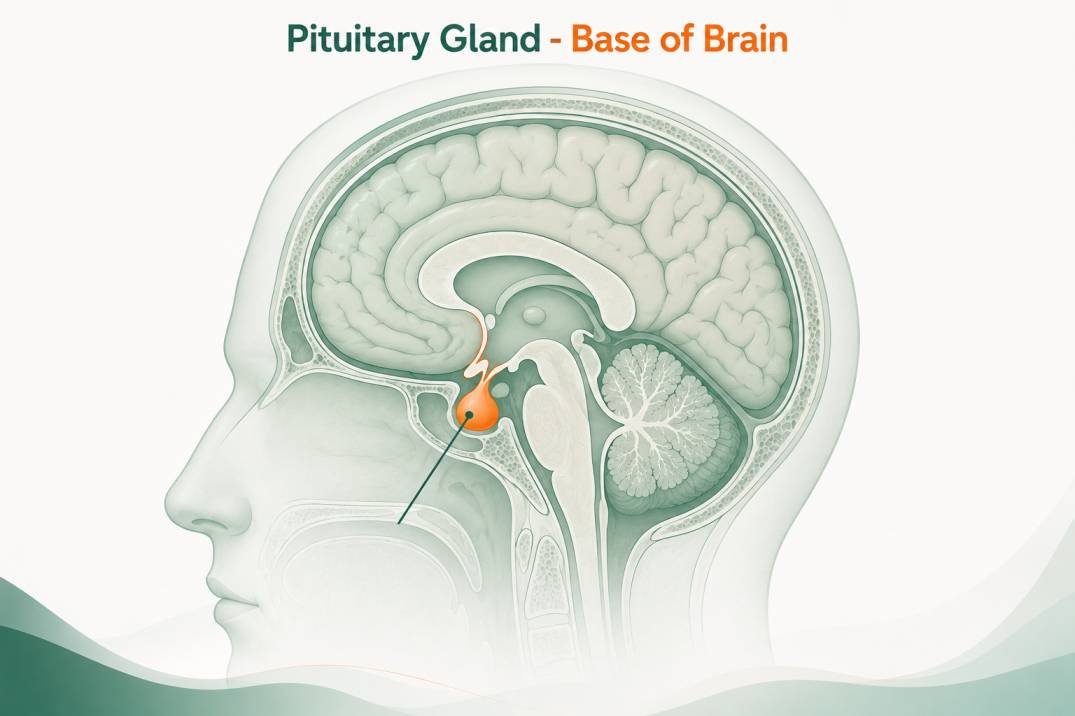
Endoscopic pituitary surgery, also called endoscopic transsphenoidal pituitary surgery, is a keyhole procedure in which a thin, camera-equipped tube (endoscope) is passed through the nasal cavity to reach and remove a pituitary tumour at the base of the brain.
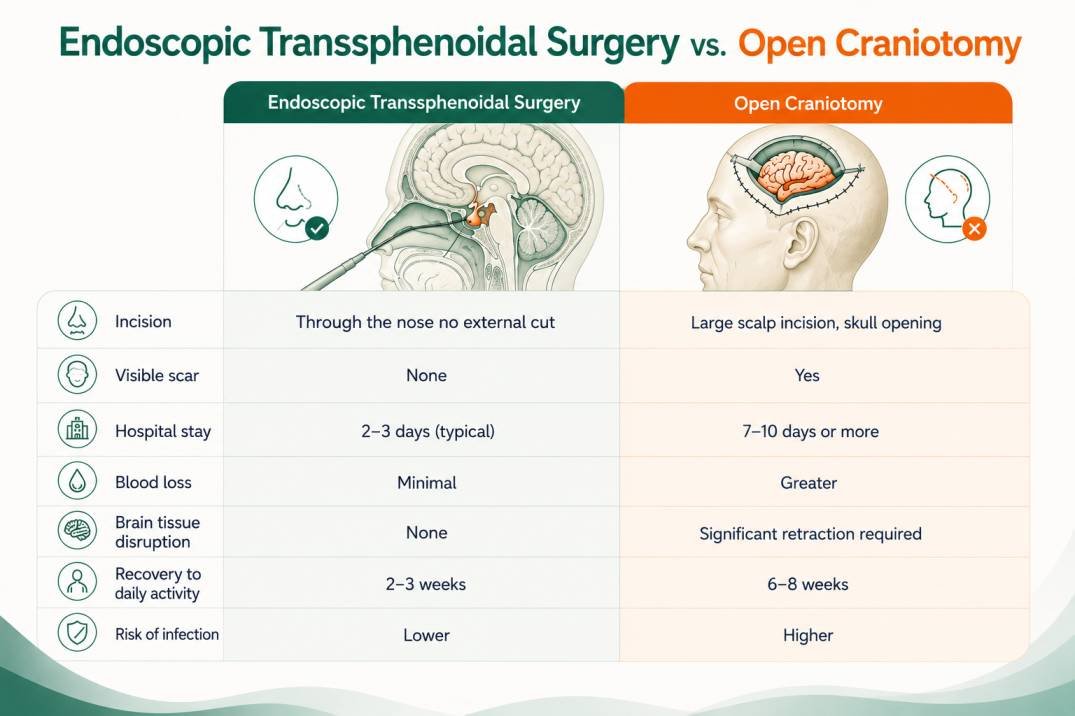
The pituitary gland sits just above the back of the nose, separated from the nasal passage by a thin bony wall called the sphenoid sinus. This natural corridor is exactly what makes the transsphenoidal approach possible: no scalp incision, no skull flap, no retraction of brain tissue. The surgeon works entirely through the nostril, guided by real-time high-definition video on a monitor.
The endoscope provides a wider, illuminated field of view compared to older microscope-based approaches, which is why the fully endoscopic technique has largely replaced the microscopic transsphenoidal approach at experienced centres.
→ Learn about Transsphenoidal Surgery in Delhi for a detailed overview of the surgical approach.
→ Learn about Pituitary Tumours, types, hormonal effects, and when surgery is needed.
When Is Endoscopic Pituitary Surgery Recommended?
Endoscopic pituitary surgery is recommended when a pituitary tumour is causing hormonal disturbances, compressing the optic nerves and affecting vision, or growing large enough to cause headaches and neurological symptoms.
The most common reasons for surgery include:
- Hormone-secreting pituitary adenomas
- Non-functioning pituitary adenomas
- Pituitary apoplexy
- Craniopharyngiomas and other sellar tumours
Not every pituitary tumour requires surgery. Prolactinomas, for instance, often respond well to dopamine agonist medications. The decision is made after evaluating MRI findings, hormone levels, ophthalmology assessment, and the patient’s overall health. Dr. Gupta discusses all relevant options before recommending a surgical approach.
How Is Endoscopic Transsphenoidal Pituitary Surgery Performed in Delhi?
In endoscopic transsphenoidal pituitary surgery, the surgeon passes an endoscope through the nostril, navigates through the sphenoid sinus, opens the floor of the sella turcica (the bony cavity housing the pituitary gland), and removes the tumour under continuous high-definition camera guidance, without any external cut.
Here is what the procedure involves, step by step:
- Pre-surgical preparation: MRI of the brain and pituitary (with contrast) is reviewed, along with hormone panel results, and ophthalmology reports. An endocrinology evaluation is arranged if needed. Neuronavigation planning is completed before the day of surgery.
- Anaesthesia: The procedure is performed under general anaesthesia. You are fully asleep throughout.
- Nasal access: The endoscope is introduced through one or both nostrils. The nasal passage is gently widened; there is no external incision.
- Sphenoid sinus entry: The bony partition at the back of the nose (the rostrum of the sphenoid) is opened to access the sphenoid sinus, which lies directly in front of the pituitary fossa.
- Sella opening: A small window is made in the bony floor of the sella turcica, exposing the pituitary tumour beneath its fibrous covering (the dural layer).
- Tumour removal: Using micro-instruments passed alongside the endoscope, the tumour is removed in portions under direct magnified vision. Intraoperative MRI or neuronavigation may be used to confirm completeness of removal.
- Closure: The surgical corridor is reconstructed. Fat graft, fascial tissue, or a synthetic material may be used to seal the sella and prevent CSF leak. The nasal passage is usually not packed.
Duration: 2-4 hours depending on tumour size and complexity.
→ For comparison with open surgery approaches, see Craniotomy Surgery in Delhi.
→ For minimally invasive brain tumour removal more broadly, see Minimally Invasive Brain Tumour Removal in Delhi.
Endoscopic vs Open Surgery: A Direct Comparison
Complications in Endoscopic Pituitary Surgery
Endoscopic pituitary surgery is generally safe when performed by an experienced neurosurgeon, but like any procedure, it carries some risks.
Potential complications include:
- CSF leak (2-4%): Leakage of cerebrospinal fluid through the nose, usually managed with drainage or repair if needed.
- Hormonal changes: Temporary or permanent hormone replacement may be required if pituitary function is affected.
- Diabetes insipidus: Excessive thirst and increased urination, typically temporary.
- Vision-related complications: Rare; vision may temporarily worsen but often improves after tumour removal.
- Incomplete tumour removal: Large or invasive tumours may require additional treatment such as radiosurgery or medication.
- Nasal symptoms: Congestion, crusting, or altered smell may occur during healing.
- Meningitis: A very rare infection treated with antibiotics.
Dr. Gupta carefully discusses individual risks before surgery. Complication rates are typically lower at experienced, high-volume neurosurgical centres.
→ Related: Skull Base Surgery in Delhi for tumours extending beyond the sella.
→ See also: Interventional Neuroradiology in Delhi for adjunct vascular interventions.
Recovery After Endoscopic Pituitary Surgery
Most patients recover from endoscopic pituitary surgery within 2-3 weeks for daily activities, with full recovery in 4-6 weeks. Hospital stay is typically 2-3 days.
- In hospital (Days 1-3): Monitored in the neuro ward or HDU. Hormone levels and fluid balance are checked closely. Nasal packing is rarely used with the modern endoscopic technique. Most patients are mobile within 24 hours.
- Week 1-2 at home: Rest, avoid nose-blowing and straining. Saline nasal rinses begin on Day 2-3 to keep the surgical corridor clean. Headache is the most common complaint and resolves over the first week.
- Week 2-4: Gradual return to light work and daily activities. Most driving, desk work, and social activity can resume.
- Follow-up: MRI (usually at 3 months) to confirm extent of removal. Repeat hormone testing at 4-6 weeks. Ophthalmology review if vision was affected pre-operatively.
Endoscopic Pituitary Surgery Cost in Delhi
The cost of endoscopic pituitary surgery in Delhi starts from ₹3,20,000.
The endoscopic pituitary surgery cost in Delhi depends on tumour size and complexity, duration of hospital stay, pre-operative investigations (MRI, hormone panel, ophthalmology), ICU or HDU requirement, and post-operative endocrinology care.
A transparent cost estimate is provided after the initial consultation and review of imaging. Cashless insurance facilitation is also available.
Why Patients Choose Dr. Vikas Gupta for Endoscopic Pituitary Surgery in Delhi?
Patients from East Delhi, Delhi NCR, and neighbouring states consult Dr. Vikas Gupta for pituitary tumour surgery because of his clinical background, not because of marketing claims. Here is what his practice actually involves:
- 30+ years of neurosurgical experience across elective and emergency brain and spine procedures, including complex skull base and sellar region surgery.
- Dual expertise in endoscopic and microsurgical techniques; he performs both the fully endoscopic transsphenoidal approach and microscope-assisted variants, selecting the technique based on tumour anatomy rather than a fixed protocol.
- Personalised treatment planning; each patient’s MRI, hormone profile, and visual field data are reviewed individually. There are no generic protocols.
- Transparent communication; the surgical plan, expected tumour removal rate, hormone risks, and recovery timeline are discussed clearly before any decision is made.
- Facility infrastructure; surgery is performed with a dedicated neuro-ICU, intraoperative imaging support, and post-operative endocrinology and ophthalmology collaboration.
Book a Consultation for Endoscopic Pituitary Surgery in Delhi
If a pituitary tumour has been identified on imaging, or if you are experiencing symptoms that suggest pituitary dysfunction, vision changes, unexplained hormonal problems, or persistent headaches, consulting the best neurosurgeon is the right next step.
During your consultation with Dr. Vikas Gupta, you will receive:
- Review of MRI brain and pituitary (with contrast), hormone panel, and visual field report
- Assessment of whether endoscopic transsphenoidal surgery is indicated for your tumour
- Explanation of the surgical approach, expected extent of removal, and hormonal risks
- Clear recovery timeline and post-operative follow-up plan
- Transparent discussion of cost and insurance coverage
For sudden-onset severe headache, rapidly worsening vision, or loss of consciousness, seek emergency care immediately; these may indicate pituitary apoplexy.
Frequently Asked Questions
How long does pituitary surgery take? expand_more
Most cases take 2-4 hours under general anaesthesia. Duration depends on tumour size, consistency, and whether it extends into adjacent structures such as the cavernous sinus.
Will I need hormone replacement after surgery? expand_more
This depends on the tumour type and the extent of surgery. Some patients, particularly those with Cushing's disease or tumours close to the normal pituitary, require temporary or long-term hormone replacement. An endocrinologist evaluates hormone levels before and after surgery.
Can a pituitary tumour come back after surgery? expand_more
Yes, particularly with invasive macroadenomas or when complete removal was not possible. Recurrence rates vary by tumour type. Regular MRI follow-up and, in some cases, adjunct radiosurgery (Gamma Knife or CyberKnife) help manage residual or recurrent disease.
How can I book an appointment with Dr. Vikas Gupta? expand_more
You can book an appointment with Dr. Vikas Gupta by contacting Neurological Hall or Kailash Deepak Hospital, Karkardooma, directly, or using their online appointment booking facilities.
How can I book an appointment at Kailash Deepak Hospital? expand_more
You can book an appointment at Kailash Deepak Hospital by calling the hospital reception directly or using the online appointment booking facility on the hospital's website.

Dr. Vikas Gupta’s Medical Content Team
Dr. Vikas Gupta’s medical content team specialises in creating accurate, clear, and patient-focused healthcare content. With strong clinical understanding and expertise in technical writing and SEO, the team translates complex medical information into reliable, accessible resources that support informed decisions and uphold Dr. Gupta’s commitment to quality care.
This content is reviewed by Dr. Vikas Gupta
Related Blogs

 WhatsApp