
Cervical Canal Stenosis with Myelopathy
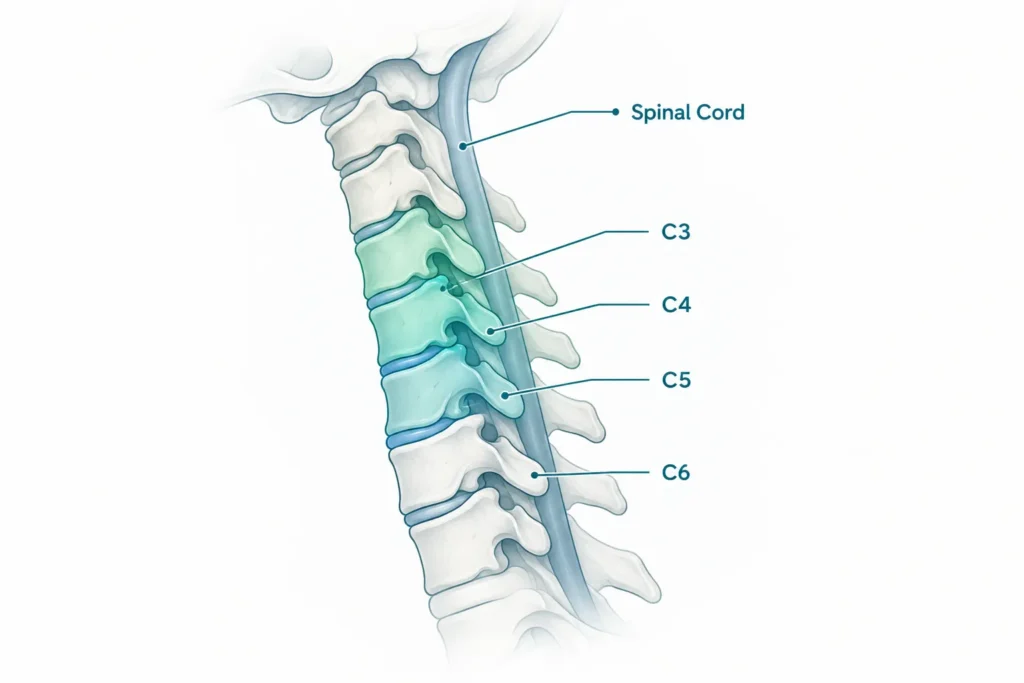
She Fell, Then Couldn’t Move Her Arms or Legs. Her Neck Was Silently Crushing Her Spinal Cord.
At a Glance
| Patient | 70-year-old female |
| Complaint | Fall followed by severe neck pain, inability to move, numbness and weakness in both arms and legs, high-grade fever for 1 day |
| Diagnosis | C3-C4-C5 cervical canal stenosis with myelopathy |
| Procedure | C3-C4-C5 laminectomy with C3-C6 lateral mass screw fixation (titanium) |
| Outcome | Spinal cord successfully decompressed; cervical spine stabilised; neurological recovery confirmed on follow-up |
A fall in an elderly patient is rarely “just a fall.” When a 70-year-old woman arrived with neck pain, an inability to move, and weakness in all four limbs, it was clear that something far more serious than a bruise was at play.
Reach Out for Expert Care
What Happened After the Fall?
After a fall, the patient developed severe neck pain, was unable to move, had numbness and weakness in both arms and legs, and spiked a high-grade fever within a day, a combination pointing to acute spinal cord compression in the neck.
She was brought in with a history of a fall, followed by:
- Severe neck pain that made even small movements unbearable
- Inability to move normally, with visible loss of function
- Numbness and weakness in both upper and lower limbs (quadriparesis)
- High-grade fever that had developed over the previous 24 hours
For an elderly patient, this combination is a red flag. Weakness in all four limbs after a fall almost always points to the spinal cord itself, not just the surrounding muscles or bones, and every hour of delay increases the risk of permanent nerve damage.
Cervical Spinal Canal Imaging: What Did the Imaging Reveal?
Imaging confirmed severe narrowing of the cervical spinal canal at the C3, C4, and C5 levels, compressing the spinal cord and producing the clinical picture of cervical myelopathy.
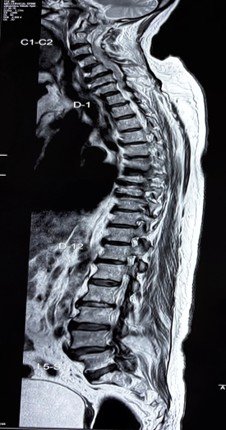
Pre-op MRI confirming C3-C4-C5 canal stenosis with cord signal changes consistent with myelopathy.
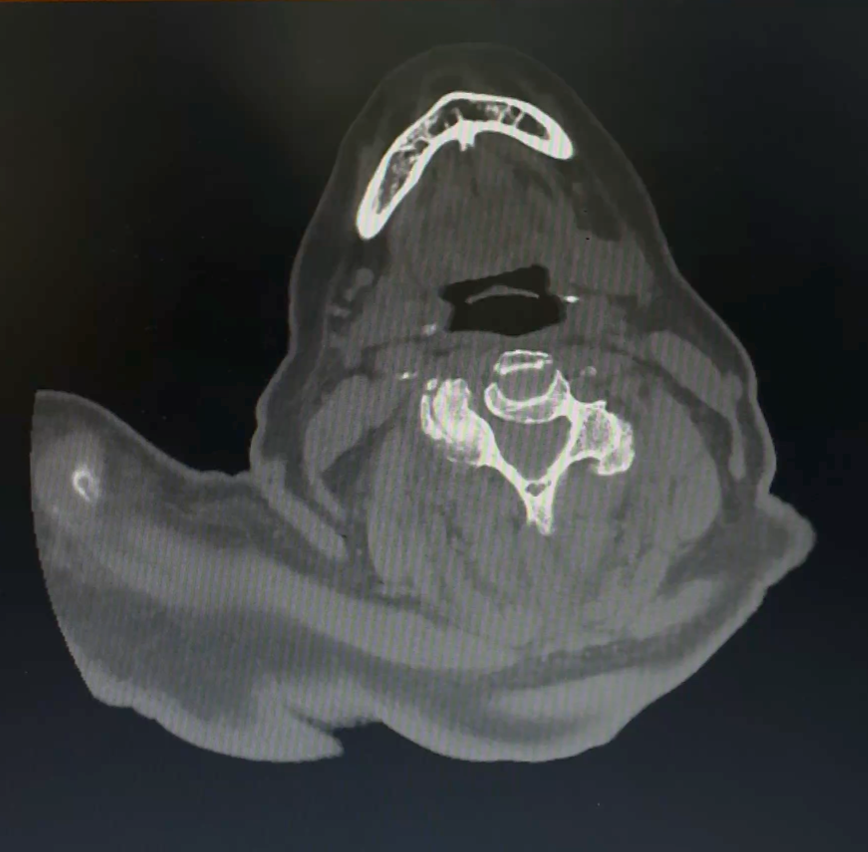
Pre-op CT delineating the bony anatomy and confirming multilevel canal narrowing prior to surgical planning.
Taken together, the scans painted a clear picture:
- The spinal canal at C3, C4, and C5 had narrowed significantly, compressing the spinal cord directly
- Signal changes within the cord on MRI confirmed myelopathy, meaning the spinal cord tissue itself was already under strain
- The bony detail on CT helped map exactly where decompression and fixation would be needed
This was not a simple case of neck stiffness. The scans confirmed that the spinal cord was under mechanical pressure severe enough to explain her sudden paralysis-like symptoms.
Why Was This Case Especially Challenging?
The combination of advanced age, sudden quadriparesis, a recent fall, and an unexplained fever made this a time-sensitive case requiring careful evaluation before urgent surgical decompression.
Several factors made this case demanding:
- Age: At 70, anaesthesia fitness, bone quality, and healing capacity all needed careful assessment before proceeding
- Severity of neurological deficit: Weakness in all four limbs signalled that the spinal cord compression had reached a critical stage
- The fever: A high-grade fever alongside new-onset paralysis required ruling out infective or inflammatory causes before confirming the diagnosis as stenosis-related myelopathy
- Multilevel disease: Stenosis spanning three vertebral levels (C3-C4-C5) meant decompression alone would not be enough; the spine also needed to be stabilised to prevent instability after bone removal
The goal was to relieve pressure on the spinal cord quickly, while also protecting the long-term stability of her cervical spine, without exposing an elderly patient to unnecessary surgical risk.
Laminectomy: Surgery Performed
A C3-C4-C5 laminectomy was performed to decompress the spinal cord, followed by C3-C6 lateral mass screw fixation using titanium implants to stabilise the cervical spine.
The procedure was carried out in two connected steps:
- Laminectomy (C3-C4-C5): The lamina, the bony arch at the back of each affected vertebra, was carefully removed at all three levels. This widened the spinal canal and lifted the pressure directly off the compressed spinal cord.
- Lateral mass screw fixation (C3-C6), titanium: Since removing bone at multiple levels can affect spinal stability, titanium screws and rods were placed from C3 to C6 to hold the cervical spine securely in position while it healed.
Performed under general anaesthesia with careful neuromonitoring, this combined decompression-and-fixation approach is a well-established technique for multilevel cervical canal stenosis with myelopathy, particularly when the spinal cord is under significant, symptomatic pressure.
You can read more about how this approach fits into broader Spinal Fixation Surgery options.
What Was the Outcome?
Post-operative imaging confirmed successful decompression of the spinal cord and correct placement of the titanium fixation, with the patient showing neurological improvement during recovery.
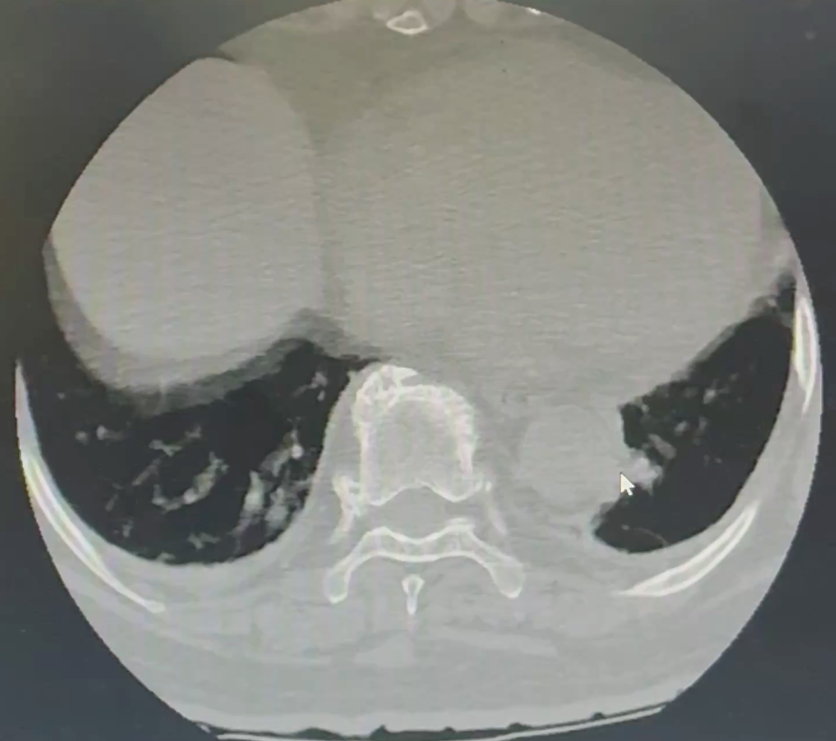
Post-op CT confirming well-positioned C3-C6 lateral mass screws and adequate decompression at the operated levels.
- The spinal canal was widened as intended, relieving cord compression
- Titanium screw and rod placement was confirmed to be accurate and stable on post-operative CT
- The patient began showing gradual improvement in limb strength during her recovery period, monitored closely in the post-operative phase
For a patient who arrived unable to move properly, with numbness across all four limbs, this represented a meaningful turning point back toward independence.
Why Does This Case Matter?
This case is a reminder that sudden weakness in the limbs after a fall in an older adult is a neurological emergency, not a routine injury, and that timely surgery can reverse what looks like a devastating outcome.
- A fall in an elderly patient can mask a far more serious underlying spinal cord problem
- Numbness and weakness in all four limbs after any trauma should prompt urgent neurological and imaging evaluation, not a “wait and watch” approach
- Cervical canal stenosis often develops silently over years; a fall can be the event that tips a narrowed canal into acute spinal cord compression
- Combined decompression and fixation surgery, even in a 70-year-old, can be performed safely with appropriate pre-operative evaluation and produce meaningful neurological recovery
- Age alone should not delay a decision for surgery when the spinal cord is at risk; functional outcome often depends more on how quickly compression is relieved than on the patient’s age
Older adults and their families should never dismiss sudden limb weakness, numbness, or difficulty walking after a fall as “just old age” or ordinary soreness. This is exactly the kind of presentation that needs prompt spinal imaging and specialist evaluation.
Learn more about Cervical Canal Stenosis Treatment, Minimally Invasive Spine Surgery, or explore all conditions treated by Dr. Vikas Gupta to understand how spinal cord compression is evaluated and managed. To discuss a similar case, book a consultation with Dr. Vikas Gupta.
This case study is published for educational and awareness purposes only. It does not constitute medical advice. Seek prompt medical attention for sudden weakness, numbness, or loss of movement following a fall.

 WhatsApp