
Thrombolysis for Stroke in Delhi: tPA Clot-Busting Injection
Stroke is a race against time. Every minute a brain artery stays blocked, millions of nerve cells are lost, which is why thrombolysis for stroke in Delhi is treated as an emergency and not a planned procedure. One clot-busting injection, given early, can dissolve the blockage and help restore speech, movement and independence. Recognising the signs and reaching a stroke-ready hospital in time decides whether this treatment is possible at all. The encouraging news is that thrombolysis for stroke in Delhi is available as a time-critical treatment, and with early action many people regain speech, movement and independence.
Dr. Vikas Gupta, Senior Consultant Neurosurgeon at Kailash Deepak Hospital, Karkardooma, has over 30 years of experience. He evaluates stroke patients for advanced options such as mechanical thrombectomy, working alongside emergency and neurology teams for complete care.
Reach Out for Expert Care
What Is Thrombolysis for Stroke?
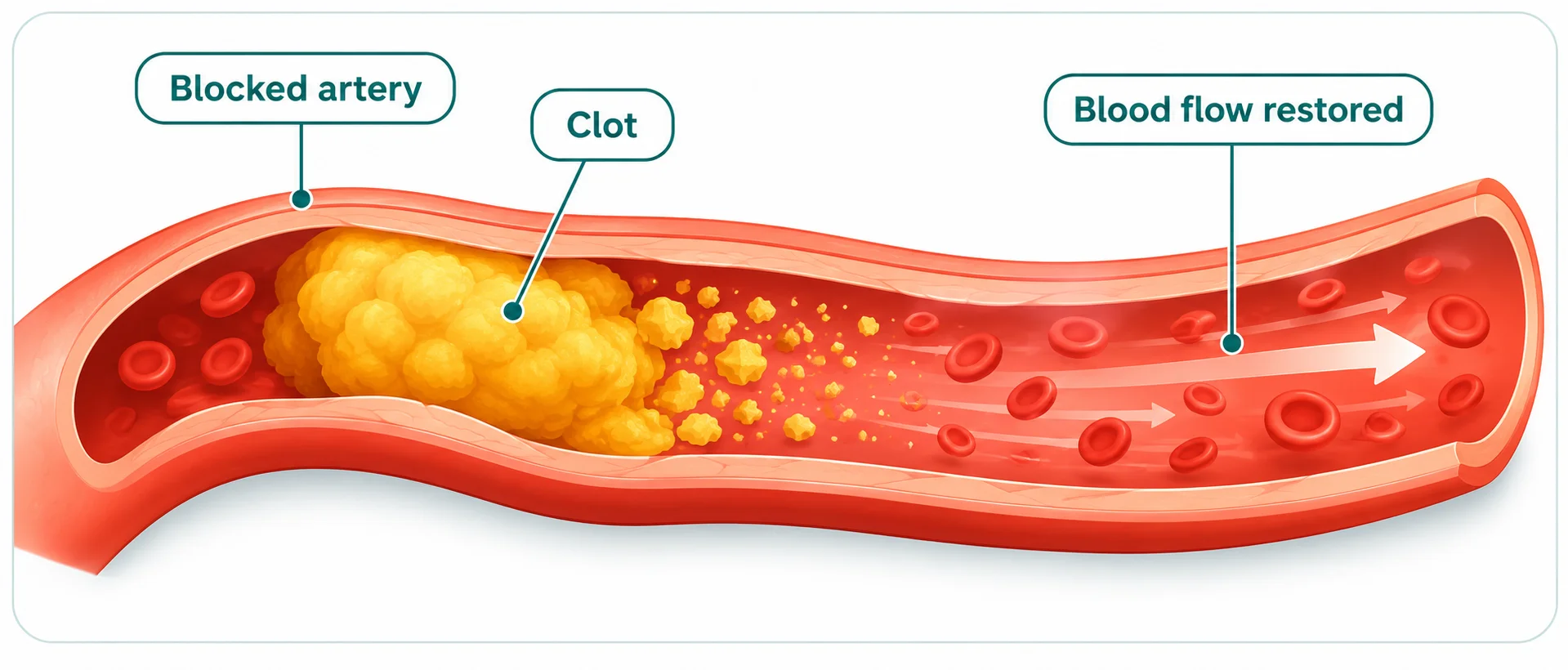
Thrombolysis is an emergency treatment in which a clot-dissolving medicine, usually tPA (alteplase) or tenecteplase, is given through a vein to reopen a blocked brain artery during an ischaemic stroke.
- Works only for ischaemic stroke (a blockage), the most common type
- Activates the body’s own clot-dissolving system to break down the clot
- Given only after a CT scan confirms there is no bleeding in the brain
It does not treat bleeding strokes, which is why a brain scan always comes first.
How Soon Must Thrombolysis Be Given After a Stroke?
Thrombolysis works best within 4.5 hours of the time the person was last known to be well, and the earlier it is given, the better the recovery.
- A pooled analysis of 6,756 patients found a good outcome in 32.9% of those treated with alteplase within 3 hours, against 23.1% without it (Lancet, 2014)
- Between 3 and 4.5 hours, the figures were 35.3% against 30.1%
- The 2026 AHA/ASA guideline says treatment may be reasonable between 4.5 and 9 hours, or after waking with symptoms, if advanced imaging shows salvageable brain tissue
- The clock starts from when the person was last seen normal, not when the symptoms were noticed
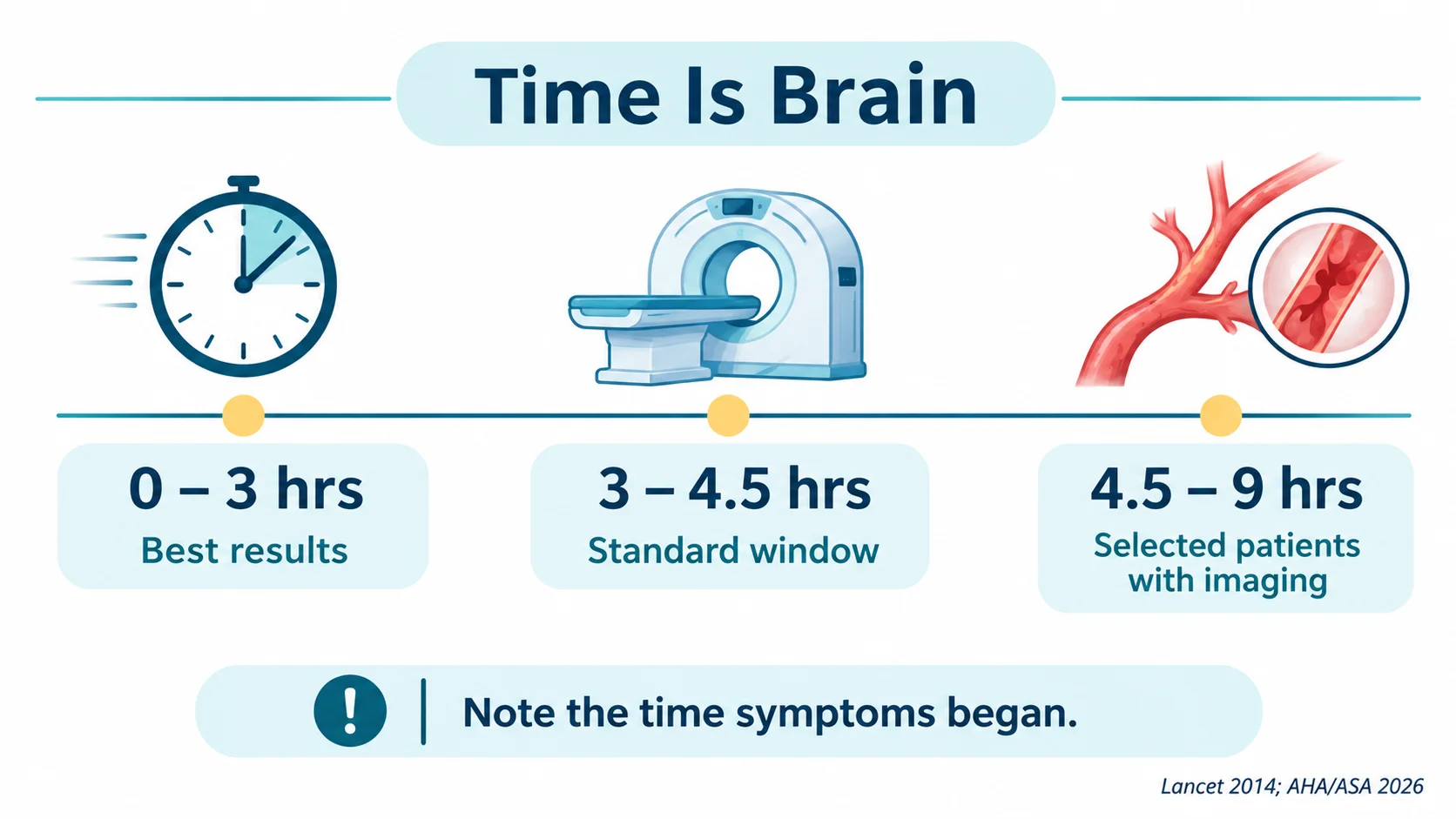
Note the exact time symptoms began, as it shapes the treatment decision.
Who Is Eligible for Thrombolysis?
People with disabling stroke symptoms, a CT scan showing no bleeding, and arrival within the treatment window are usually eligible.
- Sudden weakness or numbness, a drooping face, slurred speech, vision loss or loss of balance
- Symptoms that interfere with walking, speaking, seeing or using an arm, even if mild on paper
- Blood pressure brought within safe limits before the injection
Eligibility is decided within minutes, so never delay travelling to the hospital.
Who Cannot Receive the tPA Injection?
Thrombolysis is avoided when the risk of bleeding outweighs the benefit.
- Bleeding seen on the CT scan
- Recent major surgery, serious head injury or earlier stroke
- Very high blood pressure that cannot be controlled
- Recent use of blood thinners or abnormal clotting results
Share every medicine and recent procedure with the emergency team immediately.
How Is Thrombolysis Given?
Thrombolysis is given as an intravenous injection or drip in the emergency room after a rapid CT scan, followed by close monitoring in a stroke unit or neuro-ICU.
- Quick neurological check, blood sugar test and CT scan
- Tenecteplase is given as a single intravenous bolus, while alteplase is given as a bolus followed by a one-hour infusion
- Blood pressure and neurological checks are repeated at frequent intervals for the first 24 hours
- A repeat scan is usually done before antiplatelet or blood-thinning medicines are started
Speed matters at every step.
Thrombolysis vs Mechanical Thrombectomy: What Is the Difference?
Thrombolysis dissolves a clot with medicine, while mechanical thrombectomy physically removes a large clot using a catheter, and many patients with a large-vessel blockage benefit from both.
- Thrombolysis: given through a vein, usually within 4.5 hours
- Thrombectomy: a catheter is guided to the clot through the groin or wrist, suited to large-vessel blockages, with extended windows in selected patients
- CT angiography shows which patients need the catheter procedure
Read more about mechanical thrombectomy for stroke →
Benefits and Risks of Thrombolysis
Thrombolysis improves the chance of a good recovery, but it carries a risk of bleeding in the brain, which doctors weigh carefully for every patient.
- Benefit: pooled data show about 10 more people in every 100 recover without disability when treated within 3 hours, and about 5 more when treated between 3 and 4.5 hours
- Risk: symptomatic brain bleeding occurred in 3.7% of alteplase-treated patients against 0.6% of controls (SITS-MOST definition)
- Tenecteplase at 0.25 mg/kg is now an equally recommended option to alteplase within 4.5 hours
These figures are published literature ranges and not outcomes of any single hospital.
Recovery After Thrombolysis
Recovery depends on how much brain tissue was saved. Some people improve within hours or days, while others need weeks to months of rehabilitation.
- First 24 hours: monitoring in a stroke unit or neuro-ICU
- Rehabilitation: physiotherapy, speech therapy and occupational therapy
- Prevention: blood pressure, sugar and cholesterol control, antiplatelet medicines and a heart-rhythm check
Learn about silent stroke and prevention → and TIA →.
Preventing the next stroke is as important as treating the first one.
Thrombolysis Cost for Stroke in Delhi
The cost of thrombolysis for stroke in Delhi depends mainly on the clot-dissolving drug used and the level of care needed afterwards. Hospital-published estimates in India put the drug cost starting price alone at about ₹45,000 for alteplase and ₹25,000 for tenecteplase (indicative starting cost only), with the total higher once scans and ICU care are added. Key factors include:
- Choice of thrombolytic drug
- CT scan, CT angiography or MRI
- Stroke unit or ICU stay
- Whether mechanical thrombectomy is also needed
- Insurance coverage and pre-authorisation
The treating hospital shares a clear estimate at the time of emergency admission.
Stroke Evaluation and Treatment Planning inDelhi
Stroke care works best as a team effort between emergency physicians, neurologists and neurosurgeons.
- 30+ Years of Neurosurgical Experience: Senior Consultant Neurosurgeon and Neurointerventional Specialist, managing complex elective and emergency brain conditions at Kailash Deepak Hospital, Karkardooma. [Add MBBS/MCh/fellowship details once confirmed]
- Team-Based Stroke Care: Thrombolysis is decided together with the emergency physician and treating neurologist, based on timing, scan findings and overall health.
- Right Approach for the Blockage: CT, MRI and angiography show whether medicine alone is enough or a thrombectomy or surgery is needed.
- Setting and Access: NABH and NABL-accredited Kailash Deepak Hospital with a neuro-ICU, reached easily from Karkardooma, Anand Vihar and across Delhi NCR.
- Clear Communication: Risks, recovery and cost are explained openly.
Book a Consultation for Stroke Treatment in Delhi
A stroke in progress is always an emergency, but a consultation helps after the emergency has passed, for follow-up, prevention planning or a second opinion on thrombolysis, thrombectomy or surgery.
What to bring for your consultation:
- Time symptoms began and the hospital discharge summary, if admitted
- CT, MRI or angiography films and reports
- Current medicine list, including blood thinners
- Records of blood pressure, sugar and cholesterol
The team guides you through every step, from assessment and treatment planning to rehabilitation and prevention, with expertise, transparency and genuine care.
Call 112 or go to the nearest emergency department at once for sudden weakness, facial droop, speech difficulty, vision loss or severe imbalance. Explore other neurological conditions we treat, such as brain haemorrhage.
Sources:
Emberson et al. – Lancet 2014: Alteplase Individual Patient Meta-analysis
AHA/ASA – 2026 Guideline for the Early Management of Acute Ischemic Stroke
TCTMD – Summary of the 2026 AHA/ASA Stroke Guideline
Endovascular Today – Practical Impact of the 2026 AHA/ASA Stroke Guideline
Annals of Indian Academy of Neurology – Biosimilar Tenecteplase in India
Frequently Asked Questions
Is the tPA injection safe for stroke? expand_more
In carefully selected patients it is considered safe and effective, but it carries a small risk of brain bleeding, which is explained and monitored.
Can thrombolysis be given after 4.5 hours? expand_more
In selected patients with salvageable brain tissue on advanced imaging, it may be considered up to 9 hours, as per the 2026 AHA/ASA guideline.
What is the difference between alteplase and tenecteplase? expand_more
Both dissolve clots. Tenecteplase is a single bolus injection, while alteplase needs a one-hour infusion.
What should I do if someone shows stroke symptoms? expand_more
Call 112, note the time symptoms began, keep the person lying comfortably, and give no food, water or medicines before a doctor assesses them.
How can I book an appointment with Dr. Vikas Gupta? expand_more
Fill out the online appointment form on the website by phone or any device.

Dr. Vikas Gupta’s Medical Content Team
Dr. Vikas Gupta’s medical content team specialises in creating accurate, clear, and patient-focused healthcare content. With strong clinical understanding and expertise in technical writing and SEO, the team translates complex medical information into reliable, accessible resources that support informed decisions and uphold Dr. Gupta’s commitment to quality care.
This content is reviewed by Dr. Vikas Gupta

Related Blogs


 WhatsApp