
Slip Disc Treatment in Delhi
A spinal disc sits between each pair of bones (vertebrae) in your spine and acts like a small shock absorber, keeping your spine flexible and cushioned during everyday movements. Each disc has a firm outer ring (annulus fibrosus) and a soft, gel-like centre (nucleus pulposus). When the outer ring weakens or tears, the inner gel pushes outward. This is what most people know as a slip disc, medically referred to as a spinal disc herniation, bulging disc, or prolapsed disc.
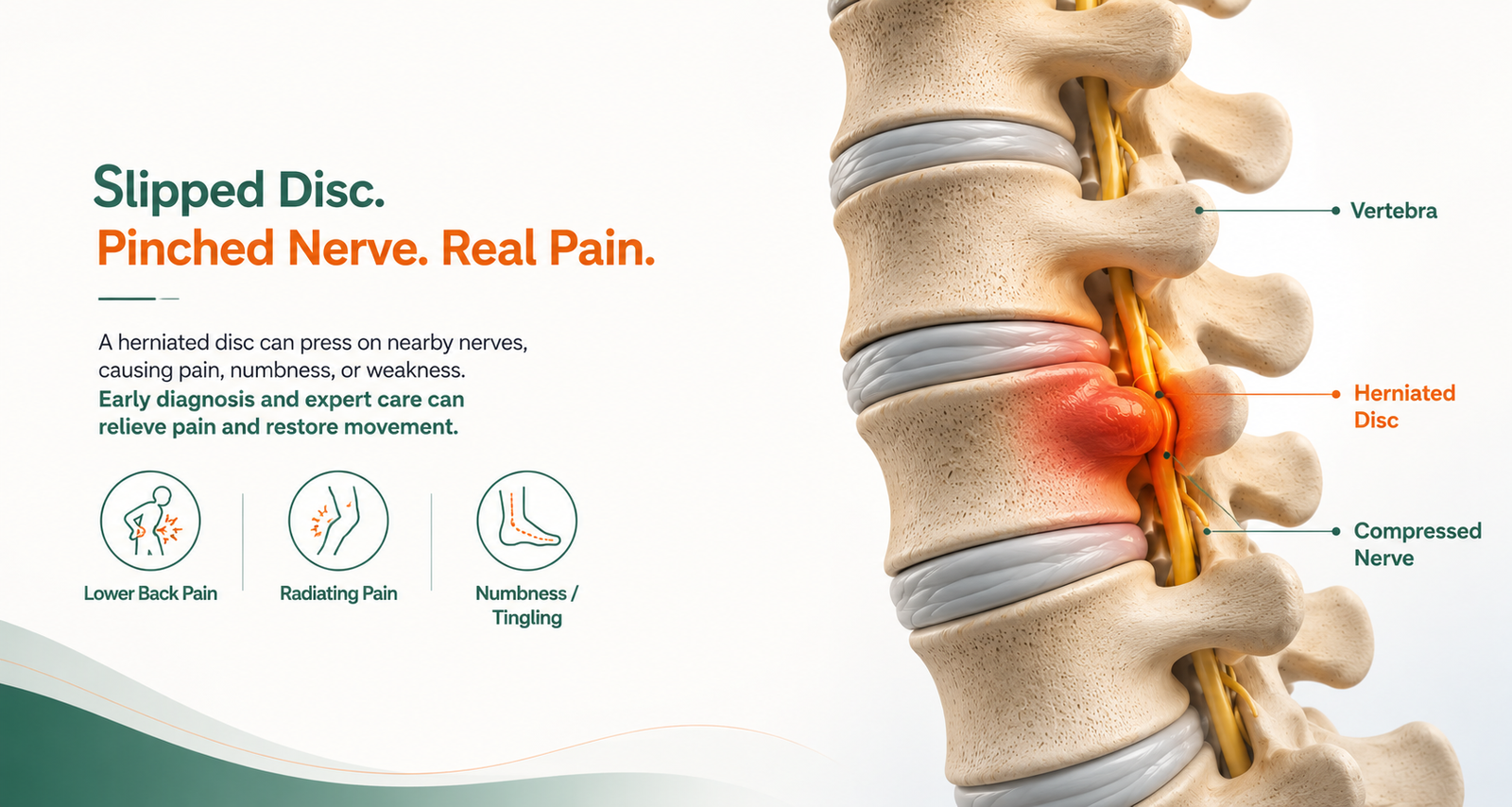
With over 30 years of neurosurgical experience, Dr. Vikas Gupta, Senior Consultant Neurosurgeon and Spine Specialist at Kailash Deepak Hospital, Delhi, offers comprehensive, personalised slip disc treatment in Delhi, from conservative management and physiotherapy to advanced minimally invasive spine surgery and microdiscectomy.
Reach Out for Expert Care
What Is a Slip Disc (Spinal Disc Herniation)?
A slip disc, also called a herniated, prolapsed, or ruptured disc, occurs when the soft inner material of a spinal disc pushes through a crack or tear in its outer layer. This displaced material can press directly on nearby spinal nerve roots or the spinal cord, triggering pain, tingling, numbness, or muscle weakness.
The lower back (lumbar region) accounts for the majority of spinal disc problems, but cervical disc herniation in the neck is also common and can cause symptoms that radiate into the arms and hands. Depending on where the spinal disc herniation occurs and how much pressure is placed on the nerve, symptoms can range from mild discomfort to severe, disabling pain.
Not every slipped disc requires surgery. In many cases, with the right treatment plan, patients achieve significant relief and a return to normal activity.
Causes of a Slip Disc
Slip disc causes are rarely the result of a single event. In most cases, the disc weakens gradually over time before a trigger, such as lifting something heavy or making a sudden, awkward movement, causes it to herniate.
Common slip disc causes include:
- Age-related disc degeneration: As we age, spinal discs lose water content and become less flexible, making them more prone to tearing. This is the most common underlying cause of spinal disc problems.
- Sudden strain or injury: Lifting heavy objects with poor posture, a fall, or a sudden twisting motion can cause a spinal disc tear, especially in the lumbar spine.
- Repetitive physical stress: Jobs or activities that involve repeated bending, lifting, or prolonged sitting put sustained pressure on the discs, gradually weakening them.
- Poor posture and sedentary lifestyle: Sitting for long hours, particularly with poor spinal alignment, increases pressure on the lower back discs and accelerates degeneration.
- Excess body weight: Extra weight places added load on the lumbar spine, increasing the risk of disc herniation.
- Genetic predisposition: Some individuals inherit a tendency toward weaker disc tissue, making spinal disc herniation more likely even without obvious triggers.
- Smoking: Reduced blood supply to the discs due to smoking accelerates disc degeneration.
Understanding the root causes helps guide treatment decisions and prevent future recurrence.
What Are the Symptoms of a Slip Disc?
Spinal disc problem symptoms vary significantly depending on which disc is affected and whether it is pressing on a nerve. Some people with a herniated disc experience no symptoms at all. When symptoms do appear, they may include:
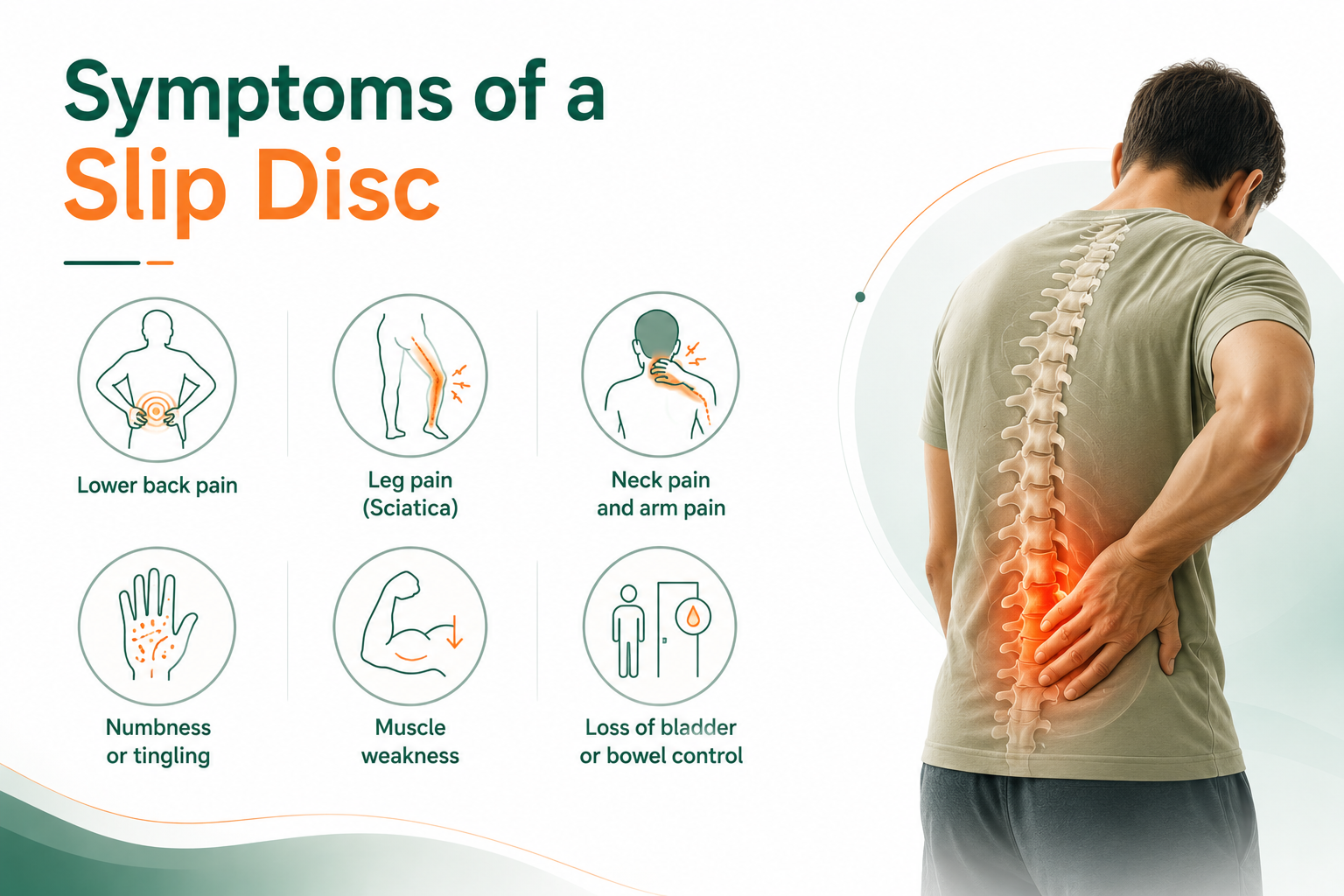
If you recognise any of these symptoms, particularly radiating pain, weakness, or numbness, prompt evaluation by a spine specialist is strongly advised. Early diagnosis prevents worsening of the spinal cord disc condition.
How Is a Slip Disc Diagnosed?
Accurate diagnosis of a spinal disc problem requires a combination of clinical evaluation and targeted imaging. Dr. Vikas Gupta conducts a thorough assessment to determine the exact level and extent of disc herniation before recommending any treatment.
- Neurological examination: Assessment of reflexes, muscle strength, and sensation helps identify which nerve roots are affected.
- MRI (Magnetic Resonance Imaging): The most valuable imaging tool for diagnosing a slip disc. MRI provides detailed, high-resolution images of the disc, spinal cord, and surrounding nerves, clearly showing the location and degree of herniation.
- CT Scan: Useful when MRI is not available or to assess the bony structures of the spine in detail. Often combined with myelography (CT myelogram) for complex cases.
- X-Ray: While it does not directly show disc herniation, X-ray helps rule out other causes of back pain, such as fractures, infections, or lumbar spondylosis.
- Nerve conduction studies (EMG/NCS): These tests measure electrical activity in nerves and muscles, helping confirm which nerves are compressed and to what degree.
A precise diagnosis is the foundation of safe, effective slip disc treatment. Imaging findings are always interpreted in the context of the patient’s symptoms and physical examination.
Slip Disc Treatment Options in Delhi
Treatment for a spinal disc problem is tailored to the severity of symptoms, the degree of herniation, the patient’s age, overall health, and the extent to which the condition affects daily function. Most patients improve with non-surgical management; surgery is considered when conservative measures fail or when neurological symptoms are progressing.
Conservative (Non-Surgical) Treatment
For most patients with a slip disc problem, non-surgical treatment is the first line of management and is effective in relieving symptoms over several weeks.
- Rest and activity modification: Short-term rest combined with avoiding movements that worsen pain helps reduce inflammation around the herniated disc.
- Medications: Non-steroidal anti-inflammatory drugs (NSAIDs) reduce pain and swelling. Muscle relaxants may be prescribed for associated spasms. In some cases, short courses of oral steroids or nerve-specific medications such as gabapentin are used.
- Physiotherapy and targeted exercises: A structured physiotherapy programme is one of the most important aspects of slip disc treatment. Core strengthening, posture correction, and spinal mobilisation exercises reduce nerve pressure and support long-term recovery.
- Epidural steroid injections: When pain is severe or not responding to oral medications, a guided injection of corticosteroid around the affected nerve root can provide significant relief by reducing local inflammation.
- Lifestyle and posture corrections: Ergonomic changes at work, healthy weight management, and avoiding prolonged sitting are key to preventing recurrence.
Surgical Treatment for Slip Disc in Delhi
Surgery is recommended when the spinal disc herniation causes persistent, disabling pain despite adequate conservative treatment, or when neurological deficits (weakness, loss of bladder/bowel control) are present.
- Microdiscectomy: The most common and effective surgical procedure for lumbar disc herniation. Using microscopic magnification, the herniated disc material pressing on the nerve is carefully removed through a small incision. Most patients experience rapid relief of leg pain after surgery. Learn more about microdiscectomy surgery in Delhi.
- Minimally Invasive Spine Surgery (MISS): Advanced techniques that achieve the same goal as open surgery through tiny incisions, causing less muscle disruption, reduced blood loss, shorter hospital stays, and faster recovery. Dr. Vikas Gupta is experienced in minimally invasive spine surgery in Delhi.
- Cervical Disc Replacement: For cervical spinal disc herniation, disc replacement preserves neck motion while relieving nerve compression — an important alternative to fusion in suitable candidates. Explore cervical disc replacement surgery in Delhi.
- Spinal Fusion Surgery: When disc removal alone is insufficient, particularly in cases with spinal instability or multi-level disease, spinal fusion surgery stabilises the spine by permanently joining affected vertebrae.
- Spinal Fixation Surgery: In cases where vertebral instability accompanies disc disease, spinal fixation surgery in Delhi using screws, rods, or plates restores structural integrity.
Recovery After Slip Disc Treatment
Recovery timelines vary based on the treatment approach and the severity of the spinal disc problem.
- After conservative treatment: Most patients notice significant improvement within 4 to 12 weeks of physiotherapy and medication. Full recovery may take 3 to 6 months with consistent adherence to the rehabilitation plan.
- After microdiscectomy or minimally invasive surgery: Many patients return home within 1 to 2 days of surgery. Leg pain from nerve compression often improves rapidly. Back soreness at the surgical site typically resolves within 2 to 4 weeks. Most patients return to desk work within 2 to 4 weeks and to more physical activities within 6 to 12 weeks.
- After spinal fusion or disc replacement: Recovery is longer, typically 3 to 6 months for full return to physical activity, with guided physiotherapy throughout.
Rehabilitation plays a vital role regardless of the treatment chosen. Physiotherapy after surgery helps rebuild core strength, restore movement, and prevent recurrence of spinal disc problems.
Related conditions that can accompany or complicate a slip disc include cervical spondylosis, lumbar spondylosis, and spinal injury, all of which Dr. Vikas Gupta manages with a personalised, evidence-based approach.
Cost of Slip Disc Treatment in Delhi
The slip disc treatment cost in Delhi ranges from ₹1,20,000 to ₹3,50,000, depending on the severity of the condition and the type of treatment required. Conservative management with physiotherapy and medications is significantly less expensive than surgical intervention.
Factors that influence the overall cost include:
- Specific procedure required (microdiscectomy, disc replacement, or spinal fusion)
- The number of spinal levels involved
- Duration of hospital stay, ICU or HDU requirements if needed
- Diagnostic imaging (MRI, CT scan, nerve studies)
- Post-operative physiotherapy and follow-up.
A detailed, personalised cost estimate is provided during your consultation after evaluation of your scans and clinical findings.
Why Patients in Delhi Trust Dr. Vikas Gupta for Slip Disc Treatment?
Choosing the best spine specialist is one of the most important decisions you can make for a spinal cord disc problem. Patients across East Delhi, Delhi NCR, and neighbouring states seek care from Dr. Vikas Gupta for the following reasons:
- 30+ Years of Neurosurgical and Spine Experience: Extensive hands-on expertise in managing the full spectrum of spinal disc problems, from mild herniation to complex multi-level disease.
- Expertise in Minimally Invasive Techniques: Proficient in microdiscectomy and minimally invasive spine surgery that reduce recovery time and surgical trauma.
- Personalised, Evidence-Based Treatment Planning: Every slip disc case is evaluated individually. Non-surgical options are always explored first; surgery is recommended only when genuinely necessary.
- Advanced Diagnostic Capabilities: Access to high-resolution MRI, CT, and nerve conduction studies ensures accurate diagnosis before any treatment decision is made.
- Trusted Name Across Delhi NCR: Trusted neuro and spine care for patients from Karkardooma, East Delhi, and Delhi NCR.
Book a Consultation for Slip Disc Treatment in Delhi
A spinal disc problem can significantly affect your quality of life, but with the right diagnosis and timely treatment, most patients achieve meaningful recovery and return to the activities they love. Whether your symptoms are new or you have been living with back pain for months, early expert evaluation makes a real difference in outcomes.
During your consultation with Dr. Vikas Gupta
- Detailed review of your symptoms and medical history
- A focused neurological examination, assessment of your MRI and imaging reports
- A clear explanation of your diagnosis and treatment options
- An honest discussion of expected outcomes, risks, and recovery.
Book an appointment today or reach Dr. Vikas Gupta’s team via WhatsApp for a prompt response.
Frequently Asked Questions
What is the difference between a slip disc and a herniated disc? expand_more
They are the same condition described differently. "Slip disc" is the commonly used term in India, while "herniated disc" or "spinal disc herniation" is the clinical term. Both refer to the inner gel of a spinal disc pushing through its outer layer and pressing on a nearby nerve.
Can a slip disc heal on its own without surgery? expand_more
Yes, in many cases. The majority of patients with a slip disc improve significantly with conservative management, physiotherapy, medications, and lifestyle modifications, within 6 to 12 weeks. Surgery is recommended only when conservative treatment fails or when there are progressive neurological symptoms such as worsening weakness or loss of bladder control.
Is microdiscectomy safe? What is the success rate? expand_more
Microdiscectomy is a well-established, safe procedure with a high success rate. Most studies report that 85-95% of patients experience significant relief of leg pain after surgery. As with any surgical procedure, risks exist and are discussed in detail during your consultation.
How can I book an appointment with Dr. Vikas Gupta? expand_more
You can book an appointment with Dr. Vikas Gupta by contacting Neurological Hall or Kailash Deepak Hospital, Karkardooma, directly, or using their online appointment booking facilities.
How can I book an appointment at Kailash Deepak Hospital? expand_more
You can book an appointment at Kailash Deepak Hospital by calling the hospital reception directly or using the online appointment booking facility on the hospital's website.

Dr. Vikas Gupta’s Medical Content Team
Dr. Vikas Gupta’s medical content team specialises in creating accurate, clear, and patient-focused healthcare content. With strong clinical understanding and expertise in technical writing and SEO, the team translates complex medical information into reliable, accessible resources that support informed decisions and uphold Dr. Gupta’s commitment to quality care.
This content is reviewed by Dr. Vikas Gupta
Related Blogs
Disc Surgery for Leg Weakness and Back Pain in Osteoporosis
She Could Barely Walk. Her Spine Was Collapsing, and Her Bones Were Too Weak to…
Read Article →
Spinal Fusion Surgery for Disc Prolapse and Spinal Instability
She Had Been Managing the Pain for Months. Then One Morning, She Could Barely Move.…
Read Article →
Slip Disc vs Sciatica: How to Tell the Difference
When your back starts hurting, or a sharp pain shoots down your leg, it is…
Read Article →
 WhatsApp