
Brain Surgery in Delhi: A Patient Guide for 2026
Being told you or a loved one may need brain surgery is one of the most overwhelming moments a family can face, and in most cases, the first question is not about the surgery itself, but about where to begin.
Delhi has grown into one of India’s most advanced centres for neurosurgical care, with hospitals offering the full range of modern brain surgery techniques, from open craniotomy to minimally invasive keyhole procedures and catheter-based interventional treatments. Understanding what that actually means for a patient is the purpose of this guide.
Reach Out for Expert Care
When Is Brain Surgery Recommended?
Brain surgery is recommended when a structural problem in the brain, such as a tumour, bleeding, abnormal blood vessels, or blocked fluid, cannot be safely managed with medication alone and poses a meaningful risk to the patient’s health or quality of life.
The conditions that most commonly lead to a surgical recommendation include:
- Brain tumours (both benign and malignant)
- brain aneurysms
- brain AVMs
- Hydrocephalus
- brain haemorrhage
- skull base tumours.
In some patients, surgery is planned after a period of monitoring; in others, particularly those with a ruptured aneurysm or active bleeding, it is an emergency.
Not every diagnosis automatically means surgery. The decision depends on the size and location of the problem, the symptoms present, the patient’s overall health, and how the condition is likely to progress without intervention. A neurosurgeon’s role is to weigh all of these factors carefully before making a recommendation.
Types of Brain Surgery Available in Delhi
The main types of brain surgery available in Delhi include open craniotomy, minimally invasive endoscopic surgery, neurointerventional (catheter-based) procedures, and stereotactic radiosurgery, each suited to different conditions and patient profiles.
- Craniotomy is the traditional approach, where a section of the skull is temporarily removed to access the brain. It remains the standard for many tumours, haematomas, and complex vascular lesions. It is highly effective when the target area requires direct surgical access.
- Endoscopic brain surgery, also called keyhole or minimally invasive brain surgery, uses a thin camera-equipped tube inserted through a small incision or through the nose, reaching the target without opening the skull broadly. It is well-suited to conditions such as hydrocephalus, pituitary tumours, and intraventricular lesions.
- Neurointerventional procedures, such as endovascular coiling for aneurysms or embolisation for brain AVMs, are catheter-based, meaning no incision in the skull at all. A thin tube is guided through a blood vessel in the wrist or groin to reach and treat the abnormality inside the brain. These are among the most significant advances in neurovascular care in recent years.
- Radiosurgery options such as Gamma Knife and CyberKnife deliver precisely focused radiation to a target in the brain, with no incision at all. These are typically used for small tumours, AVMs, or lesions in high-surgical-risk locations.
The right approach is not a matter of preference, it is determined by the nature of the condition, its exact location, the patient’s age and health, and the neurosurgeon’s assessment of the safest and most effective route.
What to Expect Before, During, and After Brain Surgery?
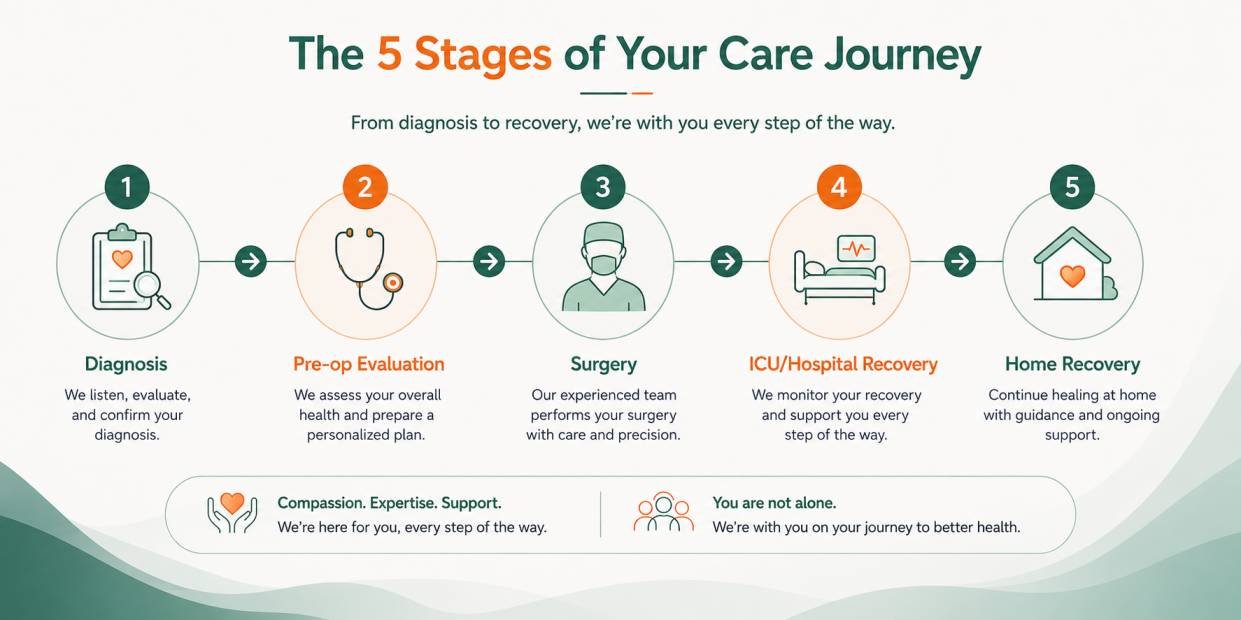
Before brain surgery, patients undergo a thorough neurological evaluation, advanced imaging (MRI, CT scan, and in some cases Digital Subtraction Angiography), blood and fitness tests, and a detailed discussion of the surgical plan, expected outcomes, and risks.
- The pre-operative workup can take a few days in non-emergency cases. Imaging is central to surgical planning; it tells the surgeon exactly where the target is, how it relates to surrounding healthy tissue, and which approach carries the least risk. Patients are generally advised to stop certain medications (such as blood thinners) before surgery, and anaesthesia fitness is assessed by the anaesthetist.
- On the day of surgery, most brain procedures are performed under general anaesthesia. Depending on the type of surgery, the procedure itself may last anywhere from one hour (for straightforward endoscopic procedures) to several hours for complex open surgeries. Modern operating theatres use intraoperative imaging and neuronavigation systems that allow real-time guidance throughout.
- After surgery, patients are monitored in a neuro-ICU, where neurological observations, blood pressure, and imaging are closely tracked. The ICU stay typically lasts one to three days for uncomplicated cases, followed by a general ward stay before discharge. A post-operative CT scan or MRI is standard before the patient goes home.
- Recovery at home varies considerably. Patients who have undergone endoscopic or catheter-based procedures often return to light activity within two to three weeks. Open surgery recovery takes longer; most patients need four to eight weeks before resuming normal routines, though this depends heavily on the individual and the extent of surgery.
How Much Does Brain Surgery Cost in Delhi?
Brain surgery cost in Delhi varies widely depending on the type of procedure, the complexity of the condition, the duration of hospital stay, and whether ICU care is required.
Major factors on which the cost of brain surgery in Delhi depends include:
- Diagnostics
- ICU charges
- Rehabilitation
- Follow-up imaging
Most comprehensive health insurance policies in India cover brain surgery as an inpatient procedure, though pre-authorisation timelines and coverage limits vary by policy.
How to Choose the Best Brain Surgeon in Delhi?
When choosing the best brain surgeon in Delhi, the most important factors are the surgeon’s specific experience with your type of condition, their access to advanced imaging and operation theatre technology, hospital accreditation, and whether they take time to explain the diagnosis and plan clearly. Two major things that you should keep in your mind before choosing the right brain surgeon in Delhi include:
- A neurosurgeon who specialises in both open microsurgery and endovascular techniques offers a broader range of treatment options than one trained in a single approach, particularly for conditions such as aneurysms, AVMs, or skull base tumours where the best route may not be immediately obvious.
- Hospital infrastructure matters. NABH-accredited facilities with dedicated neuro-ICUs, intraoperative neuromonitoring, and 24-hour neurosurgical support offer meaningfully better safety conditions than general hospitals without these capabilities.
It is also reasonable to seek a second opinion before proceeding, especially for elective brain surgery. A confident, experienced neurosurgeon will welcome this and support the patient’s need for clarity.
Why Patients Choose Dr. Vikas Gupta for Brain Surgery in Delhi?
- 30+ years of neurosurgical experience across complex elective and emergency brain conditions
- Dual expertise in microsurgery and neurointerventional procedures, offering both open surgical and catheter-based treatment options under one specialist
- Personalised treatment planning based on each patient’s imaging, grade, and health profile, no generic protocols
- Advanced infrastructure at Kailash Deepak Hospital, Karkardooma, a NABH-accredited facility with a dedicated neuro-ICU and modern operation theatres
- Transparent communication, patients and families are walked through the diagnosis, surgical plan, risks, and recovery clearly before any decision is made
- Trusted by patients across East Delhi, Delhi NCR, and neighbouring states for both routine and high-complexity neurosurgical care
A Note on Brain Surgery Outcomes in Delhi
Modern neurosurgery in Delhi has advanced considerably. For low-grade brain tumours, published surgical cure rates are high. For conditions such as brain aneurysms, endovascular coiling and surgical clipping both carry strong track records in experienced hands. Minimally invasive approaches have shortened recovery times significantly without compromising surgical precision.
That said, outcomes depend on the specific condition, its grade and location, how early it is caught, and the experience of the treating team. This is why the choice of neurosurgeon and hospital is not a secondary consideration; it is one of the most consequential decisions in the patient’s journey.
Brain surgery is not a single thing. It is a broad category of procedures, each with its own indications, techniques, and recovery paths. For patients navigating this for the first time, the goal of this guide is simply to make that landscape a little clearer, so that the conversations that follow with a specialist can be better-informed and less frightening.

 WhatsApp