
Epilepsy Treatment in Delhi
Epilepsy is a neurological condition that causes recurrent seizures, but with accurate diagnosis and appropriate treatment, many people can achieve good seizure control.
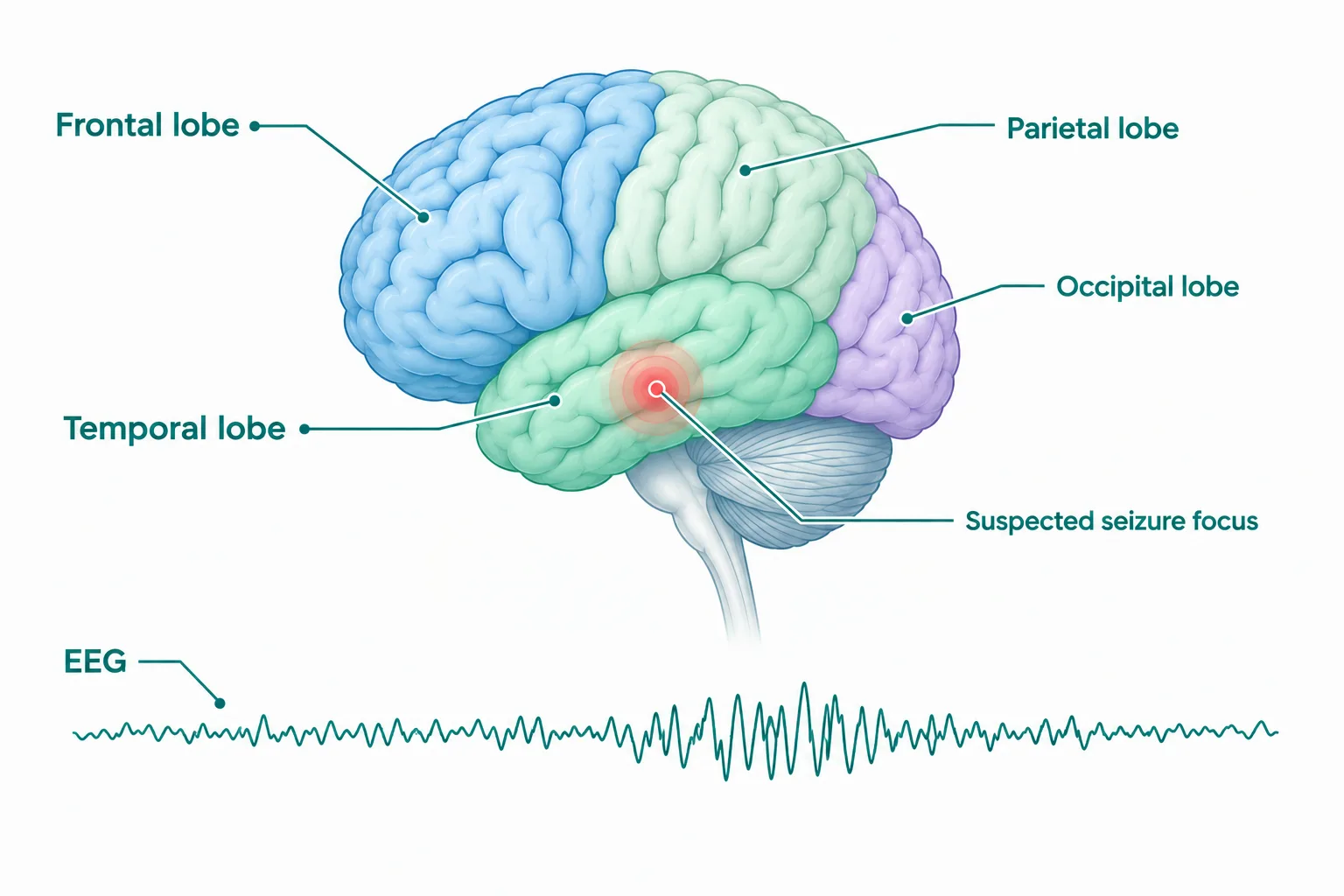
Dr. Vikas Gupta, Senior Consultant Neurosurgeon at Kailash Deepak Hospital, Karkardooma, provides comprehensive epilepsy treatment in Delhi, including seizure evaluation, medication management and surgical treatment for drug-resistant epilepsy when required. The treatment approach is tailored to the type, cause and frequency of seizures.
Reach Out for Expert Care
What Is Epilepsy?
Epilepsy (mirgi ka ilaj) is a brain condition in which abnormal electrical activity causes repeated, unprovoked seizures. It is usually diagnosed after two or more seizures that were not triggered by fever, injury, or low blood sugar.
- Seizures can affect movement, awareness, sensation, or behaviour.
- It can start at any age, from infancy to later life.
- Common causes include birth injury, head injury, brain infection, stroke, tumour, or abnormal blood vessels. In many people, no cause is found.
- Epilepsy is not contagious and is not a mental illness.
With early, correct care, most people live full and active lives.
Types of Seizures
Seizures are mainly classified as focal seizures, which start in one area of the brain, and generalised seizures, which involve both sides of the brain from the beginning.
- Focal seizures: Start in one specific area of the brain and may occur with or without loss of awareness.
- Generalised seizures: Involve both sides of the brain from the beginning and may cause loss of consciousness and muscle stiffening or jerking.
- Focal to bilateral tonic-clonic seizures: Begin in one area and then spread to both sides of the brain, causing loss of consciousness and convulsions.
A seizure lasting more than five minutes, or repeated seizures without recovery of consciousness, is a medical emergency. Seek immediate hospital care.
Symptoms of Seizures
The most common symptoms of epilepsy include staring spells, sudden jerking or stiffening, loss of awareness, unusual sensations, repetitive movements, and confusion after a seizure.
Symptoms can vary depending on where the seizure starts in the brain.
- Sudden staring or a blank look with no response
- Jerking, stiffening, or sudden falls
- Unusual smells, tastes, déjà vu, or a rising sensation in the stomach
- Repeated lip-smacking, chewing, or hand movements
- Temporary confusion, difficulty speaking, or loss of awareness
- Tongue biting, loss of bladder control, or unusual sleepiness after a seizure
Recognising these signs early can help distinguish a seizure from other conditions and ensure timely neurological evaluation and treatment.
When Should You See a Neurosurgeon for Epilepsy?
See a neurosurgeon when seizures continue despite two properly chosen anti-seizure medicines. This is called drug-resistant epilepsy, and it affects roughly 1 in 3 people with epilepsy. Surgery may give them the best chance of control.
- Seizures continue even with the right medicines at the right dose
- An MRI shows a cause such as a tumour, cavernoma, scar, or brain AVM
- Medicines cause troublesome side effects
- Seizures lead to injuries or disrupt work or school
- A child has frequent seizures that affect development
Early referral matters, because uncontrolled seizures can affect memory, safety, and quality of life.
How Is Epilepsy Diagnosed?
Epilepsy is diagnosed through your seizure history, an EEG, and an MRI of the brain. For surgical planning, video-EEG monitoring and advanced scans help locate exactly where seizures begin.
- History: A family member’s description or phone video of the seizure is very helpful.
- EEG: Records the brain’s electrical activity.
- MRI brain (epilepsy protocol): Detects scars, tumours, and developmental changes.
- Video-EEG monitoring: A short hospital stay to capture seizures on camera and EEG together.
- PET, SPECT, or memory testing: Used in selected surgical candidates.
Bring all previous EEG and MRI reports, plus your medicine list, to your first visit.
What Are the Epilepsy Treatment Options in Delhi?
Epilepsy treatment in Delhi begins with anti-seizure medicines, which control seizures in about 7 out of 10 people. If medicines fail, surgery or nerve-stimulation devices may be considered.
- Medicines: Take them regularly and never stop suddenly.
- Lifestyle: Keep regular sleep, avoid alcohol, manage stress, and take care around heights, fire, and water.
- Resective surgery: Removes the small brain area where seizures start.
- Lesion removal: Removes the cause, such as a brain tumour or AVM.
- Disconnection procedures: Used in selected cases to stop seizures from spreading.
- Vagus nerve stimulation (VNS): A device option for selected patients.
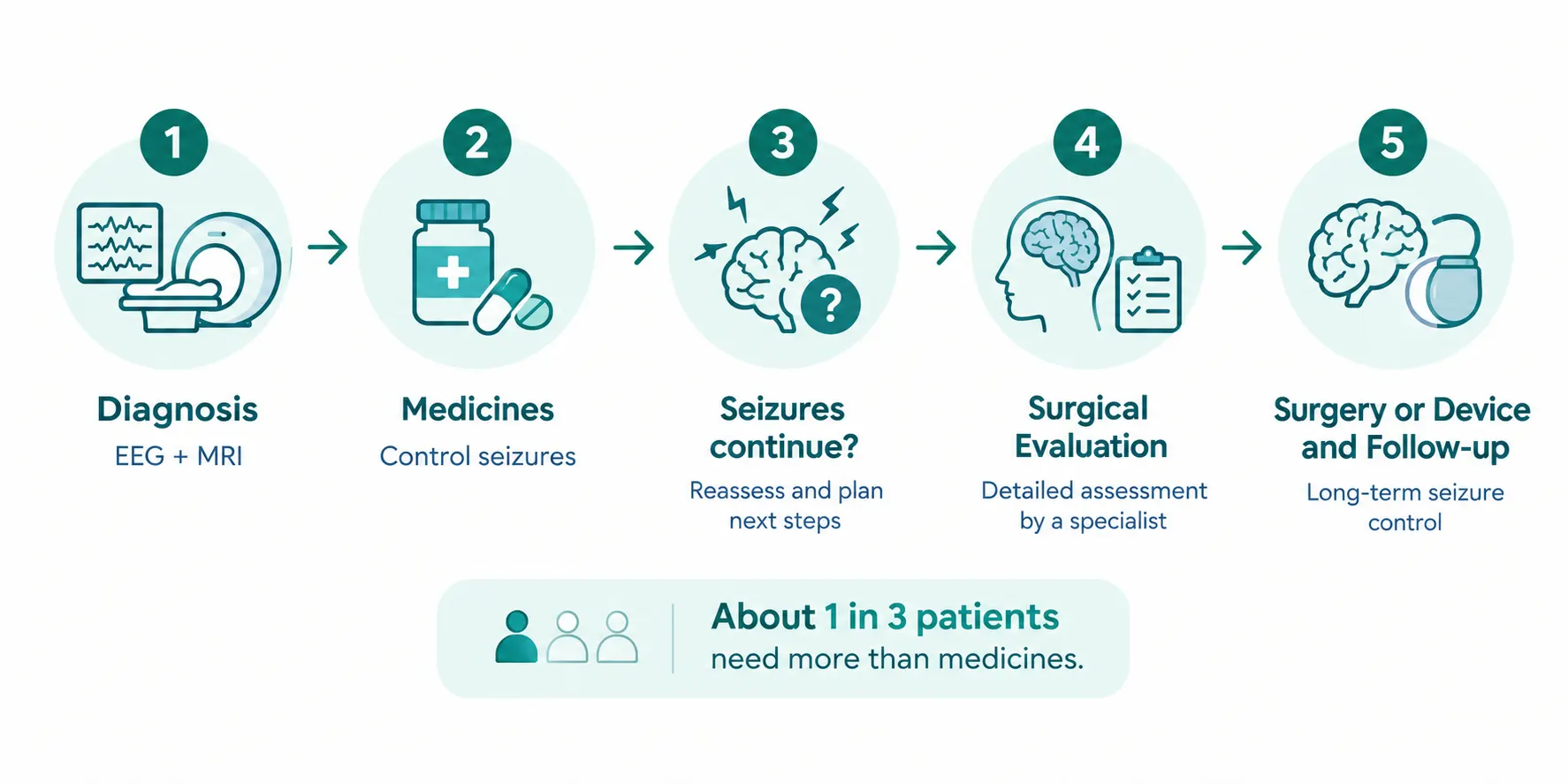
The right option depends on your seizure type, scans, age, and overall health.
What Is Epilepsy Surgery in Delhi Like?
Epilepsy surgery removes or disconnects the small brain area where seizures begin, performed under general anaesthesia. Studies show that over half of carefully selected patients with temporal lobe epilepsy become seizure-free after surgery.
- Before surgery: Tests, team discussion, and honest counselling on benefits and risks.
- During surgery: A craniotomy guided by neuronavigation and a microscope. Sometimes the patient is awake so that speech areas can be protected.
- After surgery: Neuro-ICU monitoring and a follow-up scan. The hospital stay is usually about 5-10 days.
- Risks: Bleeding, infection, and changes in memory or vision. These depend on the location and are discussed beforehand.
For lesions near the ventricles, endoscopic brain surgery may also be an option.
Results vary from patient to patient, so no outcome can be guaranteed.
How Is Recovery After Epilepsy Treatment?
Most patients return to light activity within 2-4 weeks after epilepsy surgery. Medicines usually continue for some time, and follow-up EEGs guide slow, supervised dose reduction.
- Weeks 1-2: Rest at home and wound care.
- Weeks 4-6: Gradual return to school or light work.
- Medicines: Reduce them only under your doctor’s guidance, usually after a long seizure-free period.
- Daily life: Maintain regular sleep and manage stress. Follow your doctor’s advice on driving.
Steady follow-up is the best protection for long-term control.
Epilepsy Treatment Cost in Delhi
Epilepsy treatment cost in Delhi generally starts from ₹1,70,000 and depends on the care needed. Evaluation and medicines cost far less than surgery, depending on the procedure, tests, and hospital stay.
- Type of procedure (lesion removal, resective surgery, or device)
- Video-EEG days and advanced imaging
- ICU and total hospital stay
- Implanted devices, which add cost
- Insurance coverage and pre-authorisation
A written estimate is shared after your reports are reviewed, so you can plan without surprises.
Why Choose Dr. Vikas Gupta for Epilepsy Treatment in Delhi?
Patients choose Dr. Vikas Gupta for his 30+ years of neurosurgical experience and personalised planning at NABH and NABL-accredited Kailash Deepak Hospital. He is trusted for epilepsy linked to tumours, AVMs, and other brain lesions.
- Expertise in microsurgical and endovascular techniques
- Neuronavigation, intraoperative imaging, and a dedicated neuro-ICU
- Treatment planned individually, with no generic protocols
- Clear discussion of risks, outcomes, and cost
- Convenient for Karkardooma, Anand Vihar, and East Delhi
Your care plan is built around your scans and your life, not a template.
Book a Consultation for Epilepsy Treatment in Delhi
A consultation reviews your reports, explains your seizure type, and tells you whether surgery could help. Book an appointment.
- Review of EEG, MRI, and medicine history
- Assessment of drug-resistant epilepsy and surgical suitability
- Plain-language explanation of options, risks, and recovery
- Transparent cost discussion
For seizures lasting over five minutes, head injury, or breathing difficulty, seek emergency care immediately.
Frequently Asked Questions
Can epilepsy be cured completely? expand_more
Some people, especially after successful surgery, become seizure-free and may later stop medicines. Others control seizures well with tablets. The outcome depends on the cause and seizure type.
Is epilepsy surgery safe? expand_more
In carefully selected patients at an experienced centre, it is considered safe. Risks depend on the brain area involved and are explained before surgery.
Can I stop my medicines if I feel better? expand_more
No. Stopping suddenly can trigger severe seizures. Changes should be made only by your doctor.
Is epilepsy hereditary? expand_more
Sometimes. Most people with epilepsy have no family history, and the risk to children is usually low.
How can I book an appointment with Dr. Vikas Gupta? expand_more
You can book an appointment with Dr. Vikas Gupta by contacting us directly or using our online appointment booking facilities available on this website.

Dr. Vikas Gupta’s Medical Content Team
Dr. Vikas Gupta’s medical content team specialises in creating accurate, clear, and patient-focused healthcare content. With strong clinical understanding and expertise in technical writing and SEO, the team translates complex medical information into reliable, accessible resources that support informed decisions and uphold Dr. Gupta’s commitment to quality care.
This content is reviewed by Dr. Vikas Gupta
 WhatsApp