
Endovascular Treatment for Brain AVMs in Delhi
A brain AVM can remain undetected for years-until it suddenly ruptures and causes a life-threatening brain haemorrhage. Endovascular Treatment for Brain AVMs in Delhi is a minimally invasive, image-guided procedure that blocks abnormal blood vessels to reduce the risk of bleeding, preserve brain function, and, in selected cases, completely close the AVM.
With over 30 years of experience, Dr. Vikas Gupta, Senior Consultant Neurosurgeon and Neurointerventional Specialist, provides expert endovascular treatment for Brain AVMs in Delhi using advanced, image-guided embolisation and personalised treatment planning.
Reach Out for Expert Care
Understanding Endovascular Treatment for Brain AVMs
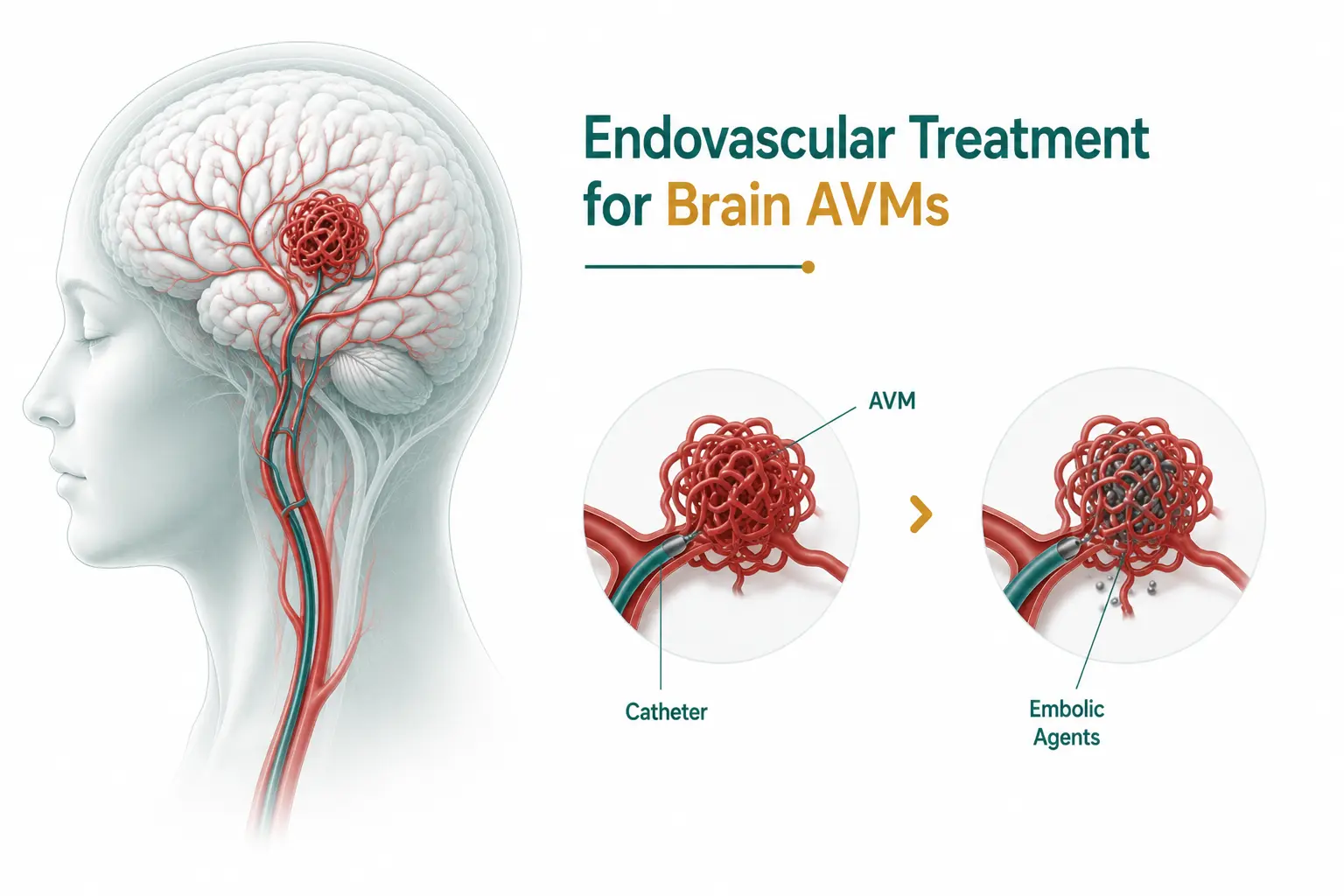
Endovascular Treatment for Brain AVMs is a minimally invasive, image-guided procedure that blocks abnormal blood vessels to reduce the risk of bleeding while preserving healthy brain tissue. It may be performed as a standalone treatment or alongside surgery or stereotactic radiosurgery, depending on the AVM.
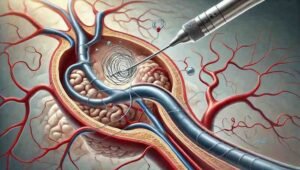
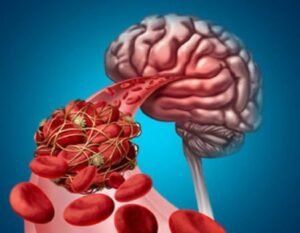
A brain arteriovenous malformation (AVM) is an abnormal tangle of blood vessels that disrupts normal blood flow in the brain. During endovascular embolisation, a thin catheter is guided to the AVM, where specialised embolic agents are injected to block the abnormal vessels, helping reduce bleeding risk and improve long-term outcomes.
Endovascular Treatment in Delhi: Procedure Overview
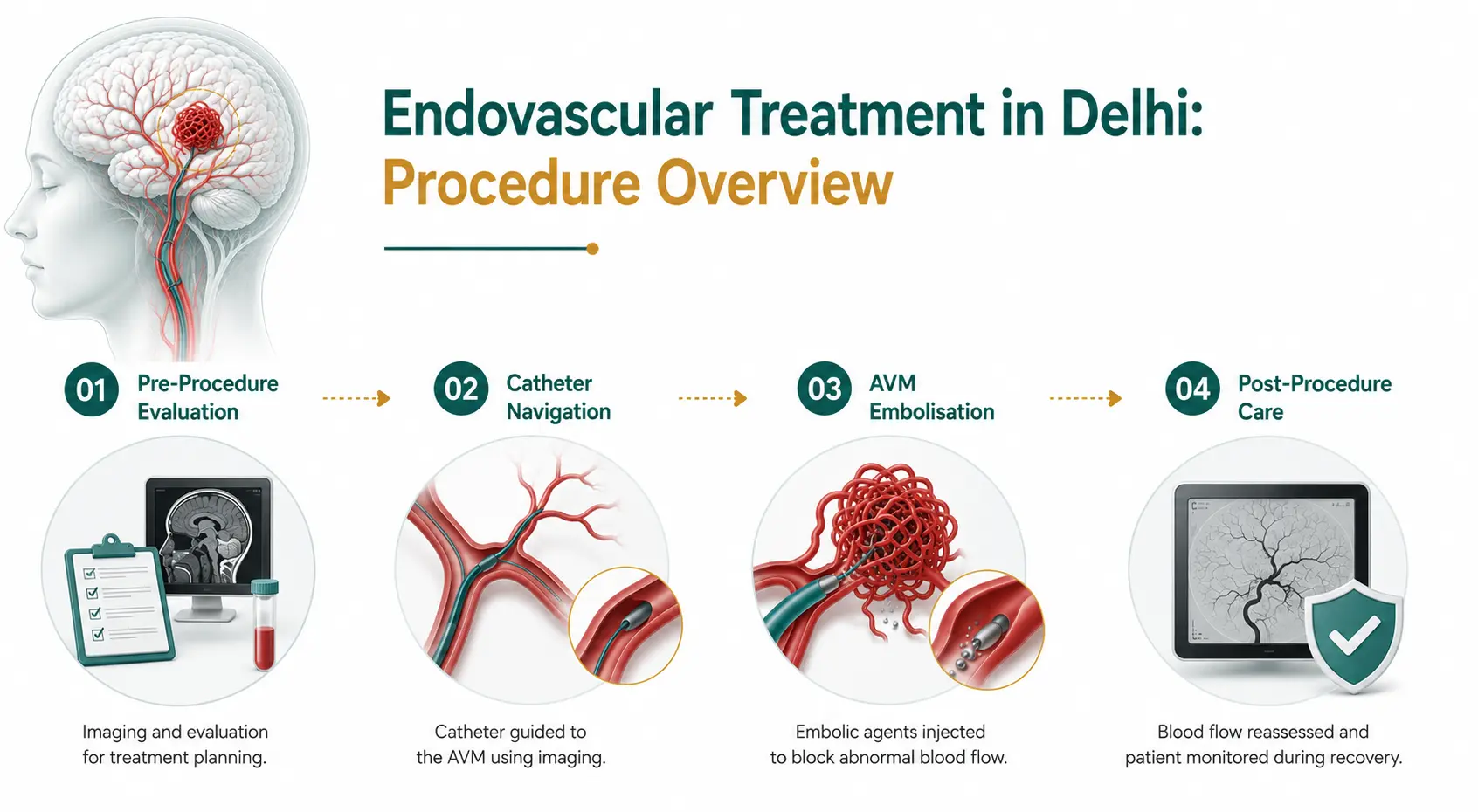
Endovascular embolisation is performed through a tiny catheter inserted into a blood vessel, allowing specialists to precisely block abnormal blood flow to the AVM without open brain surgery. The procedure typically involves the following steps:
Step 1: Pre-Procedure Evaluation
- MRI, CT scan, and cerebral angiography to assess the AVM.
- Blood tests and anaesthesia evaluation.
- Personalised treatment planning.
Step 2: Catheter Navigation
- A small puncture is made in the groin or wrist.
- A thin catheter is guided to the AVM using real-time X-ray imaging.
Step 3: AVM Embolisation
- Specialised embolic agents are injected into the abnormal blood vessels.
- Blood flow to the AVM is reduced or completely blocked.
Step 4: Post-Procedure Care
- Blood flow is reassessed with angiography.
- The catheter is removed, and the patient is monitored during recovery
Who Is a Suitable Candidate for Endovascular Treatment for Brain AVMs?
The suitability for endovascular embolisation treatment is determined after a detailed evaluation of the AVM and the patient’s overall health to ensure the safest and most effective treatment approach. You may be a suitable candidate if you:
- Have a ruptured or unruptured brain AVM suitable for catheter-based treatment.
- Have an AVM that can be safely accessed through the blood vessels.
- May benefit from embolisation before surgery or stereotactic radiosurgery.
- Experience symptoms such as seizures, headaches, or a previous brain haemorrhage.
- Are medically fit to undergo the procedure.
- Have undergone detailed evaluation with MRI, CT scan, and Digital Subtraction Angiography (DSA).
Risks of Endovascular Embolisation Therapy
Endovascular therapy is generally safe when performed by experienced neurointerventional specialists, but like any medical procedure, it carries certain risks. These may include:
- Bleeding or stroke during or after the procedure.
- Damage to nearby blood vessels.
- Allergic reaction to the contrast dye.
- Infection at the catheter insertion site.
- Temporary or permanent neurological symptoms.
- Incomplete closure of the AVM, which may require additional treatment.
Benefits of Endovascular Embolisation Therapy
Endovascular treatment offers a minimally invasive alternative to open brain surgery for selected brain AVMs, enabling precise treatment with reduced disruption to healthy brain tissue. Key benefits include:
- Minimally invasive procedure with no large incision.
- Precisely targets the AVM using image guidance.
- Reduces the risk of brain haemorrhage.
- Preserves healthy brain tissue and neurological function.
- Shorter hospital stay and quicker recovery.
- Can be performed alone or alongside surgery or stereotactic radiosurgery.
Endovascular Treatment vs Brain Surgery: What’s The Difference?
Both surgical procedures, endovascular procedures, and brain surgery are good approaches to treating AVMs of the brain, but they differ in their procedures and recovery methods. The type of AVM determines which procedure is best suited for treatment. Here is a tabular comparison:
| Endovascular Treatment | Brain Surgery |
| Minimally invasive, performed through a catheter inserted into a blood vessel | Open surgical procedure involving a craniotomy |
| No large incision or direct exposure of the brain | Requires an incision and temporary removal of part of the skull |
| Uses image guidance to block abnormal blood vessels | Physically removes the AVM from the brain |
| Typically associated with a shorter hospital stay and quicker recovery | May involve a longer recovery period depending on the complexity |
| Can be used alone or before surgery/radiosurgery | Often preferred for AVMs that can be safely removed completely |
| Best suited for selected AVMs based on their anatomy and location | Best suited for accessible AVMs where complete surgical removal is feasible |
Endovascular Treatment For Brain AVMs Cost in Delhi
The cost of endovascular therapy for AVMs in Delhi starts from ₹2,50,000. The actual cost of the treatment varies based on the health condition of the patient and the treatment regimen advised by the neurointerventional surgeon.
Some factors that might affect the overall cost of treatment are:
- Size of the AVM: Large AVMs might require a longer time to treat.
- Method of Treatment: Endovascular therapy alone can cost differently compared to when it is combined with other methods like microsurgery or stereotactic radiosurgery.
- Hospital Stay: Length of stay in the hospital, ICU treatment if needed.
- Diagnostic Tests: Tests such as MRI, CT Scan, and Digital Subtraction Angiography (DSA) that might be needed before the procedure also contribute to the total cost of the treatment.
- Medications and Equipment: Different types of embolic materials, catheters, and medications used during the process add up to the total cost of the treatment.
- Treatment Aftercare: Further consultations and post-treatment imaging tests also make up the overall cost of the treatment.
Consultation with the specialist is the ideal means to get an accurate idea about the cost involved in the treatment process.
Why Patients Choose Dr. Vikas Gupta For Endovascular Treatment
Choosing the best neurosurgeon is essential for the safe and effective treatment of brain AVMs. Patients trust Dr. Vikas Gupta for:
- Over 30+ years of neurosurgical experience.
- Expertise in advanced endovascular embolisation for brain AVMs.
- Personalised treatment plans based on each AVM’s size, location, and complexity.
- Advanced image-guided neurovascular treatment techniques.
- End-to-end care from diagnosis and treatment to follow-up.
- Trusted neurovascular expertise for patients across East Delhi and Delhi NCR.
Book a Consultation for Endovascular Treatment for Brain AVMs in Delhi
Brain AVMs can increase the risk of serious complications, including brain haemorrhage, if left untreated. An early evaluation helps determine whether endovascular embolisation is the most appropriate treatment option for your condition.
During your consultation, you can expect:
- Detailed medical history and symptom assessment.
- Comprehensive neurological evaluation.
- Review of MRI, CT scan, and Digital Subtraction Angiography (DSA) findings.
- Assessment of your AVM’s size, location, and treatment suitability.
- Discussion of personalised endovascular treatment options and expected outcomes.
- Guidance on the estimated cost of endovascular treatment and the recovery process.
A timely consultation can help determine the most effective treatment approach and reduce the risk of future brain haemorrhage while preserving neurological function.
Frequently Asked Questions
How long will my endovascular AVM treatment last? expand_more
Treatment lasts about 2 to 6 hours, depending on how big, located, and complex the AVM is. The doctor will give you a better estimate after looking at your imaging tests.
Will there be any recurrence of the brain AVM following the endovascular therapy? expand_more
While successful embolisation can permanently close some AVMs, others may require additional treatment or long-term monitoring. Regular follow-up helps ensure the AVM remains effectively treated.
Am I allowed to return to my regular activities after the procedure? expand_more
It would be possible for a person who underwent the therapy to gradually resume their activities. There might be limitations involving strenuous activities, exercises, lifting of heavy objects, and driving.
How can I book an appointment with Dr. Vikas Gupta? expand_more
You can schedule a consultation with Dr. Vikas Gupta by contacting Neurological Hall or Kailash Deepak Hospital, Karkardooma, by phone. You can also use the appointment request form available on this website to book your consultation.
How can I book an appointment at Kailash Deepak Hospital? expand_more
You can book an appointment at Kailash Deepak Hospital by calling the hospital's appointment desk or by using the online appointment booking facility available on the hospital's website.

Dr. Vikas Gupta’s Medical Content Team
Dr. Vikas Gupta’s medical content team specialises in creating accurate, clear, and patient-focused healthcare content. With strong clinical understanding and expertise in technical writing and SEO, the team translates complex medical information into reliable, accessible resources that support informed decisions and uphold Dr. Gupta’s commitment to quality care.
This content is reviewed by Dr. Vikas Gupta

Related Blogs
Is Percutaneous Coiling Safer Than Surgery?
As medical advancements continue to progress, treatment options for conditions such as cerebral aneurysms have…
Read Article →
 WhatsApp