
Spinal pedicle screw and rod fixation with L2 decompression
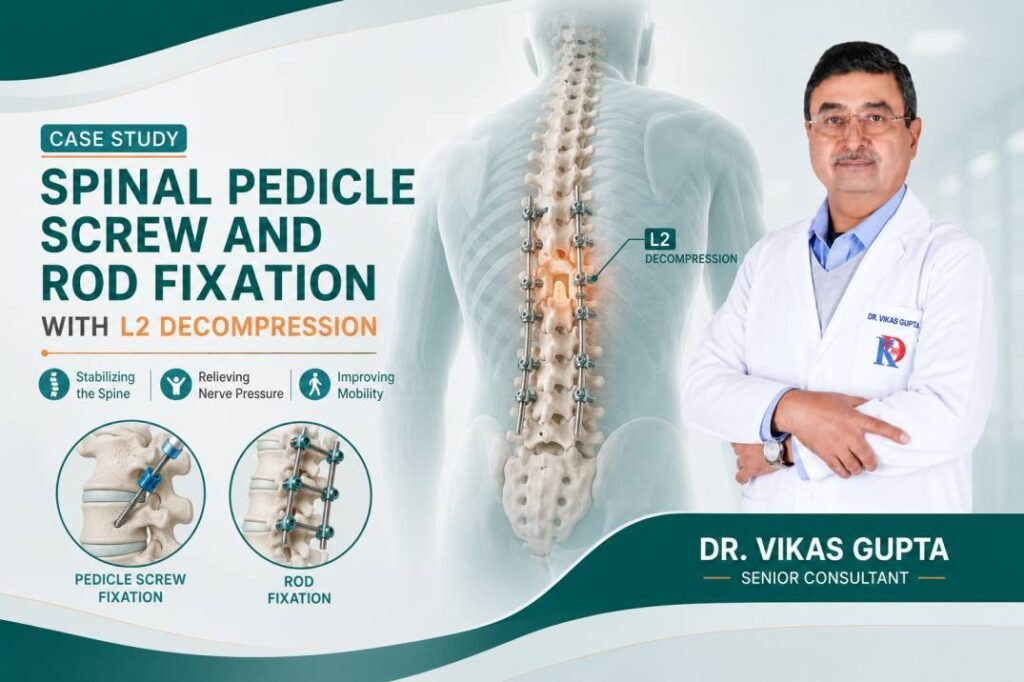
A Fall from Height at 29 – Paralysis of the Legs, and the Race to Restore Movement
AT A GLANCE
| Patient | 29-year-old male |
| Injury | L2 burst fracture with paraparesis; bilateral calcaneal fractures |
| Procedures | Spinal pedicle screw and rod fixation (D12-L1 and L3-L4) with L2 decompression; |
| Hospital stay | 20 days |
| Outcome | Neurological improvement; regained motor function in lower limbs; discharged ambulatory with support |
A 29-year-old man was brought to the emergency department after a fall from a significant height. He had landed on his feet, and by the time he reached the hospital, he could barely move his legs.
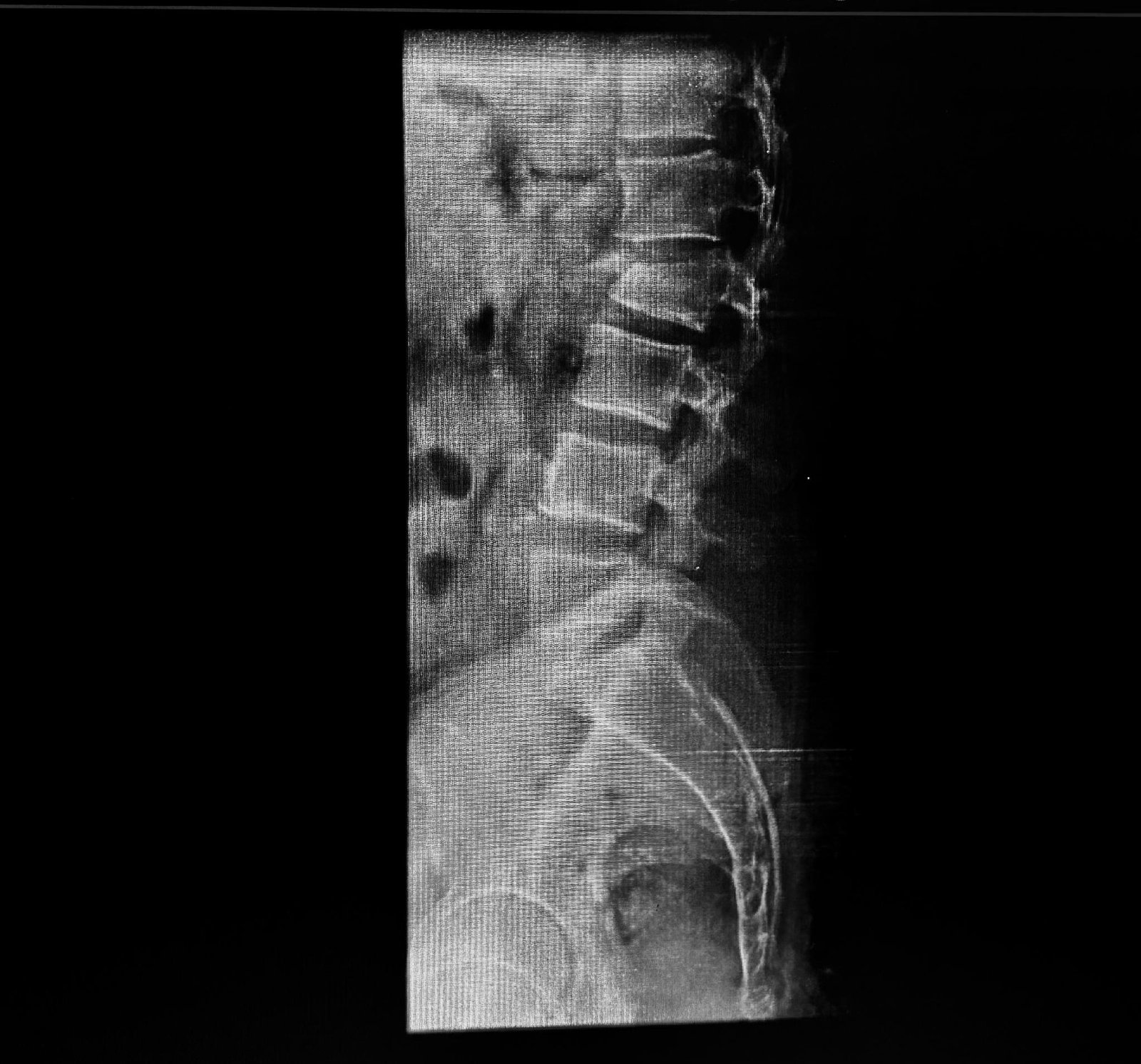
Figure: Pre-operative X-ray showing L2 burst fracture with loss of vertebral height
What had seemed like a survivable accident had caused a life-threatening chain of injuries: a shattered vertebra in the lower back pressing on his spinal cord, and both heel bones fractured from the impact of the fall. He was 29 years old, and he was looking at the possibility of permanent paralysis.
Reach Out for Expert Care
What the Scans Showed?
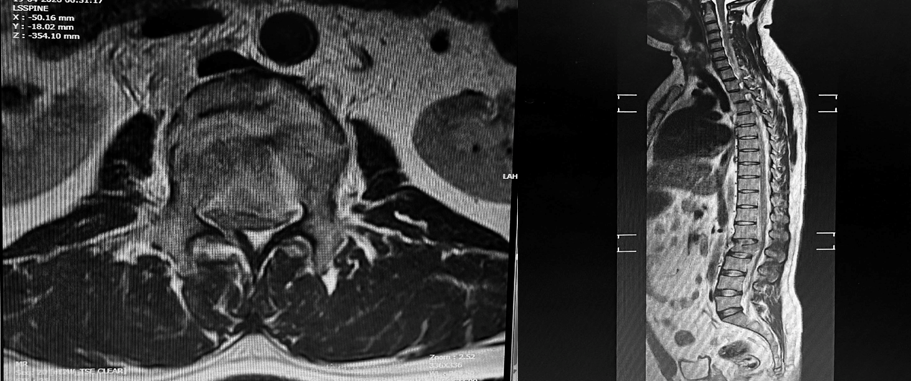
Figure: Pre-operative MRI howing the collapsed vertebra and pressure on the spinal cord.
The MRI told the story clearly. The second lumbar vertebra, L2 , had not just cracked. It had collapsed inward, with fragments pushing into the spinal canal and squeezing the nerves responsible for movement in the legs. This explained why he could barely move them.
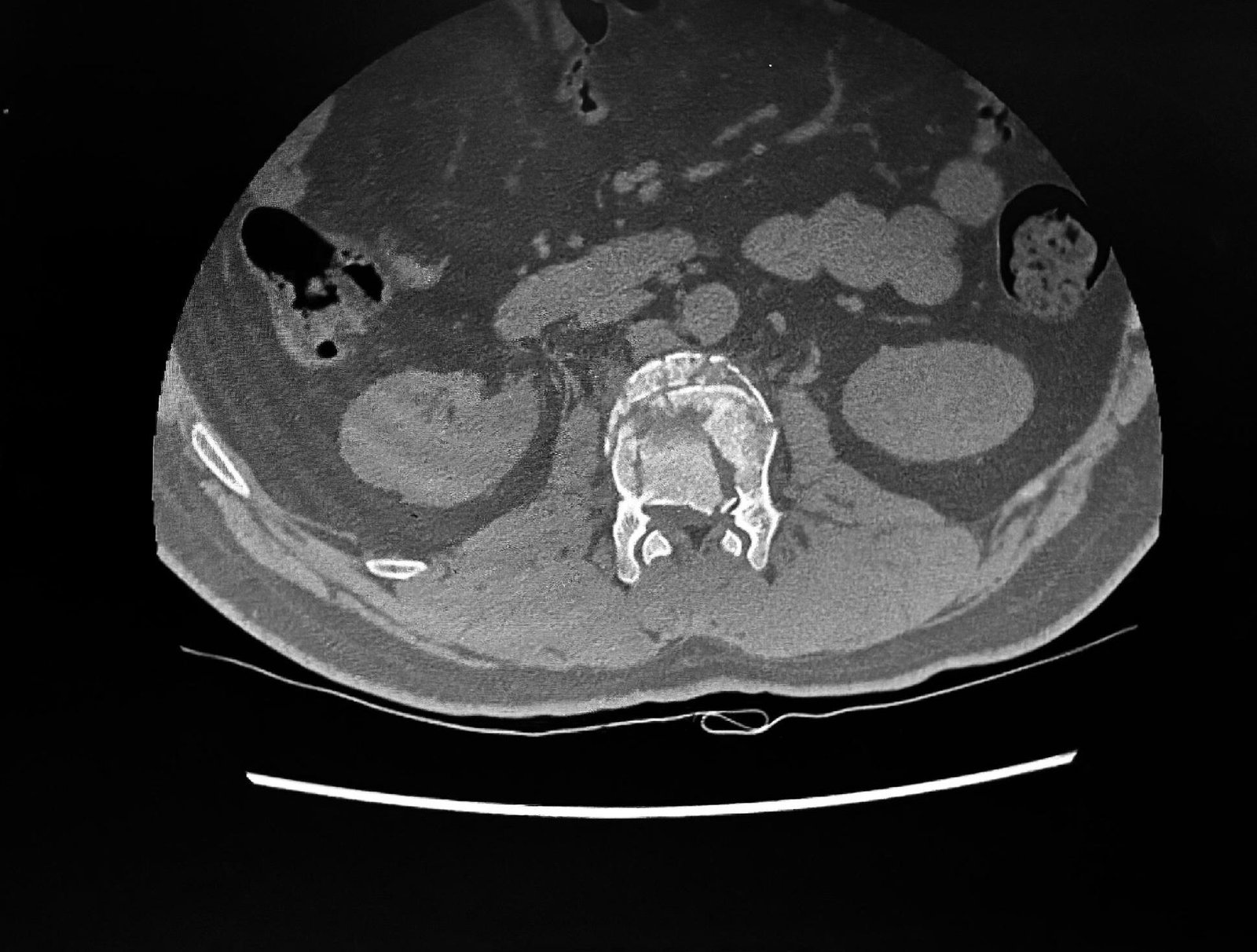
Figure: Pre-operative CT scan showing the extent of the fracture before surgery.
The CT scan filled in the detail, showing exactly where the bone fragments had travelled and helping the surgical team plan precisely where to place the stabilising hardware.
The Challenge
A shattered spine with nerve compression would have been a serious enough emergency on its own. But this patient had also broken both heel bones in the same fall, meaning two entirely separate, life-altering injuries needed to be addressed at the same time, in the same young man.
And with spinal cord compression, time matters. The longer the nerves stay compressed, the lower the chance they recover.
The plan required close coordination between the neurosurgical and orthopaedic teams: stabilise the spine and decompress the cord first, then address the feet.
Procedure: What Was Done?
The spine was addressed first.
Dr. Vikas Gupta placed titanium screws into the vertebrae above and below the fracture, connected by rods on either side of the spine. This locked the spinal column in alignment and stopped the broken vertebra from shifting further.
With the spine now stable, the decompression could be done safely. The bone fragments that had been pressing on the spinal cord were carefully cleared away, giving the nerves the space they needed to breathe and, hopefully, recover.
Outcome
In the days following surgery, the patient began showing neurological improvement. Strength gradually returned to his lower limbs, and sensation began to recover below the level of the original injury. By the time of discharge on day 20, he was mobilising with support, a significant and meaningful recovery for someone who had arrived at the hospital barely able to move his legs.
He was discharged with a structured rehabilitation plan that included physiotherapy for lower-limb strengthening, gait training, and progressive weight-bearing. Regular follow-up was scheduled to monitor neurological recovery and implant position.
Why This Case Matters?
Falls from height are among the most common causes of severe spinal injury in young working-age adults in India, often construction workers, labourers, or people involved in accidents at significant elevation. What makes these cases particularly devastating is that the patients are young, otherwise healthy, and the injuries are sudden and without warning.
The critical lesson from this case is the importance of immediate, expert evaluation after any fall from height, even when the person is conscious and seems stable.
The second lesson is about complexity. Real trauma cases rarely involve a single injury, not just fixing one thing well, but seeing the whole picture and planning for all of it, even when the picture is complicated.
At 29, this patient walked out of the hospital. That was not certain when he came in.
If someone you know has sustained a spinal injury following a fall or accident, early expert evaluation is essential. Explore Spine Surgery services or book a consultation with Dr. Vikas Gupta to understand the options available.
Disclaimer: This case study is published for educational and awareness purposes only. It does not constitute medical advice. Seek immediate emergency care for any acute spinal injury.

 WhatsApp