
CSF Leak Treatment in Delhi
A CSF leak is a condition where the protective cerebrospinal fluid surrounding the brain and spinal cord escapes through a defect in the dura. This can occur in the skull (cranial leak) or along the spine (spinal leak), leading to symptoms such as positional headaches or clear nasal discharge. CSF leak treatment in Delhi depends on the cause and may include conservative care, epidural blood patch, or surgical repair.
A CSF leak is not always obvious. Many patients spend months being investigated for migraines, sinusitis, or anxiety before the real diagnosis surfaces. The condition can be disabling; some people cannot sit upright for more than a few minutes without severe head pain, yet it is treatable, and most patients improve significantly with the right management.
Dr. Vikas Gupta, a senior consultant neurosurgeon and neurointerventionalist at Kailash Deepak Hospital, Delhi, provides specialist evaluation and treatment for both cranial and spinal CSF leaks, ranging from conservative management to surgical repair when needed.
Reach Out for Expert Care
What Is Cerebrospinal Fluid and Why Does a Leak Matter?
The brain floats inside the skull in a bath of CSF. This fluid acts as a shock absorber, keeping the brain from pressing against the bony walls of the skull. It is continuously produced, circulates around the brain and spinal cord, and is reabsorbed in a constant cycle.
When CSF leaks out faster than it is replenished, the brain loses its cushion and begins to sag under gravity. This is called intracranial hypotension, low pressure inside the skull. It is this sagging that causes the characteristic positional headache of a spinal CSF leak: severe when sitting or standing, and relieved quickly by lying flat.
Cranial leaks carry a different risk. When CSF escapes through a defect in the skull base, often draining out through the nose or ear, it creates an open channel between the brain and the outside world. Without treatment, that becomes a pathway for bacteria to reach the brain, raising the risk of meningitis.
Types of CSF Leaks
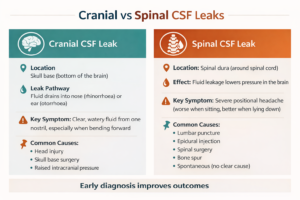
What Causes a CSF Leak?
A CSF leak can develop in several ways. Common causes include:
- Head trauma: Fractures to the skull base can tear the dura and create a direct pathway for CSF to drain
- Lumbar puncture or spinal tap: A needle insertion that leaves a hole in the dura, usually small and self-limiting
- Epidural injections: A complication of epidural anaesthesia used in childbirth or pain management
- Brain or spinal surgery: Accidental dural tear during an operation
- Bone spurs: A sharp protrusion from a calcified disc or vertebral osteophyte can puncture the dura from inside
- Skull base tumours: Erosion of bone and dura by a growing tumour
- Raised intracranial pressure: In conditions like idiopathic intracranial hypertension, sustained pressure can erode the skull base and cause spontaneous leakage
- Spontaneous: In a significant number of cases, particularly spinal leaks, no clear cause is found; a connective tissue weakness in the dura is suspected
What are the Symptoms of a CSF Leak?
Symptoms depend on where the leak is. The picture for cranial and spinal leaks is quite different, though both can be mistaken for more common conditions.
Symptoms of a Spinal CSF Leak
The hallmark is the positional headache. Here is what to look out for:
- A severe headache that comes on quickly when sitting or standing, and eases within minutes of lying down
- Neck stiffness or pain
- Nausea, sometimes vomiting
- Dizziness or a sense of imbalance
- Sensitivity to light or sound
- Ringing in the ears (tinnitus) or muffled hearing
- A feeling of brain fog or difficulty concentrating
- In long-standing leaks: memory problems, or a gradual slumping posture as the brain sags
Symptoms of a Cranial CSF Leak
- Clear, watery fluid draining from one nostril, especially when bending forward or straining
- A salty or metallic taste at the back of the throat
- A sense of fluid draining down the back of the throat
- Hearing loss or a feeling of fullness in one ear
- Recurrent meningitis with no other obvious cause
One reliable clue: the nasal discharge from a CSF leak does not thicken, discolour, or dry up the way mucus does in a cold or sinusitis. It remains consistently clear and watery.
When Should You See a Doctor Urgently for CSF Leak?
Seek immediate medical attention if you experience:
- A sudden, severe headache described as the worst of your life, this may indicate a different but serious condition, such as a subarachnoid haemorrhage
- Fever with neck stiffness and sensitivity to light, these are warning signs of meningitis
- Clear fluid from the nose or ear following a head injury
- Rapidly worsening neurological symptoms, confusion, slurred speech, weakness, or loss of consciousness
A CSF leak following head trauma is a medical emergency. Do not delay seeking assessment.
How Is a CSF Leak Diagnosed?
CSF leaks are underdiagnosed, particularly spinal leaks, which are frequently missed for months or years. Here is how the evaluation typically unfolds:
- Clinical history and examination: The pattern of symptoms, especially a positional headache that improves immediately on lying down, is highly suggestive. A detailed history of any recent procedures, injuries, or head trauma is essential.
- Beta-2 transferrin test: This simple lab test on any nasal or ear fluid can confirm whether it is CSF. Beta-2 transferrin is a protein found only in CSF, not in nasal mucus or tears, making it a highly specific marker.
- MRI brain with contrast: In spinal CSF leaks, MRI often shows characteristic findings, including drooping of brain structures (brain sagging), fluid collections outside the spinal cord, and engorgement of the pituitary gland. These findings, even without identifying the exact leak site, strongly support the diagnosis.
- CT cisternography or MR myelography: Contrast is injected around the spinal cord to map CSF flow and identify where it is escaping. CT myelography with dynamic imaging is currently the most sensitive technique for finding the leak site.
- CT of the skull base: For cranial leaks, thin-slice CT imaging identifies defects in the skull base bone, the site where CSF is draining into the nose or ear.
- Pledget test: Small cotton pads are placed in the nose and later analysed for the presence of radioactive tracer or beta-2 transferrin. This confirms a cranial leak when clinical examination alone is inconclusive.
CSF Leak Treatment Options in Delhi
Treatment for a CSF leak is usually done step by step. Doctors start with the simplest, least invasive options first and move to advanced treatments only if needed. The right approach depends on the type of leak, its cause, how long it has been present, and the severity of the symptoms. CSF Leak Treatment Options in Delhi include:
Conservative (Non-Surgical) Treatment
For small or recent leaks, especially after procedures like a lumbar puncture or epidural, simple measures are often enough to allow the body to heal on its own.
This may include:
- Resting flat in bed for a few days to reduce pressure on the leak
- Drinking more fluids helps the body produce CSF
- Taking caffeine (oral or IV), which can help relieve headaches
- Avoiding activities like heavy lifting, straining, or coughing
Many patients recover within 1-2 weeks with these steps alone.
Epidural Blood Patch
If symptoms don’t improve with rest, this is the most commonly used treatment for spinal CSF leaks.
In this procedure:
- A small amount of your own blood is injected near the leak
- The blood forms a clot and “seals” the leak naturally
It is a short procedure (usually under an hour) and often provides relief within hours to a few days. Sometimes, a repeat session may be needed for complete relief.
Fibrin Glue Injection
If a blood patch is not enough, doctors may use a special medical adhesive called fibrin glue.
- It is injected directly at the leak site
- Creates a stronger and more durable seal
This is especially helpful in more persistent leaks.
Lumbar Drain
In some cases, a thin tube is temporarily placed in the lower back to:
- Divert fluid away from the leak
- Reduce pressure and allow healing
This is usually a temporary measure used alongside other treatments.
Endoscopic Repair (For Cranial CSF Leaks)
For leaks from the skull base (often causing fluid from the nose), surgery may be needed, but it is usually minimally invasive.
- Done through the nose using a thin camera (endoscope)
- No cuts on the face or skull
- The leak is sealed using natural tissue grafts
Recovery is faster, and success rates are high when performed by experienced specialists.
Open Surgery (Advanced Cases)
If other treatments don’t work or the leak is difficult to access, surgery may be needed to repair the tear directly.
This may involve:
- Skull surgery (for cranial leaks)
- Spine surgery (for spinal leaks)
These are reserved for more complex cases.
CSF Venous Fistula Treatment
In some rare cases, the leak is caused by an abnormal connection between the spinal fluid and a vein.
- This can be treated without open surgery
- A minimally invasive procedure blocks the abnormal connection from inside the blood vessel
Most CSF leaks can be treated without major surgery, especially when diagnosed early. If symptoms are recognised in time, simpler treatments are often enough and recovery is faster.
Cost of CSF Leak Treatment in Delhi
The cost of CSF Leak treatment in Delhi ranges from ₹2,00,000 to ₹15,00,000, depending heavily on the type and complexity of the required treatment. An epidural blood patch is far less involved and less costly than skull base surgery or open spinal dural repair.
Factors that influence cost include:
- Whether treatment is conservative, procedural (blood patch or fibrin glue), or surgical
- Number of blood patch sessions required
- Type of surgery, endoscopic endonasal repair vs. open craniotomy vs. spinal surgery
- Pre-treatment imaging, MRI, CT myelography, beta-2 transferrin testing
- Hospital stay duration
- Post-treatment follow-up imaging and consultations
A detailed cost estimate is provided during the initial consultation once the diagnosis and treatment plan are established.
Recovery after CSF Leak Treatment
Recovery depends on the treatment path taken. Here is what most patients can expect:
- After conservative management: Most post-procedural leaks resolve within one to two weeks of strict bed rest. Resuming normal activity too quickly can cause the leak to reopen.
- After an epidural blood patch: Many patients notice significant relief within hours. Full benefit may take a few days to take effect. Physical restrictions, no heavy lifting, no straining, are advised for one to two weeks. The patch can be repeated if needed.
- After endoscopic skull base repair: Most patients go home within two to three days. Activity is restricted for four to six weeks to allow the graft to heal fully. Nose blowing, straining, and sneezing with the mouth closed must be avoided during this period.
- After open surgical repair: Recovery takes longer, typically two to four weeks in the hospital, followed by a period of reduced activity at home. Follow-up imaging confirms the repair has held.
- Monitoring for recurrence: CSF leaks can recur, particularly in patients with underlying raised intracranial pressure or connective tissue disorders. Follow-up MRI and clinical review are scheduled at intervals after treatment.
Why Patients Trust Dr. Vikas Gupta for CSF Leak Treatment in Delhi?
Diagnosing and treating a CSF leak requires familiarity with a condition that remains underrecognised and access to the right imaging and surgical expertise. Patients across Delhi NCR consult Dr. Vikas Gupta for CSF leak care because of:
- 30+ Years of Neurosurgical and Neurointerventional Experience
- Expertise in both cranial and spinal CSF leak assessment and management
- Access to advanced neuroimaging, including high-resolution MRI and CT myelography
- Surgical experience in skull base repair, dural reconstruction, and minimally invasive endoscopic techniques
- Interventional neuroradiology training, relevant for complex cases, including CSF-venous fistula embolisation
- Personalised treatment planning, conservative management where possible, and surgery when genuinely necessary
- Trusted name in neurological and neurovascular care across East Delhi and Delhi NCR
His approach prioritises accurate diagnosis first, because treating the wrong condition, or the right condition in the wrong way, sets patients back considerably.
Book a Consultation for CSF Leak Treatment in Delhi
If you have been experiencing positional headaches, unexplained clear nasal discharge, or symptoms that have not been explained despite multiple investigations, a specialist assessment for a possible CSF leak is worth pursuing.
During the consultation, you can expect:
- A thorough review of your symptoms, history, and any existing scan reports or lab results
- Clinical assessment to identify features consistent with intracranial hypotension or cranial CSF leak
- Guidance on which diagnostic tests are needed and what they will show
- An honest discussion of treatment options, from conservative management to surgical repair, and which is most appropriate for your case
- Transparent discussion of costs and what the treatment pathway involves
- Answers to your questions, without being rushed
Early consultation opens the door to more treatment options. Book your appointment today for expert CSF leak treatment in Delhi.
Frequently Asked Questions
Can a CSF leak heal on its own? expand_more
Some can, particularly small leaks following a lumbar puncture or epidural, which often seal within days to weeks with bed rest alone. Any leak that does not resolve warrants prompt specialist assessment, given the risk of meningitis.
Is the positional headache from a CSF leak different from a migraine? expand_more
Yes. CSF leak headaches worsen rapidly when sitting or standing and improve significantly within minutes to an hour of lying down flat. Migraines are not typically position-dependent in this way.
What happens if a CSF leak is left untreated? expand_more
An untreated spinal CSF leak causes progressive intracranial hypotension, the brain continues to sag, and the headaches become more constant and disabling over time.
How can I book an appointment with Dr. Vikas Gupta? expand_more
To book a consultation with Dr Vikas Gupta, you can contact Neurological Hall or Kailash Deepak Hospital, Karkardooma, directly by phone or via the appointment booking form on this website.
How can I book an appointment at Kailash Deepak Hospital? expand_more
Appointments at Kailash Deepak Hospital can be scheduled by calling the hospital reception or through the online booking facility on the hospital's website.

Dr. Vikas Gupta’s Medical Content Team
Dr. Vikas Gupta’s medical content team specialises in creating accurate, clear, and patient-focused healthcare content. With strong clinical understanding and expertise in technical writing and SEO, the team translates complex medical information into reliable, accessible resources that support informed decisions and uphold Dr. Gupta’s commitment to quality care.
This content is reviewed by Dr. Vikas Gupta
Related Conditions

Skull Base Tumour Treatment in Delhi: Symptoms, Causes & Expert Care
Skull base tumours are abnormal growths located at the base of the skull, where the brain meets the spine. These…

Spinal Injury Treatment in Delhi: Symptoms, Causes & Expert Care
A spinal injury is damage to the spinal cord or the surrounding structures, such as the vertebrae or discs. This…

Acoustic Neuroma Treatment in Delhi
An acoustic neuroma, also known as a vestibular schwannoma, is a slow-growing, non-cancerous tumour that develops on the nerve connecting your…
Related Blogs
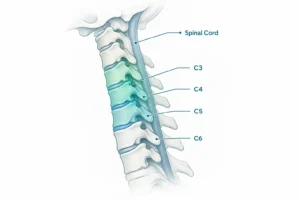
Cervical Canal Stenosis with Myelopathy
She Fell, Then Couldn’t Move Her Arms or Legs. Her Neck Was Silently Crushing Her…
Read Article →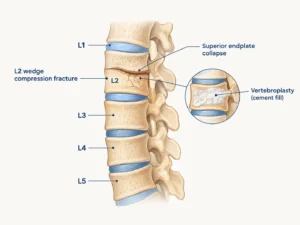
Vertebroplasty for L2 Compression Fracture
Three Days of Back Pain. Then He Couldn’t Walk. His Vertebra Had Fractured. At a…
Read Article →
Spinal Fusion Surgery for Degenerative Disc Disease
A Fall. Six Months of Pain. His Spine Had Been Quietly Degenerating for Years. At…
Read Article →
Kyphoplasty and Rod fixation
His Back Had Been Hurting for Months. He Thought It Was Age. His Spine Was…
Read Article →
Slip Disc vs Sciatica: How to Tell the Difference
When your back starts hurting, or a sharp pain shoots down your leg, it is…
Read Article →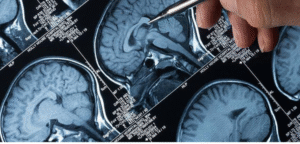
From Diagnosis to Treatment: What Role Does Neuro-Oncology Play in Enhancing Patient Outcomes?
According to the World Health Organization (WHO), primary brain tumors account for approximately 2% of…
Read Article → WhatsApp