
Interventional Neuroradiology Treatment in Delhi
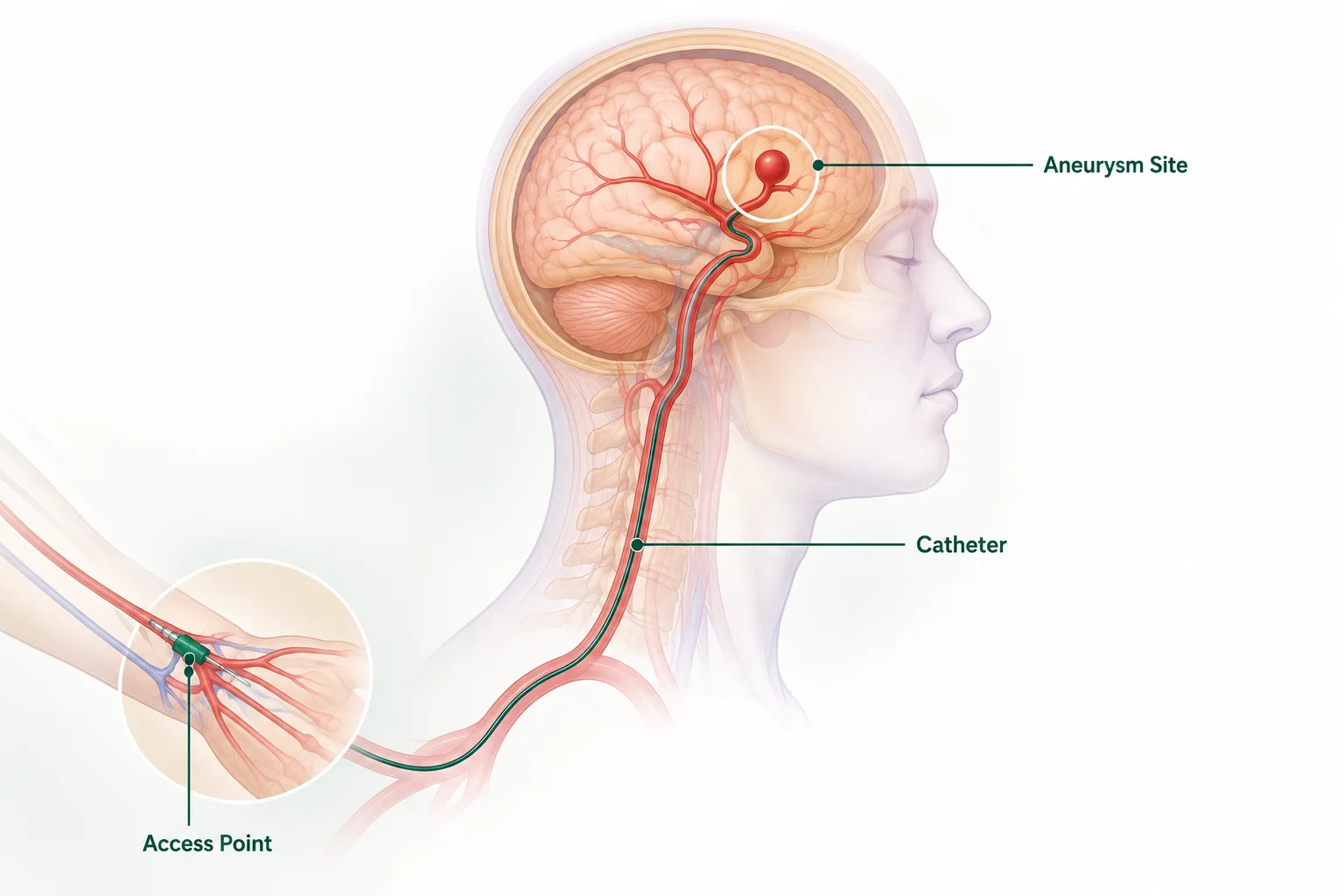
Neurological disorders such as stroke, brain aneurysms, and vascular malformations are increasingly diagnosed across Delhi NCR, and many can now be treated without open surgery. Interventional neuroradiology treatment in Delhi uses catheter-based, image-guided techniques to reach blood vessels deep inside the brain, spine, head, and neck, often through a small puncture in the wrist or groin.
Dr. Vikas Gupta, Senior Consultant Neurosurgeon and Neurointerventional Specialist at Kailash Deepak Hospital, Karkardooma, has over 30 years of experience and has performed 5,000+ surgeries, including complex endovascular procedures for aneurysms, stroke, and vascular brain conditions.
Reach Out for Expert Care
What Is Interventional Neuroradiology?
Interventional neuroradiology (INR), also called neuro-interventional surgery, is a minimally invasive medical speciality that treats blood vessel disorders of the brain, spine, head, and neck using catheters guided by real-time imaging instead of open surgery.
A thin catheter is threaded through the blood vessels under fluoroscopic, CT, or MR guidance to reach the exact site of the problem, an aneurysm, a clot, or an abnormal tangle of vessels, and treat it from inside the vessel itself.
Since there is no large incision or skull opening involved in most cases, patients typically experience less blood loss, a shorter hospital stay, and a faster return to daily life compared with traditional open neurosurgery.
Dr. Vikas Gupta combines this endovascular expertise with open microsurgical skill, which allows each case to be matched to the safest and most effective approach rather than a one-size-fits-all protocol.
Which Neurological Conditions Can Be Treated with Interventional Neuroradiology in Delhi?
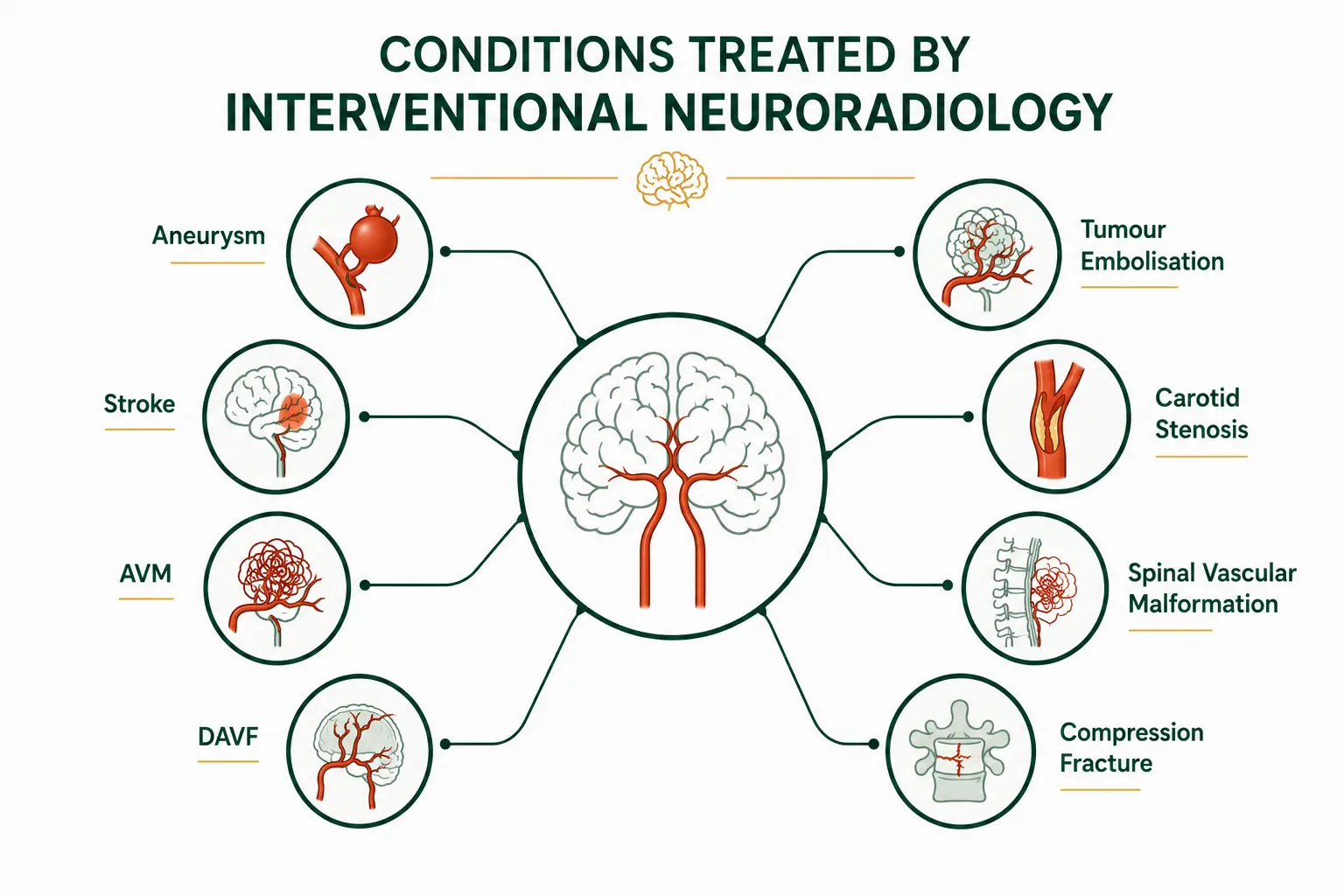
Interventional neuroradiology can treat cerebral aneurysms, acute ischaemic stroke, brain AVMs, dural arteriovenous fistulas, certain brain and head-neck tumours, spinal vascular malformations, and vertebral compression fractures, all through minimally invasive, catheter-based techniques. Delhi patients searching for condition-specific treatment often find that INR is part of the recommended care plan. Common conditions include:
- Brain Aneurysm Treatment in Delhi: Endovascular coiling, stenting, or flow diversion seals off a weakened, bulging blood vessel to prevent rupture or re-rupture. Learn more about Brain Aneurysm Treatment →
- Stroke Treatment in Delhi: Mechanical thrombectomy removes a clot blocking a brain artery during acute ischaemic stroke, restoring blood flow within the critical treatment window. Learn more about Stroke Treatment →
- Brain AVM Treatment in Delhi: Embolisation blocks abnormal, high-risk connections between arteries and veins, reducing bleeding risk before or instead of surgery. Learn more about Brain AVM Treatment →
- Dural Arteriovenous Fistula (DAVF): Abnormal connections in the brain’s outer covering are closed off endovascularly to prevent haemorrhage and neurological decline.
- Carotid Artery Disease Treatment in Delhi: Carotid stenting opens a narrowed neck artery to lower stroke risk in suitable patients. Learn more about Carotid Artery Disease →
- Brain Tumour Embolisation: Select vascular tumours, including meningiomas, are embolised before surgery to reduce bleeding risk during removal. Learn more about Brain Tumour Treatment →
- Brain Haemorrhage: Endovascular techniques help identify and treat the underlying vascular cause of bleeding in the brain. Learn more about Brain Haemorrhage Treatment →
- Transient Ischaemic Attack (TIA): Vascular imaging and, where indicated, endovascular treatment help address the underlying cause and reduce future stroke risk. Learn more about TIA →
- Spinal Vascular Malformations: Abnormal spinal blood vessels are embolised to relieve pressure on the spinal cord and prevent bleeding.
- Vertebral Compression Fractures: Vertebroplasty or kyphoplasty stabilises fractures caused by osteoporosis or trauma and relieves pain.
View All Conditions Treated by Dr. Vikas Gupta →
How Is Interventional Neuroradiology Different from Traditional Open Brain Surgery?
Interventional neuroradiology treats blood vessel problems from inside the vessel using a catheter and imaging guidance, while traditional open neurosurgery requires a skull or spinal incision to directly access and repair the affected area. The right approach depends on the size, location, and complexity of the condition.
| Feature | Interventional Neuroradiology | Traditional Open Neurosurgery |
| Access | Catheter via wrist/groin artery | Craniotomy or open incision |
| Anaesthesia | Local or general, procedure-dependent | General anaesthesia |
| Hospital Stay | Often 1-3 days | 5-10 days |
| Visible Scarring | None to minimal | Present |
| Recovery Time | Days to a few weeks | Several weeks |
| Best Suited For | Aneurysms, stroke clots, AVMs, DAVFs, vascular tumours | Large or surgically accessible lesions, cases unsuitable for endovascular access |
Note: Suitability depends on the exact condition, vessel anatomy, and overall health. Dr. Vikas Gupta determines the appropriate approach after detailed imaging and evaluation.
What Does an Interventional Neuroradiology Procedure Involve?
Most interventional neuroradiology procedures involve a small puncture in the wrist or groin, catheter navigation to the brain or spinal blood vessels under live imaging, targeted treatment of the problem area, and same-day or next-day monitoring. A typical procedure includes:
- Pre-procedure imaging: CT angiography, MR angiography, or digital subtraction angiography (DSA) to map the exact vascular anatomy.
- Access: A catheter is inserted through the radial artery (wrist) or femoral artery (groin) under local or general anaesthesia.
- Navigation: The catheter is guided through the blood vessels to the target site using real-time fluoroscopic imaging.
- Treatment: Depending on the condition, coils, stents, flow diverters, embolic agents, or clot-retrieval devices are deployed.
- Recovery: The access site is closed, and the patient is monitored in a neuro-ICU or step-down unit before discharge.
Interventional Neuroradiology Treatment Cost in Delhi
The cost of interventional neuroradiology treatment in Delhi typically ranges from ₹1,50,000 to ₹8,00,000, depending on the specific condition, the procedure used, device selection (coils, stents, or flow diverters), and length of ICU stay. Key factors that influence the cost include:
- Type of condition treated (aneurysm, stroke, AVM, DAVF, or tumour)
- Devices used, such as coils, stents, or flow-diverting implants
- Duration of the procedure and complexity of vascular anatomy
- ICU care and length of hospital stay
- Pre- and post-procedure imaging and follow-up
A personalised consultation with imaging review is essential for an accurate cost estimate. For condition-specific cost details, see Brain Aneurysm Treatment Cost in Delhi, Brain AVM Treatment Cost in Delhi, and Stroke Treatment Cost in Delhi.
Why Do Delhi Patients Consult Dr. Vikas Gupta for Neuro-Interventional Care?
Patients across Delhi NCR consult Dr. Vikas Gupta for neuro-interventional care because of his 30+ years of neurosurgical experience, dual expertise in endovascular and open microsurgical techniques, and personalised, imaging-based treatment planning at Kailash Deepak Hospital.
Every patient’s vascular anatomy, symptoms, and overall health are evaluated individually rather than following a fixed protocol, and treatment options, endovascular, open, or combined, are explained clearly before a decision is made.
Book a Consultation for Interventional Neuroradiology Treatment in Delhi →
Frequently Asked Questions
Who is the best neurosurgeon in Delhi? expand_more
Dr. Vikas Gupta is among the most experienced neurosurgeons in Delhi NCR, with over 30 years of experience and 5,000+ surgeries performed, including endovascular treatment of aneurysms, stroke, and AVMs. Patients are encouraged to check a doctor's qualifications, hospital infrastructure, and case experience before deciding.
Is interventional neuroradiology safe? expand_more
Yes, interventional neuroradiology is a well-established, minimally invasive approach used worldwide for vascular brain and spine conditions. As with any procedure, risks such as bleeding, infection, or vessel injury exist and should be discussed with your treating specialist.
Can all brain aneurysms or AVMs be treated with interventional neuroradiology? expand_more
No. Suitability depends on the size, location, and shape of the aneurysm or AVM. Some cases are better suited to open microsurgery, and some require a combination of both approaches.
How can I book an appointment with Dr. Vikas Gupta? expand_more
You can book an appointment with Dr. Vikas Gupta by contacting us directly, using our online appointment booking facilities, available on this website.
How can I book an appointment at Kailash Deepak Hospital? expand_more
You can book an appointment at Kailash Deepak Hospital by calling the hospital reception directly or using the online appointment booking facility on the hospital's website.

Dr. Vikas Gupta’s Medical Content Team
Dr. Vikas Gupta’s medical content team specialises in creating accurate, clear, and patient-focused healthcare content. With strong clinical understanding and expertise in technical writing and SEO, the team translates complex medical information into reliable, accessible resources that support informed decisions and uphold Dr. Gupta’s commitment to quality care.
This content is reviewed by Dr. Vikas Gupta
Related Conditions

Brain Haemorrhage Treatment in Delhi
A brain Haemorrhage, also called a brain bleed, is a medical emergency that occurs when a blood vessel inside or…

Acoustic Neuroma Treatment in Delhi
An acoustic neuroma, also known as a vestibular schwannoma, is a slow-growing, non-cancerous tumour that develops on the nerve connecting your…
Brain AVM Treatment in Karkardooma
A brain AVM (arteriovenous malformation) diagnosis can be alarming and deeply unsettling for patients and their families. Access to experienced…

Brain Tumour Surgery in Karkardooma
A brain tumour diagnosis can be overwhelming for patients and their families. Access to experienced neurosurgeons, advanced diagnostic facilities, and…

Stroke Treatment in Karkardooma
A brain stroke is a medical emergency that requires immediate attention. Every minute counts; the faster treatment begins, the better…
Neuroblastoma Treatment in Delhi
Every parent’s worst nightmare is hearing the words “your child has cancer”. Neuroblastoma, one of the most complex childhood cancers,…
Related Blogs
Decompressive Hemicraniectomy for Sudden Brain Haemorrhage in a Young Patient
She Was 28. No Health Issues. Then Without Warning: She Collapsed. At a Glance Patient…
Read Article →
Brain Surgery in Delhi: A Patient Guide for 2026
Being told you or a loved one may need brain surgery is one of the…
Read Article →
Silent Stroke: The Hidden Brain Damage Many People Miss
When people hear the word stroke, they usually imagine a sudden and dramatic medical emergency, someone…
Read Article →
From Diagnosis to Treatment: What Role Does Neuro-Oncology Play in Enhancing Patient Outcomes?
According to the World Health Organization (WHO), primary brain tumors account for approximately 2% of…
Read Article →
What are the 5 warning signs of stroke?
Stroke, a devastating cerebrovascular event, poses a significant global health challenge. Often called a “brain…
Read Article →
Understanding Different Types of Strokes: Its Symptoms and Causes
A stroke, or cerebrovascular accident, is a medical emergency that occurs when the brain’s blood…
Read Article → WhatsApp