
Carotid Artery Stenting in Delhi
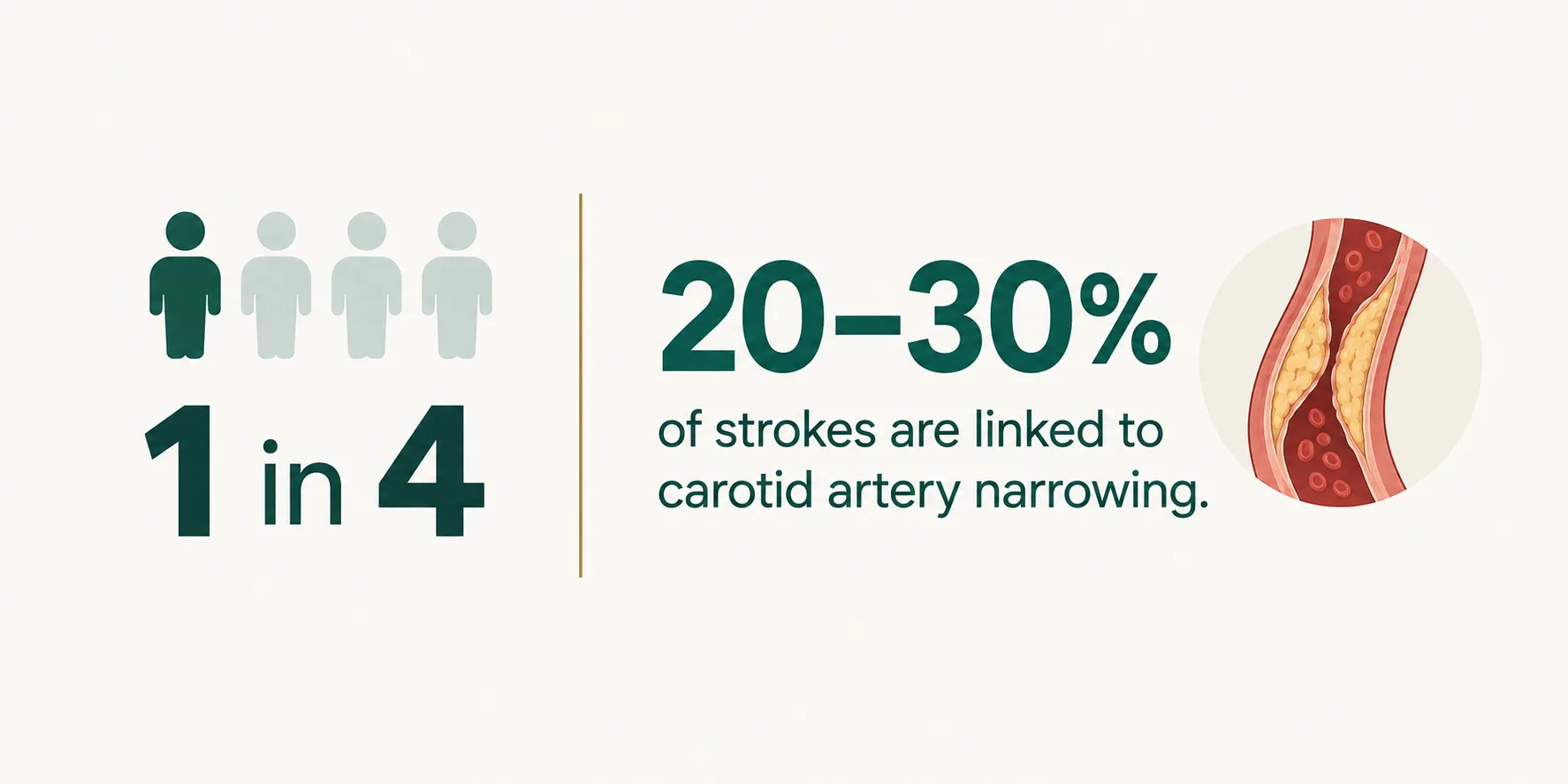
One in every four strokes in India can be traced back to a single narrow point in the neck. Carotid artery stenting in Delhi has become one of the most trusted, minimally invasive ways to reopen a blocked carotid artery and protect the brain before a stroke happens.
Dr. Vikas Gupta, Senior Consultant Neurosurgeon and Neurointerventional Specialist at Kailash Deepak Hospital, has performed carotid artery stenting for over 30 years, pairing advanced imaging with an experienced hand to keep complication rates low.
Reach Out for Expert Care
What Is Carotid Artery Disease?
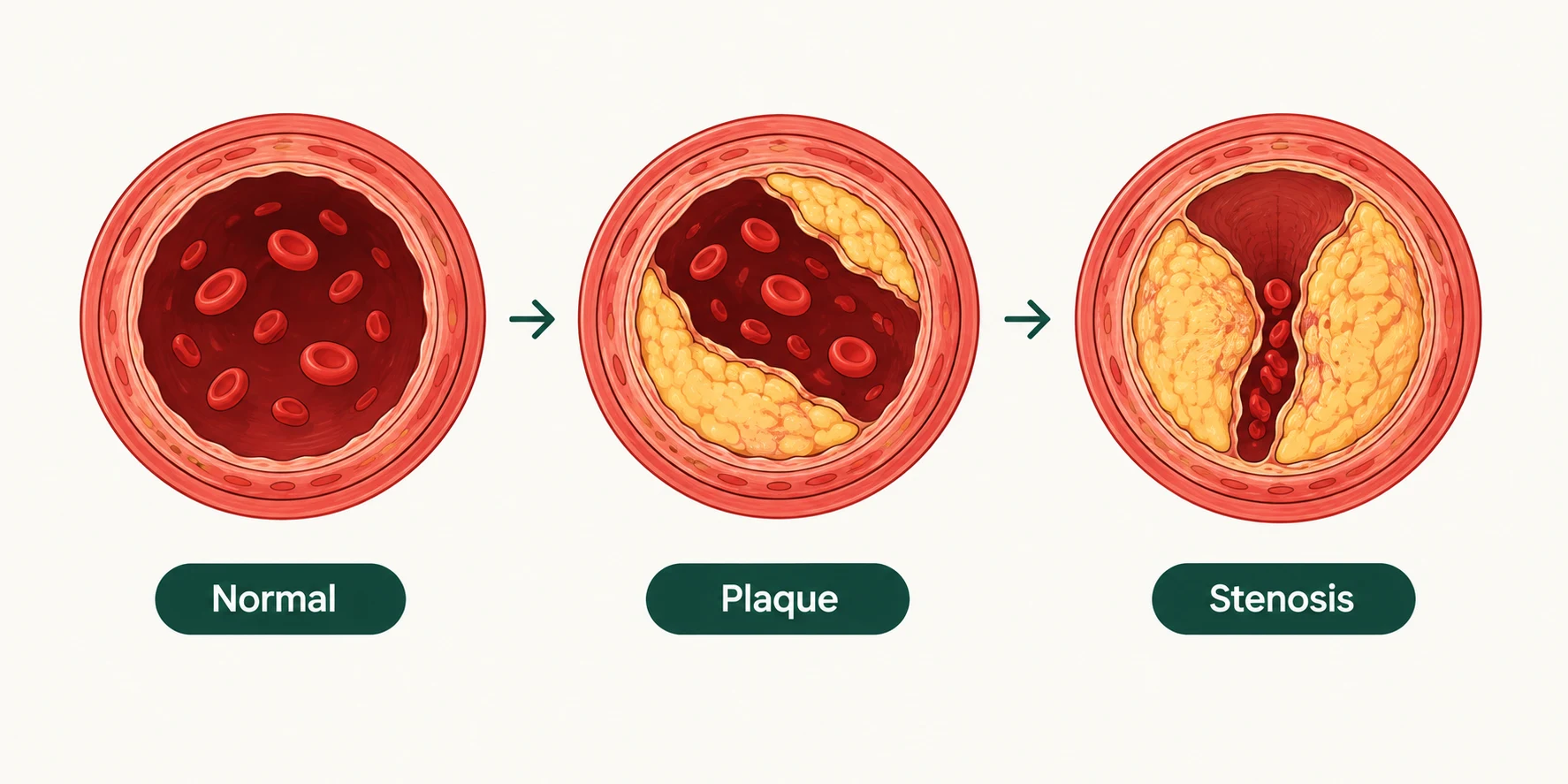
Carotid artery disease is the narrowing of the neck’s main blood vessels caused by plaque buildup, restricting blood flow to the brain and raising stroke risk.
- The two carotid arteries carry oxygen-rich blood to the front of the brain, the part responsible for thought, speech, and movement.
- Cholesterol, calcium, and fibrous tissue build up on artery walls over time, a process called atherosclerosis.
- Severe narrowing (stenosis) can trigger clots or send plaque fragments travelling toward the brain, causing a stroke.
It often causes no symptoms until a stroke occurs, which is why medical literature links 20-30% of all strokes to carotid stenosis, making early screening essential.
Read more about Carotid Artery Disease and how it raises overall stroke risk.
What Is Carotid Artery Stenting?
Carotid artery stenting is a catheter-based procedure that places a small mesh tube inside the narrowed artery to hold it open and restore normal blood flow to the brain.
- Performed under local anaesthesia through a small puncture, usually in the groin.
- A catheter is guided to the blockage using live X-ray (fluoroscopic) guidance.
- A balloon widens the artery before a self-expanding stent is placed to keep it open, with an embolic protection filter catching any loose debris.
It achieves the same goal as open surgery, a clear artery, through a pinhole rather than an incision.
How Is Carotid Stenosis Diagnosed?
Carotid stenosis is diagnosed using carotid Doppler ultrasound, CT or MR angiography, and, when needed, digital subtraction angiography (DSA), the gold-standard confirmatory test.
- Carotid Doppler: non-invasive and low-cost, usually the first test done.
- CTA / MRA: detailed, relatively non-invasive imaging of the whole arterial tree.
- DSA: the most accurate test, reserved for confirming borderline results.
Dr. Gupta personally reviews every scan to grade the exact severity before recommending treatment.
Who Needs Carotid Artery Stenting?
Stenting is generally recommended once a carotid artery is narrowed by 70% or more, or by 50-69% in patients with recent stroke-like symptoms.
- Above 70% with symptoms: revascularisation is strongly advised.
- 50-69% with symptoms: advised based on age, health, and symptom severity.
- Below 50%: usually managed with medication alone.
- Ideal timing is within two weeks of a mini-stroke (TIA) or minor stroke, or four to six weeks after a larger stroke.
Both the degree of narrowing and the timing of treatment shape the outcome for every patient.
Learn more about Stroke symptoms and warning signs.
The Carotid Artery Stenting Procedure: Step by Step
Carotid stenting usually takes 30 minutes to an hour: the artery is accessed through the groin, the brain is protected with a filter device, and a stent is placed across the blockage under continuous X-ray guidance.
- Access: a catheter enters through a small puncture in the femoral artery.
- Protection: an embolic filter is placed beyond the narrowing to catch debris.
- Angioplasty: a small balloon widens the narrowed segment.
- Stenting: a self-expanding stent is released to hold the artery open permanently.
- Closure: the puncture site is sealed with pressure, a closure device, or dissolvable stitches.
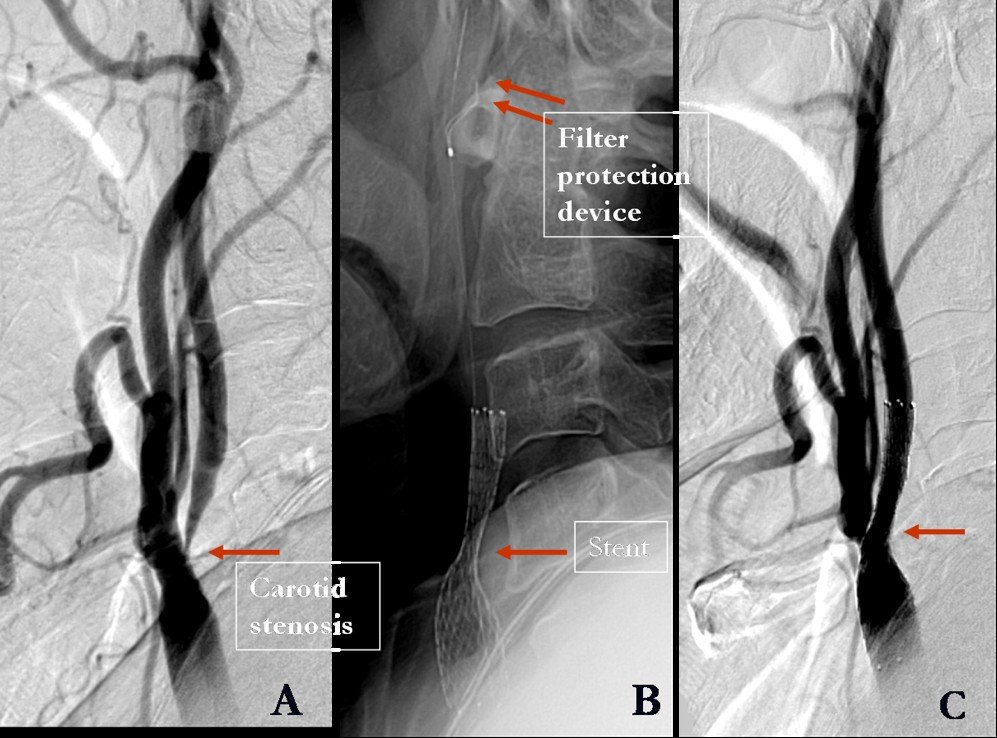
These images are from one of Dr. Gupta’s own cases: Image A shows severe stenosis at the origin of the right internal carotid artery; Image B shows the stent and protection filter in place; Image C shows the same artery successfully reopened after stenting.
Carotid Stenting vs Carotid Endarterectomy
Carotid stenting is a catheter-based alternative to carotid endarterectomy, the traditional open surgery; the right choice depends on the patient’s anatomy, age, and overall health.
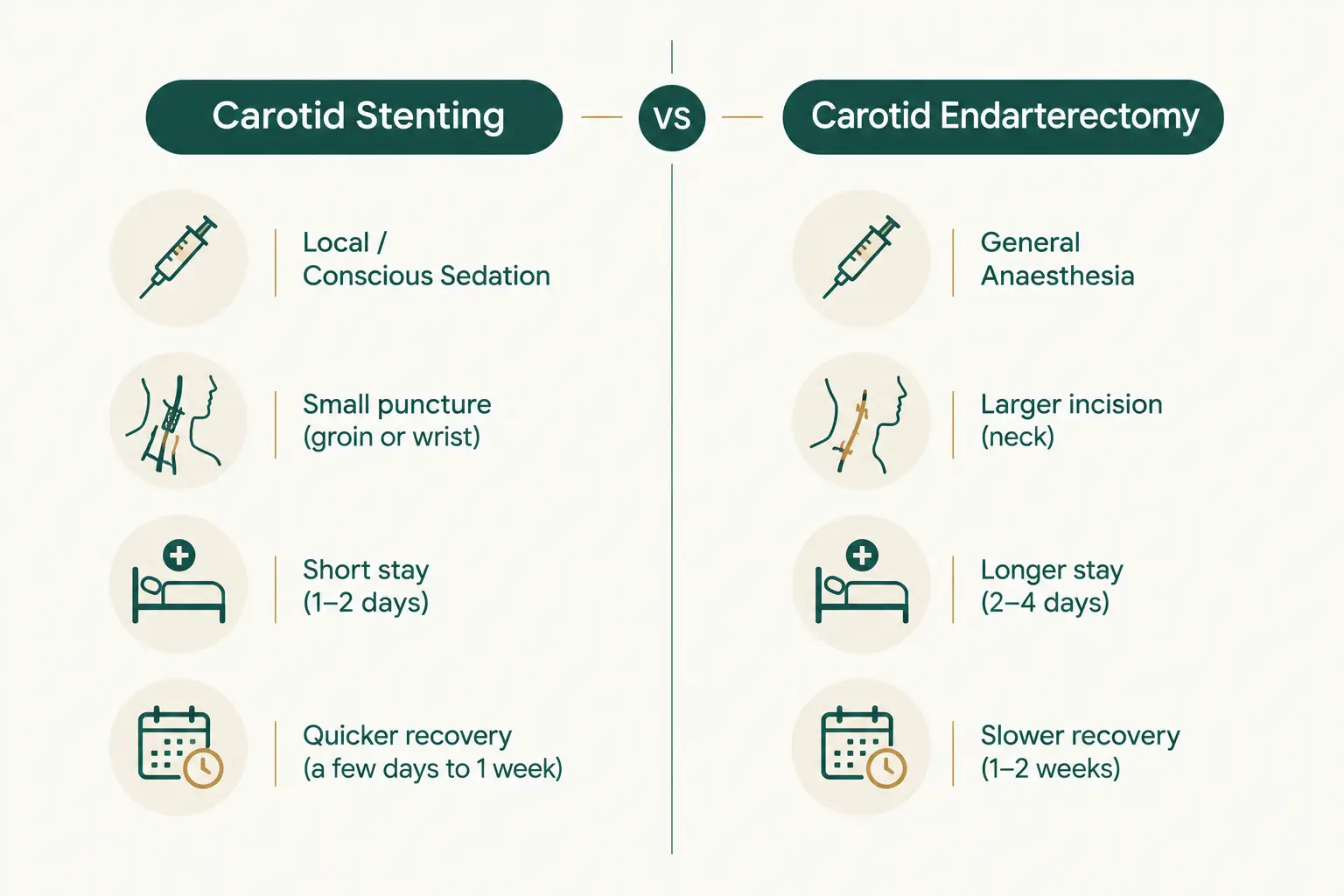
Dr. Gupta recommends whichever approach carries the lower risk for that specific patient, and explains why.
Benefits and Risks of Carotid Artery Stenting
Carotid stenting lowers stroke risk with a shorter recovery than open surgery, though it carries a small risk of bleeding, restenosis, or stroke, like any vascular procedure.
Benefits:
- Minimally invasive
- Usually no general anaesthesia
- Shorter hospital stay
- Meaningfully lower stroke risk
Risks:
- Bleeding or bruising at the puncture site
- Restenosis over time
- Rare embolic stroke
- Rare hyperperfusion.
In experienced hands, with routine use of protection devices, these risks stay low for most patients.
Recovery After Carotid Artery Stenting
Most patients go home within 24-48 hours and resume light activity within a week, though the stent alone does not cure the underlying artery disease.
- A few hours of bed rest allow the puncture site to close.
- Blood-thinning medication and periodic carotid ultrasound follow-ups monitor the stent.
- Avoid heavy lifting for a few days; showers are fine, baths are briefly restricted.
- Long-term success depends on controlling blood pressure, cholesterol, and diabetes, and quitting smoking.
Carotid Artery Stenting Cost in Delhi
Carotid artery stenting in Delhi generally starts from ₹1,00,000 and goes beyond depending on the hospital, stent and filter device used, and case complexity.
- Cost drivers include the device selected, ICU charges, pre-procedure imaging, and length of stay.
- An accurate, personalised estimate is only possible after imaging review and consultation.
See our guide to Stroke Treatment Cost in Delhi for a broader picture, or book a consultation for a quote based on your case.
Why Choose Dr. Vikas Gupta for Carotid Artery Stenting in Delhi?
Patients across Delhi NCR choose Dr. Vikas Gupta for carotid stenting because of his 30-plus years of neurointervention experience and consistently low complication rates.
- 30+ years of neurosurgical and neurointerventional experience across complex and emergency cases.
- Personal review of every angiogram before recommending stenting, endarterectomy, or medical management.
- Routine use of embolic protection devices to actively reduce stroke risk during the procedure.
- Transparent discussion of risks, alternatives, and realistic costs at Kailash Deepak Hospital, Karkardooma.
The safety of carotid stenting depends heavily on operator experience, which is where three decades of practice make the difference.
Read more About Dr. Vikas Gupta.
Book a Consultation for Carotid Artery Stenting in Delhi
If a scan has shown carotid narrowing, or stenting has been suggested, the safest next step is a direct consultation, not a delay. Dr. Gupta will review your imaging, explains your specific risk, and walks you through every option in plain language.
Frequently Asked Questions
Is carotid artery stenting painful? expand_more
No. It is usually done under local anaesthesia, so most patients feel only mild pressure at the puncture site.
How long does the procedure take? expand_more
Carotid artery stenting typically takes 30 minutes to one hour, though complex cases may take longer.
How soon can I return to normal activities? expand_more
Most patients resume light activity within a week and full routine within two to three weeks, depending on overall health.
Who is the best neurosurgeon in Delhi? expand_more
Dr. Vikas Gupta brings 30+ years of neurosurgical experience and has performed 5,000+ surgeries, making him a trusted and experienced choice for glioma evaluation and treatment in Delhi NCR.
How can I book an appointment with Dr. Vikas Gupta? expand_more
You can book an appointment with Dr. Vikas Gupta by contacting us directly or using our online appointment booking facilities available on this website.

Dr. Vikas Gupta’s Medical Content Team
Dr. Vikas Gupta’s medical content team specialises in creating accurate, clear, and patient-focused healthcare content. With strong clinical understanding and expertise in technical writing and SEO, the team translates complex medical information into reliable, accessible resources that support informed decisions and uphold Dr. Gupta’s commitment to quality care.
This content is reviewed by Dr. Vikas Gupta
Related Blogs
Silent Stroke: The Hidden Brain Damage Many People Miss
When people hear the word stroke, they usually imagine a sudden and dramatic medical emergency, someone…
Read Article →
How Serious is Carotid Artery Surgery?
Your brain is the command center of your entire being, but have you ever considered…
Read Article →


 WhatsApp